

Eastern Province General Dept. of Traffic Light vehicle
Practice mode· Right of way & safetyEastern Province General Dept. of Traffic - Saudi Safe Driving Practice Test
Covers defensive driving, following distances, fatigue, visibility, adverse weather and hazard awareness. Safe driving habits save lives and keep your licence clean.
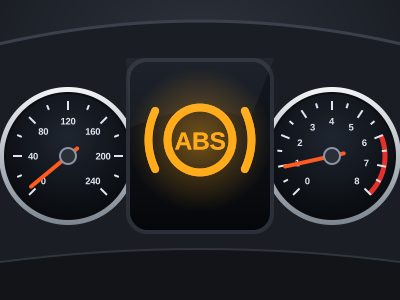
When your ABS activates you will feel the brake pedal pulsating or vibrating under your foot. What should you do?
The other 12 questions in this test
Read them all. The answer and the reason for each, and the timed 22-question run, are in the Saudi Driving Theory Online Practice Bank.
- Q11Safe driving
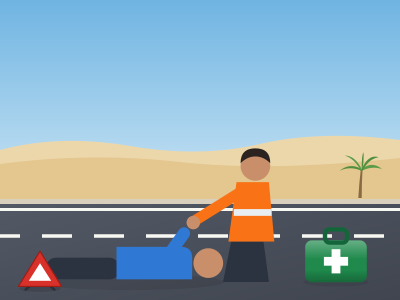
You are the first person to arrive at a collision where a vehicle has caught fire and a person is trapped inside. What is the priority order?
- APhotograph the scene first, then call emergency services, then attempt rescue
- BCall emergency services immediately (911), warn other traffic, and only attempt to free the trapped person if there is no immediate fire danger and you can do so safely
- CAttempt to free the trapped person at all costs before doing anything else
- DWait for other motorists to help before taking any action
Answer and explanation in the bank
- Q12Safe driving
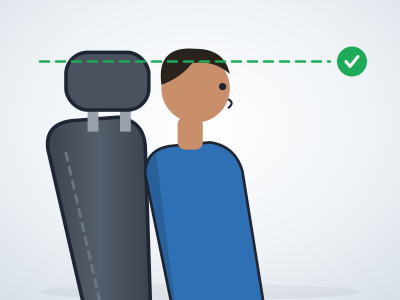
What is the main safety function of the headrest (head restraint) in your seat?
- ATo make long drives more comfortable
- BTo limit rearward head movement and reduce whiplash injury in a rear-end collision
- CTo prevent the driver from falling asleep
- DTo support the neck when checking blind spots
Answer and explanation in the bank
- Q13Safe driving
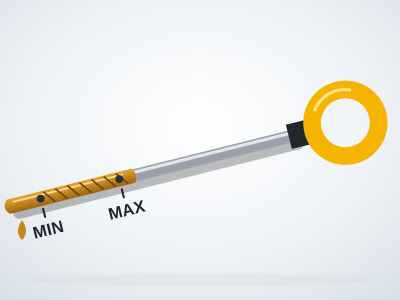
Before a long desert highway journey, which pre-trip check is most important to minimise breakdown risk?
- ACleaning the windscreen and adjusting the radio presets
- BOnly the fuel level; modern vehicles rarely break down
- CChecking tyre condition and pressure, engine oil level, coolant level, brakes, and fuel with a spare for remote sections
- DThe air conditioning refrigerant level only
Answer and explanation in the bank
- Q14Safe driving
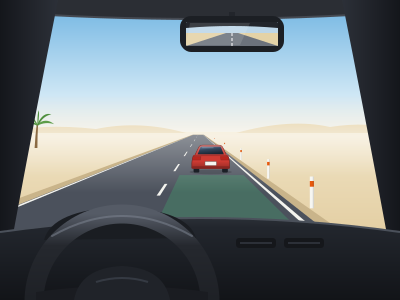
You are driving at 120 km/h on the highway when the vehicle in front brakes sharply. If your reaction time is 1.5 seconds, approximately how far do you travel before you even begin braking?
- AAbout 20 metres
- BAbout 100 metres
- CAbout 50 metres
- DAbout 10 metres
Answer and explanation in the bank
- Q15Safe driving
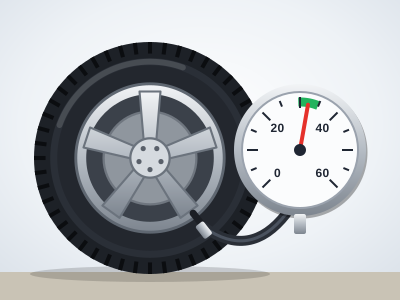
How does driving at high speed in Saudi Arabia's extreme heat affect your tyre pressure?
- APressure decreases because the rubber softens
- BPressure stays the same regardless of temperature
- CPressure increases only in rear tyres
- DPressure increases as the air inside heats up
Answer and explanation in the bank
- Q16Safe driving
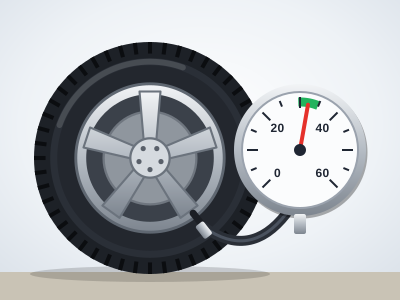
When should you ideally check your tyre pressure for the most accurate reading?
- AImmediately after a long highway drive
- BWhile the engine is running and warm
- CWhen the tyres are cold, before driving or after parking for at least 3 hours
- DOnly when the tyre warning light appears
Answer and explanation in the bank
- Q17Safe driving
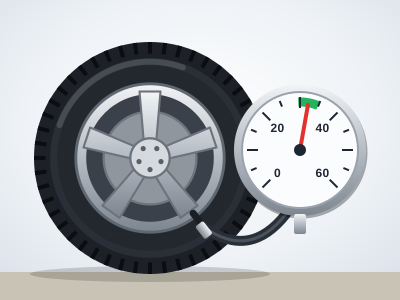
You experience a sudden front tyre blowout at highway speed. What is the correct immediate response?
- ABrake hard and steer to the shoulder immediately
- BGrip the wheel firmly, keep straight, ease off the accelerator, and brake gently only after the car slows
- CPull the handbrake to slow quickly
- DTurn off the engine immediately
Answer and explanation in the bank
- Q18Safe driving
What does ABS (Anti-lock Braking System) allow a driver to do during emergency braking?
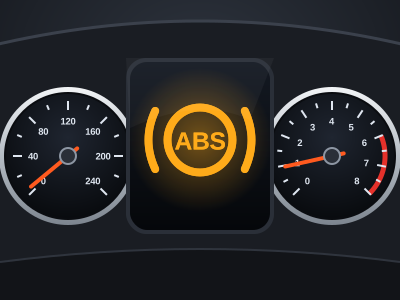
- AStop in a shorter distance than normal braking on all surfaces
- BBrake without pressing the pedal
- CBrake only with the rear wheels
- DSteer around a hazard while braking hard
Answer and explanation in the bank
- Q19Safe driving
How should a seat belt be positioned on the body to work correctly?
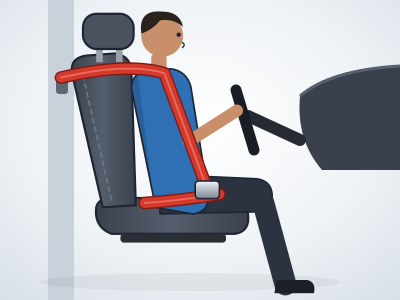
- ALap belt across the stomach and shoulder belt behind the back
- BLap belt across the hips and shoulder belt across the chest and over the collarbone
- CUnder the arm with the shoulder belt across the neck
- DShoulder belt only, without the lap belt fastened
Answer and explanation in the bank
- Q20Safe driving
A child aged 4 years and weighing 18 kg must travel in your car. Which restraint is most appropriate?
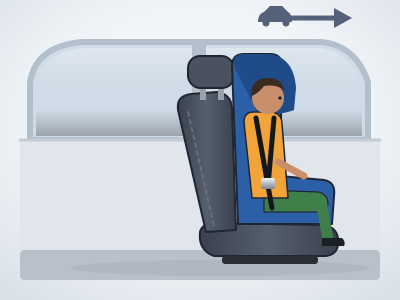
- AA rear-facing infant seat
- BA forward-facing child seat with a harness suitable for their weight
- CThe adult seat belt without any child seat
- DHeld by an adult passenger
Answer and explanation in the bank
- Q21Safe driving
Why must a rear-facing child seat never be installed in a front seat that has an active passenger airbag?
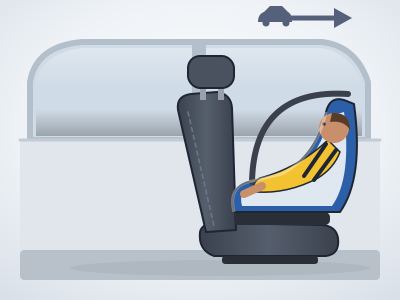
- ABecause the seat belt will not reach around the child seat
- BBecause the front seat is always narrower than the rear seat
- CBecause the deploying airbag can strike the back of the child seat with lethal force
- DBecause it blocks the driver's view of the speedometer
Answer and explanation in the bank
- Q22Safe driving
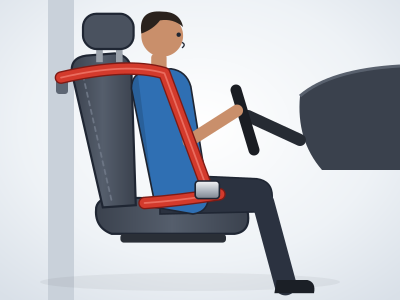
A front airbag is designed to work best when the driver sits at what minimum distance from the steering wheel?
- AAt least 10 cm
- BAt least 50 cm
- CDistance does not matter if a seat belt is worn
- DAt least 25 cm (about 10 inches)
Answer and explanation in the bank
Every answer above, with the rule it comes from, plus the full 22-question timed test.
Get the Saudi Driving Theory Online Practice Bank - SAR 39What this test covers
Topics include road signs, traffic signals, right of way, roundabouts, speed limits, seat belts, fines and penalties, and the safe-driving rules specific to your vehicle category. Full question-by-question feedback with explanations is shown immediately after you finish the test above.
Frequently asked questions
How many questions is the Eastern Province General Dept. of Traffic light vehicle theory test?
The official General Dept. of Traffic light vehicle theory test in Eastern Province has 35 questions and you need 22 correct (63%) to pass. This practice test has 22 questions.
Is this the real exam?
These are practice questions to help you revise, written to the published rules and to what candidates report from the real test. They are not the official Saudi exam and the real question bank, format, fees and pass mark are set by the General Department of Traffic (Moroor) and the driving schools, and can change. Always confirm the current requirements with your driving school or the traffic department.
Is this practice test free?
The first 10 questions are free, with no signup, and each shows the answer and the reason. The full 22-question test, timed, is in the Saudi Driving Theory Online Practice Bank (SAR 39, one payment), with every question in the bank.
What does the Eastern Province light vehicle theory test cover?
Road signs, traffic signals, right of way, roundabouts, speed limits, seat belts, penalties and safe-driving rules, plus the handling and safety topics specific to your vehicle.