

Hail General Dept. of Traffic Motorcycle
Timed mock exam· Full mock examsHail General Dept. of Traffic - Saudi Motorcycle Theory Mock Test 1
A full 35-question timed practice exam for the Saudi motorcycle theory test. Covers shared road rules and signs plus motorcycle-specific control and safety. Aim for 22/35 to pass.
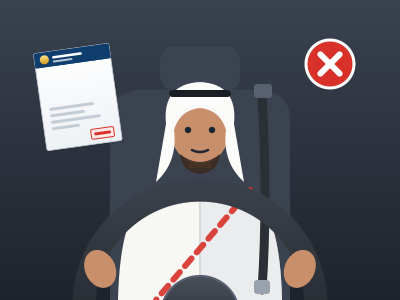
Who is required to wear a seatbelt in a private car travelling in Saudi Arabia?
The other 25 questions in this test
Read them all. The answer and the reason for each, and the timed 35-question run, are in the Saudi Driving Theory Online Practice Bank.
- Q11Road signs and signals
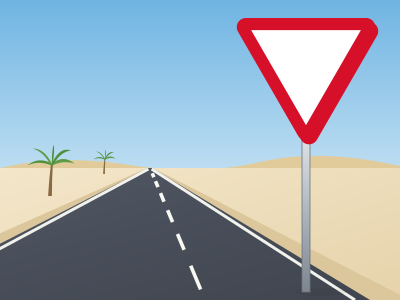
Which of the following correctly lists the four broad categories of traffic signs used in Saudi Arabia?
- AWarning, Prohibitory, Advisory, and Temporary
- BDanger, Speed, Direction, and Regulatory
- CWarning, Prohibitory, Mandatory, and Informational
- DRed, Blue, Green, and White
Answer and explanation in the bank
- Q12Traffic rules
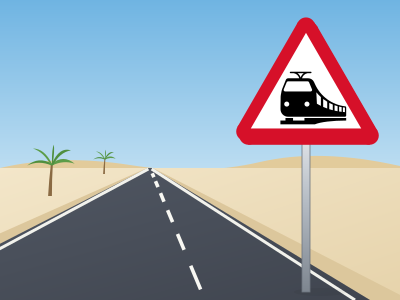
You are approaching an uncontrolled level crossing (railway crossing without barriers or lights). What must you do?
- ASlow down slightly and cross if no train is visible
- BSound your horn and proceed at normal speed
- CGive way to vehicles behind you and then accelerate across quickly
- DStop, look both ways, listen for trains, and only cross when it is clear
Answer and explanation in the bank
- Q13Right of way
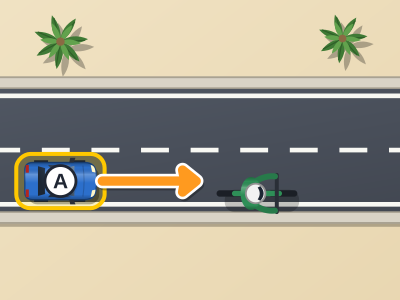
How much space should you leave when overtaking a cyclist on a road?
- AAt least 1 metre
- BAt least 0.5 metres
- CAt least 3 metres
- DNo minimum; you just need to avoid contact
Answer and explanation in the bank
- Q14Safe driving
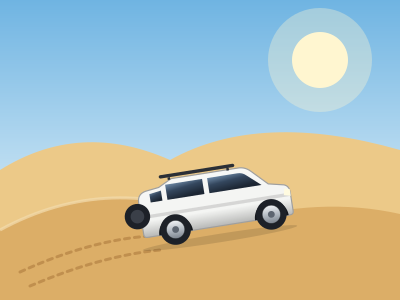
How does dehydration affect driving ability in Saudi Arabia's extreme heat?
- AIt has no effect if you feel alert
- BIt only causes problems after you stop driving
- CIt makes drivers more cautious and therefore safer
- DIt reduces concentration, slows reaction time, and increases irritability similar to low-level intoxication
Answer and explanation in the bank
- Q15Penalties and fines
Saudi Arabia operates a violations-accumulation (points) system. What is the general consequence of accumulating a large number of traffic violation points?
- APoints have no practical effect; only the fines themselves matter
- BAt 24 points the licence is withdrawn: for 3 months the first time in a Hijri year, then 6 months, then 1 year, and it is revoked permanently the fourth time
- CPoints reset automatically every calendar year with no further action required
- DThe only consequence of points is a higher insurance premium
Answer and explanation in the bank
- Q16Motorcycle control
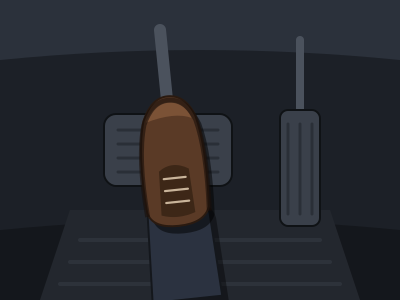
You are about to perform a quick-stop (emergency brake) and feel the rear wheel start to lock. You should:
- AMaintain full rear brake pressure until you stop; a locked rear is acceptable if it keeps a straight line
- BRelease both brakes completely and reapply from zero
- CEase rear brake pressure slightly to restore rolling contact, then reapply just below the lock-up threshold
- DIncrease front brake force to compensate and allow the rear to remain locked
Answer and explanation in the bank
- Q17Motorcycle safety
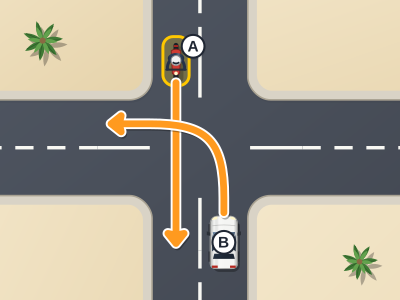
What is the 'hurt report' finding most relevant to Saudi urban motorcycle safety regarding the direction of collisions?
- AMost motorcycle crashes are rear-end collisions caused by following cars
- BA high proportion of motorcycle crashes involve another vehicle failing to yield or turning across the motorcycle's path, rather than the rider making an error
- CSingle-vehicle crashes caused by excessive speed are the dominant crash type in all environments
- DMost urban crashes involve motorcycles running red lights
Answer and explanation in the bank
- Q18Road signs and signals
You are on a highway posted at 140 km/h, as shown. From what speed above the limit does a speeding fine start?
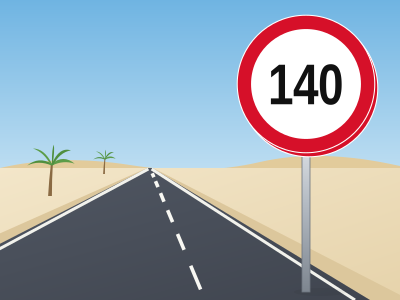
- AMore than 5 km/h over the limit (SR 300-500)
- BMore than 10 km/h over the limit
- CMore than 25 km/h over the limit
- DOnly above 160 km/h
Answer and explanation in the bank
- Q19Traffic rules
Barriers are down and lights are flashing at a level crossing, but you see no train. What should you do?
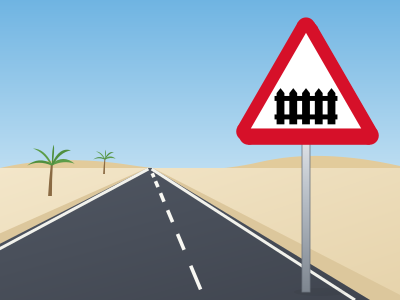
- ADrive around the barrier because the system may be faulty
- BInch forward until you can see the track clearly, then cross
- CWait behind the barrier, a train may be approaching from beyond your line of sight
- DSound your horn to alert the signal operator
Answer and explanation in the bank
- Q20Right of way
A cyclist is approaching a junction from the left at the same time as you. Who has priority at an unmarked crossroads?
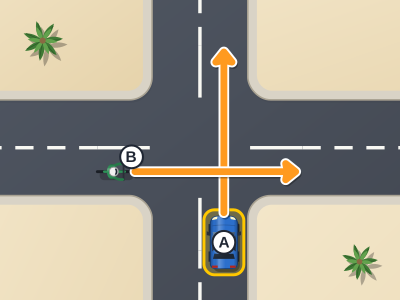
- AYou have priority because you are in a motor vehicle
- BThe cyclist has priority because cyclists are vulnerable road users
- CThe vehicle to the right of the other has priority under right-hand priority rules
- DThe vehicle that arrived first has priority
Answer and explanation in the bank
- Q21Safe driving
How much water is recommended to carry per person for a long desert drive in Saudi Arabia?
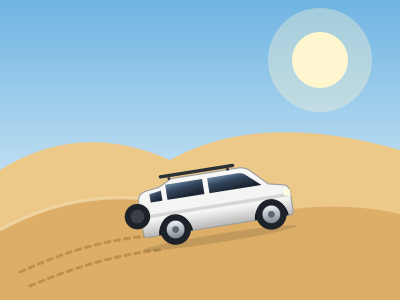
- AHalf a litre is sufficient for most trips
- BWater is not needed if the air conditioning works
- C1 litre only during summer months
- DAt least 2 litres per person, with extra for emergencies
Answer and explanation in the bank
- Q22Penalties and fines
A driver ignores several Saher camera fines and allows them to accumulate unpaid. Which practical problem will this cause?

- ANothing; unpaid camera fines expire after one year with no consequences
- BOnly fines over a certain amount must be paid before Istimara renewal
- CThe driver will be unable to renew the vehicle's Istimara (registration) until all fines are paid
- DThe fines are transferred to the driver's employer for deduction from salary
Answer and explanation in the bank
- Q23Motorcycle control
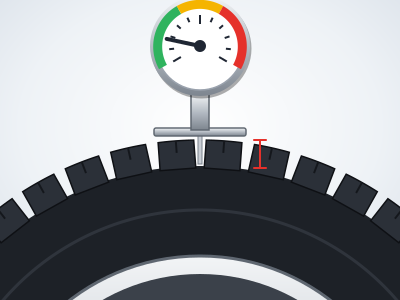
How does riding with a worn rear tyre affect motorcycle handling?
- AA worn tyre is harder and provides more grip than a new tyre on dry roads
- BTread depth only matters in the wet; a slick rear tyre is safe on Saudi dry roads
- CA worn tyre reduces weight, improving acceleration and handling response
- DGrip is reduced especially in corners, wet conditions, and braking, increasing the risk of a slide
Answer and explanation in the bank
- Q24Motorcycle safety
You are riding on a Saudi motorway at 120 km/h and realise you are about to miss your exit. What should you do?
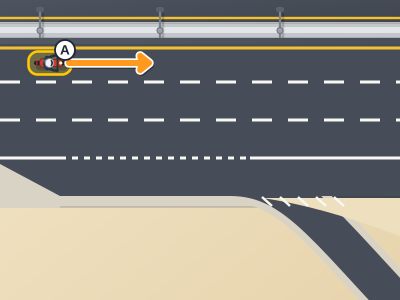
- AContinue to the next exit; do not swerve or brake sharply across lanes to make the exit at speed
- BSignal and brake hard across all lanes immediately to make the exit
- CUse the hard shoulder to slow down and re-enter the exit ramp
- DReverse along the hard shoulder to reach the exit
Answer and explanation in the bank
- Q25Road signs and signals
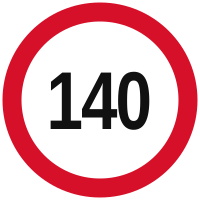
What is the highest speed limit posted on Saudi highways?
- A120 km/h
- B140 km/h
- C160 km/h
- D100 km/h
Answer and explanation in the bank
- Q26Traffic rules
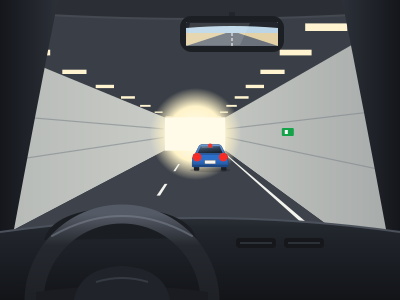
What general speed restriction should you adopt when driving through a tunnel?
- AMatch the fastest vehicle in the tunnel
- BObey the posted tunnel speed limit and increase following distance due to reduced visibility
- CReduce speed to 20 km/h regardless of signs
- DTunnels have no special rules; normal road speeds apply
Answer and explanation in the bank
- Q27Right of way
You are reversing out of a private driveway onto a public road. Who has priority?
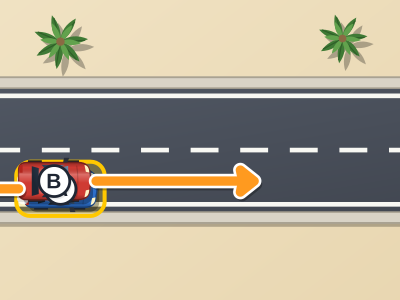
- AYou have priority because you were there first
- BTraffic on the public road has priority
- CBoth you and road traffic share equal priority
- DYou have priority only if you signal before reversing
Answer and explanation in the bank
- Q28Safe driving
Before setting off on a long journey, how should you adjust your seat position?
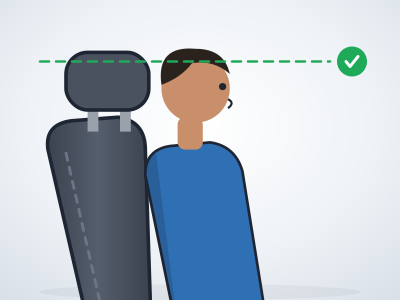
- ARecline the seat fully back for comfort
- BPush the seat as far forward as possible to reach the pedals easily
- CSet the seat so your arms are slightly bent when holding the wheel and your knees are slightly bent when the pedals are fully depressed
- DSeat height does not affect driving safety
Answer and explanation in the bank
- Q29Penalties and fines
A traffic officer signals a driver to stop at a checkpoint but the driver does not stop and drives on. What offence has occurred?
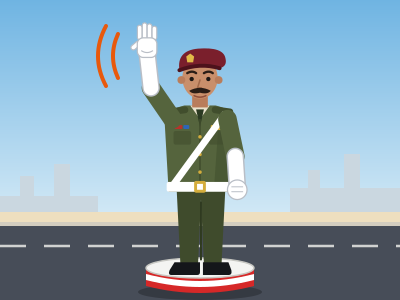
- AFailing to stop at a traffic checkpoint, which is a serious offence that can lead to pursuit, arrest and heavy penalties
- BNo offence, provided the driver was not speeding at the time
- CA minor administrative infraction equivalent to missing a toll payment
- DAn offence only if the checkpoint was a police roadblock, not a routine traffic stop
Answer and explanation in the bank
- Q30Motorcycle control
Before a long ride in Saudi Arabia, what tyre-related checks should you perform?
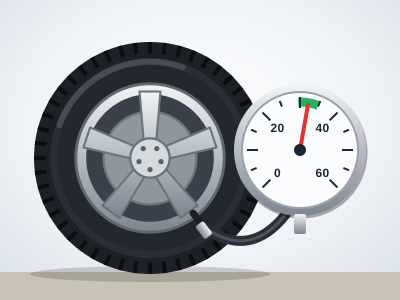
- ACheck cold tyre pressure against the manufacturer's specification, inspect tread depth, and look for cracks or embedded objects
- BCheck pressure only after riding at least 10 km so the tyres are at operating temperature
- CTap each tyre with your heel; if it sounds solid, pressure is fine
- DTyre checks are only needed before touring; urban riding requires no pre-ride inspection
Answer and explanation in the bank
- Q31Motorcycle safety
Why is a pre-ride inspection (T-CLOCS check) important before every ride?
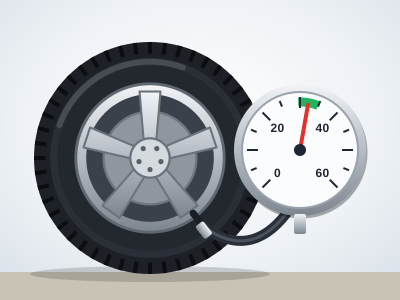
- AIt identifies mechanical defects such as low tyre pressure, fluid leaks, and brake issues before they cause a breakdown or crash
- BIt is a legal requirement that must be documented and carried in writing on every ride
- CIt is only necessary for older motorcycles; modern bikes have electronic self-diagnostics
- DIt is useful only before long-distance trips; urban riding does not require a pre-ride check
Answer and explanation in the bank
- Q32Road signs and signals
What does a speed-limit sign with a diagonal bar through it indicate?
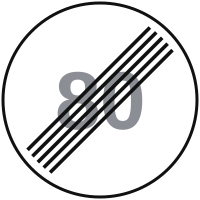
- AA new and lower speed limit begins here
- BThe end of the previously stated speed restriction
- CThe road ahead is closed
- DA radar camera is operating here
Answer and explanation in the bank
- Q33Traffic rules
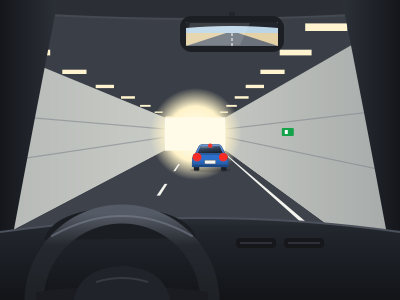
Which lights must you turn on when entering a tunnel in Saudi Arabia?
- AFog lights only
- BHeadlights (dipped beam), even if the tunnel is lit
- CHazard lights throughout the tunnel
- DNo additional lights are required in a lit tunnel
Answer and explanation in the bank
- Q34Right of way
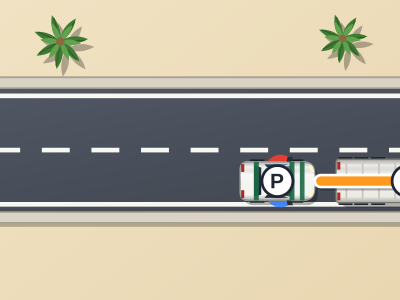
You are approaching a convoy of vehicles with hazard lights flashing. What should you do?
- AOvertake the last vehicle and insert yourself into the convoy
- BFlash your lights to signal you wish to pass and the convoy must let you through
- CMaintain a safe following distance; do not enter the convoy or attempt to overtake it as a whole
- DMove to the hard shoulder and wait for the entire convoy to pass
Answer and explanation in the bank
- Q35Safe driving
How should you set your interior rear-view mirror correctly?
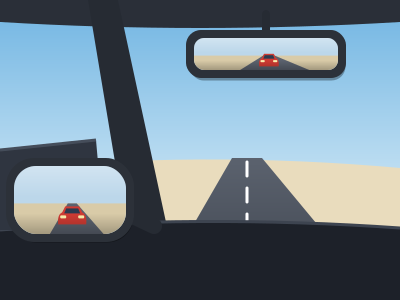
- AAngled so you can see the back seat passengers clearly
- BTilted down so it does not reflect headlights at night
- CAdjusted to see the parcel shelf behind you
- DPositioned so you can see the full rear window with minimal head movement
Answer and explanation in the bank
Every answer above, with the rule it comes from, plus the full 35-question timed test.
Get the Saudi Driving Theory Online Practice Bank - SAR 39What this test covers
Topics include road signs, traffic signals, right of way, roundabouts, speed limits, seat belts, fines and penalties, and the safe-driving rules specific to your vehicle category. Full question-by-question feedback with explanations is shown immediately after you finish the test above.
Frequently asked questions
How many questions is the Hail General Dept. of Traffic motorcycle theory test?
The official General Dept. of Traffic motorcycle theory test in Hail has 35 questions and you need 22 correct (63%) to pass. This practice test has 35 questions.
Is this the real exam?
These are practice questions to help you revise, written to the published rules and to what candidates report from the real test. They are not the official Saudi exam and the real question bank, format, fees and pass mark are set by the General Department of Traffic (Moroor) and the driving schools, and can change. Always confirm the current requirements with your driving school or the traffic department.
Is this practice test free?
The first 10 questions are free, with no signup, and each shows the answer and the reason. The full 35-question test, timed, is in the Saudi Driving Theory Online Practice Bank (SAR 39, one payment), with every question in the bank.
What does the Hail motorcycle theory test cover?
Road signs, traffic signals, right of way, roundabouts, speed limits, seat belts, penalties and safe-driving rules, plus the handling and safety topics specific to your vehicle.