

Jazan General Dept. of Traffic Motorcycle
Practice mode· Motorcycle skillsJazan General Dept. of Traffic - Saudi Motorcycle Safety Practice Test
Rider safety essentials: protective gear, visibility, safe following distances, hazard awareness, lane position and sharing the road with larger vehicles.
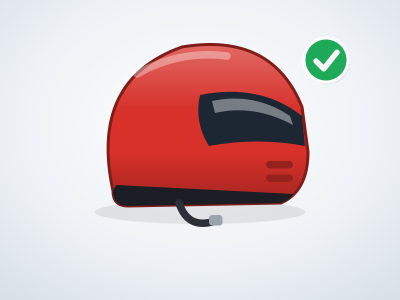
Which helmet standard is generally recognised for motorcycle use in Saudi Arabia?
The other 10 questions in this test
Read them all. The answer and the reason for each, and the timed 20-question run, are in the Saudi Driving Theory Online Practice Bank.
- Q11Motorcycle safety
A car suddenly pulls out of a side road directly into your path on a Saudi urban road. What is the best immediate response?
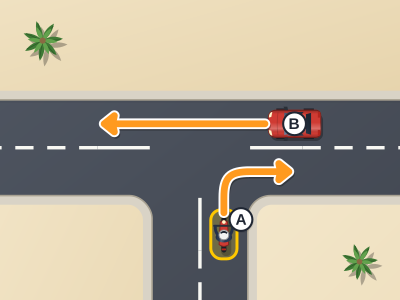
- ASwerve immediately to the opposite lane without braking
- BApply both brakes progressively and firmly, steer to the safest available gap, and sound the horn as a warning
- CApply only the rear brake to avoid pitching forward
- DAccelerate to pass in front of the car before it reaches your lane
Answer and explanation in the bank
- Q12Motorcycle safety
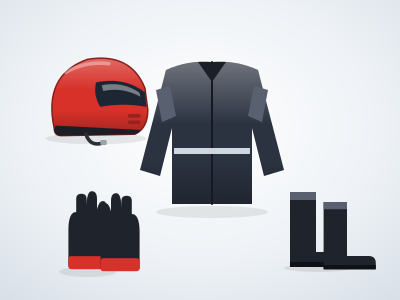
What does retro-reflective material on motorcycle clothing do?
- AIt generates its own light from solar energy stored during the day
- BIt is effective only in daylight and provides no benefit at night
- CIt bounces light from vehicle headlights back toward the source, making the rider visible at night even without active illumination
- DIt replaces the need for a functioning rear reflector on the motorcycle
Answer and explanation in the bank
- Q13Motorcycle safety
You are riding when a strong crosswind gusts suddenly from the right. What is the instinctive-but-wrong response, and what should you actually do?
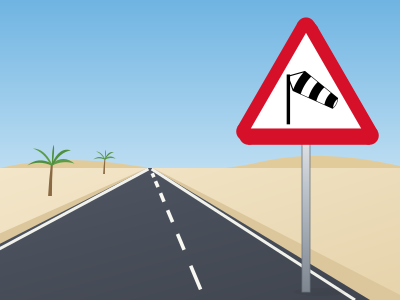
- AWrong: counter-steer hard left to fight the wind. Correct: allow a relaxed grip so the bike can self-correct, make a smooth counter-steering input, and gradually move to a sheltered lane position
- BWrong: do nothing. Correct: apply full brakes and stop immediately on the hard shoulder
- CWrong: lean into the wind. Correct: lean away from the wind to stay upright
- DWrong: accelerate. Correct: slow down by using only the rear brake
Answer and explanation in the bank
- Q14Motorcycle safety
When overtaking a stationary line of traffic in Saudi Arabia, which hazard should the rider be especially alert to?
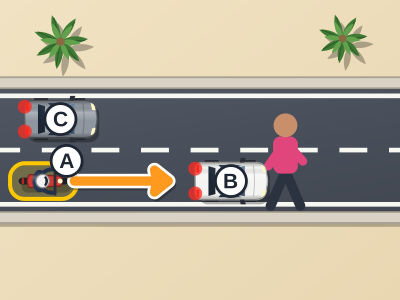
- AIncreased wind turbulence from the row of stationary vehicles
- BRoad surface being wetter beside stationary vehicles
- CA vehicle's door opening, a pedestrian stepping between vehicles, or a car pulling out of the queue without signalling
- DStationary vehicles cooling the road surface and reducing tyre grip
Answer and explanation in the bank
- Q15Motorcycle safety
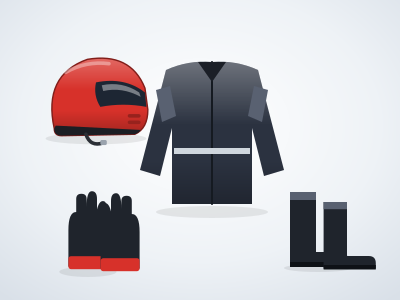
Why should a motorcyclist always wear appropriate footwear?
- AAny closed-toe shoe is sufficient; the footpeg provides all the structural support needed
- BMotorcycle boots protect the ankles and feet in a crash and provide a secure platform for brake and gear lever operation
- CFootwear choice only matters on dirt roads where the rider may put a foot down
- DSandals are acceptable in Saudi heat as long as the rider is careful with the footpegs
Answer and explanation in the bank
- Q16Motorcycle safety
How should a motorcyclist position themselves when waiting at traffic lights in Saudi Arabia?
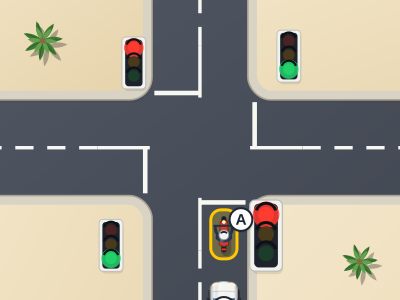
- AToward the front of the lane, slightly offset to either side so they are visible in the mirrors of the vehicles ahead, and with an eye on the mirror for vehicles approaching from behind
- BIn the centre of the lane, directly behind the car ahead, to minimise exposure to lane changes
- CAt the very back of the queue so that you can observe all hazards
- DOn the pavement beside the road to be completely clear of traffic
Answer and explanation in the bank
- Q17Motorcycle safety
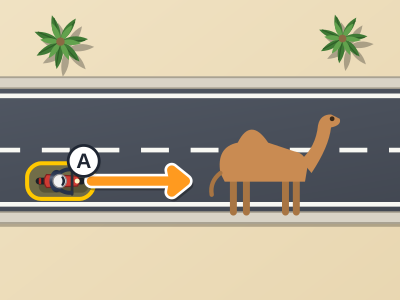
You are riding on an unlit desert road at night and your headlight illuminates a camel standing in your lane 50 metres ahead. What should you do?
- ASwerve immediately to the opposite lane at speed to give maximum clearance
- BApply both brakes progressively and firmly, do not swerve until you know no animal is in the adjacent lane, and stop if possible
- CFlash your headlight to frighten the camel away, then accelerate past
- DSound your horn and accelerate; camels always move off the road when they hear traffic
Answer and explanation in the bank
- Q18Motorcycle safety
What does 'buffer zone' mean in the context of motorcycle riding?
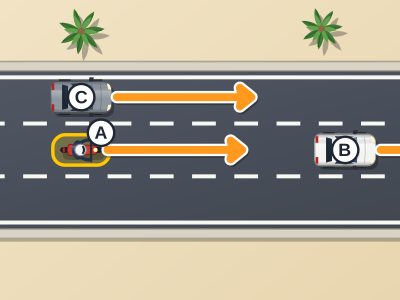
- AThe distance between the rider's helmet and the windscreen to prevent impact
- BA space deliberately maintained around the motorcycle in all directions to provide reaction time and an escape route if another vehicle moves unexpectedly
- CA legal exclusion zone that other vehicles must not enter under Saudi law
- DThe additional braking distance required when carrying a pillion passenger
Answer and explanation in the bank
- Q19Motorcycle safety
What should you do if your motorcycle begins to weave or wobble at highway speed?
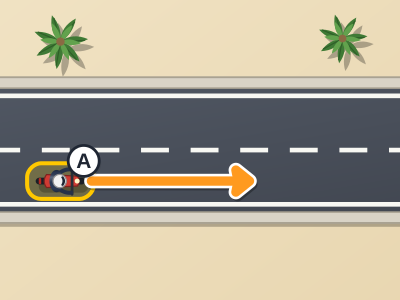
- AApply the front brake immediately to stop as quickly as possible
- BGrip the handlebars as tightly as possible and fight the steering oscillation
- CIncrease speed so the gyroscopic effect stabilises the wheels
- DGrip the tank firmly with your knees, hold the bars lightly (do not fight the wobble), gradually ease the throttle, and bring the bike to a stop when stable
Answer and explanation in the bank
- Q20Motorcycle safety
How should a rider signal to the rest of a group that there is a hazard on the road surface ahead?
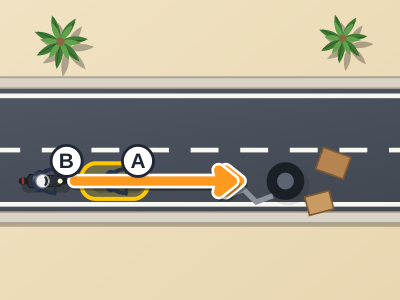
- ASound the horn twice to alert everyone without moving a hand from the controls
- BPoint or gesture downward toward the hazard side as you pass it, so each following rider can relay the signal
- CBrake sharply so the group knows to stop and investigate
- DFlash the indicator in the direction of the hazard and continue at normal speed
Answer and explanation in the bank
Every answer above, with the rule it comes from, plus the full 20-question timed test.
Get the Saudi Driving Theory Online Practice Bank - SAR 39What this test covers
Topics include road signs, traffic signals, right of way, roundabouts, speed limits, seat belts, fines and penalties, and the safe-driving rules specific to your vehicle category. Full question-by-question feedback with explanations is shown immediately after you finish the test above.
Frequently asked questions
How many questions is the Jazan General Dept. of Traffic motorcycle theory test?
The official General Dept. of Traffic motorcycle theory test in Jazan has 35 questions and you need 22 correct (63%) to pass. This practice test has 20 questions.
Is this the real exam?
These are practice questions to help you revise, written to the published rules and to what candidates report from the real test. They are not the official Saudi exam and the real question bank, format, fees and pass mark are set by the General Department of Traffic (Moroor) and the driving schools, and can change. Always confirm the current requirements with your driving school or the traffic department.
Is this practice test free?
The first 10 questions are free, with no signup, and each shows the answer and the reason. The full 20-question test, timed, is in the Saudi Driving Theory Online Practice Bank (SAR 39, one payment), with every question in the bank.
What does the Jazan motorcycle theory test cover?
Road signs, traffic signals, right of way, roundabouts, speed limits, seat belts, penalties and safe-driving rules, plus the handling and safety topics specific to your vehicle.