

Madinah General Dept. of Traffic Light vehicle
Timed mock exam· Full mock examsMadinah General Dept. of Traffic - Saudi Theory Mock Test 3
Third full mock exam - another fresh set of 35 questions drawn from all topics. A great way to check your readiness before the real test.
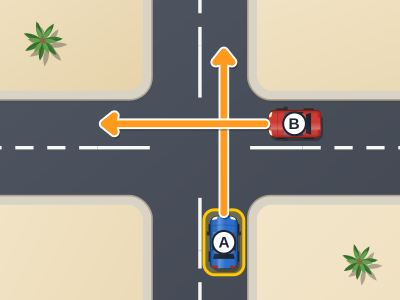
You arrive at an unmarked crossroads at the same time as another vehicle coming from your right. Who has priority?
The other 25 questions in this test
Read them all. The answer and the reason for each, and the timed 35-question run, are in the Saudi Driving Theory Online Practice Bank.
- Q11Road signs and signals
A blue circular sign with a white symbol is giving you a positive instruction. What category does this sign belong to?
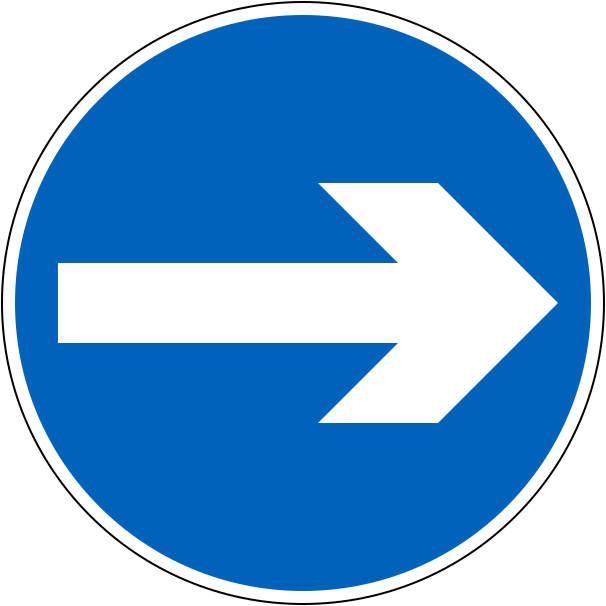
- AMandatory instruction sign
- BProhibitory sign
- CWarning sign
- DInformational sign
Answer and explanation in the bank
- Q12Traffic rules
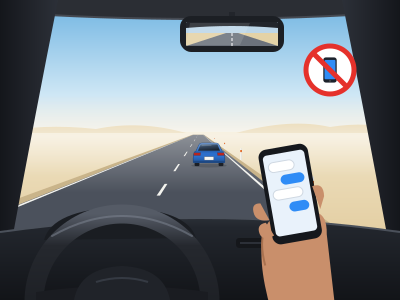
Is it legal to use a hand-held mobile phone while driving in Saudi Arabia?
- AYes, for calls under two minutes
- BNo, hand-held phone use while driving is prohibited
- CYes, if you are stopped at a red traffic light
- DYes, as long as you are on a quiet road
Answer and explanation in the bank
- Q13Right of way
You are on a narrow road and meet an oncoming vehicle. There is a passing place on your right. What should you do?
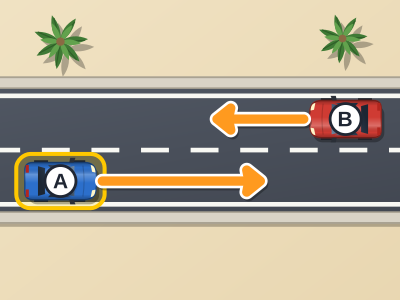
- APull into the passing place on your right so the other vehicle can pass
- BSound your horn and drive forward, forcing the other driver to reverse
- CStop in the middle of the road and wait
- DThe larger vehicle always has priority on narrow roads
Answer and explanation in the bank
- Q14Safe driving
You want to overtake a truck on a two-lane road. Before pulling out, how much clear road ahead should you see?
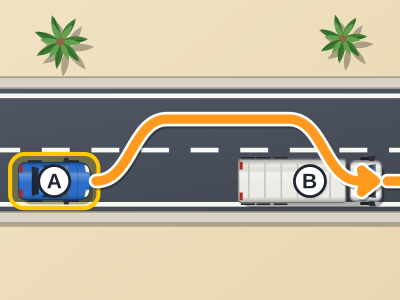
- AEnough to match the truck's speed and pass
- BA gap large enough to accelerate, pass the full length of the truck, return to lane, and have a comfortable margin with oncoming traffic
- CAt least 50 metres
- DThe same distance as the truck's length
Answer and explanation in the bank
- Q15Penalties and fines
Under what circumstances can Saudi traffic authorities impound a vehicle?
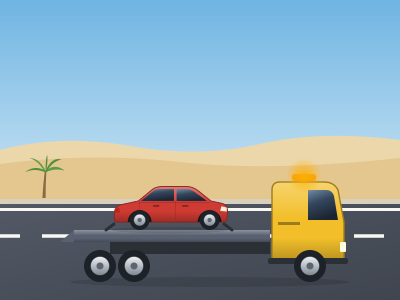
- AOnly if the driver is also under arrest; a fine alone never leads to impoundment
- BImpoundment is not used in Saudi Arabia; vehicles are only fined, never seized
- COnly for commercial vehicles, not private cars
- DFor serious offences such as driving without a licence, drifting, driving without insurance or accumulating a large number of unpaid violations
Answer and explanation in the bank
- Q16Road signs and signals
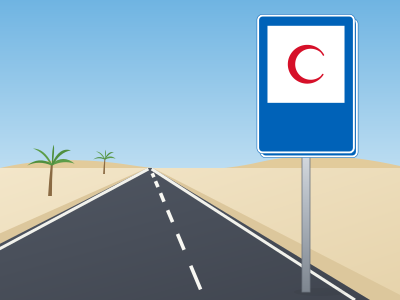
What colour are informational and directional signs typically on Saudi roads?
- ARed triangles with black text
- BYellow circles with black text
- CGreen or blue rectangles with white text
- DWhite rectangles with red borders
Answer and explanation in the bank
- Q17Traffic rules
Which type of phone use is permitted while driving in Saudi Arabia?
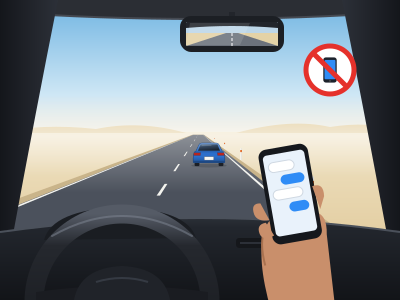
- ATexting at traffic lights
- BVideo calls if the phone is placed on the dashboard
- CHands-free calls using a Bluetooth or speakerphone system that does not require holding the device
- DHolding the phone with one hand while steering with the other
Answer and explanation in the bank
- Q18Right of way
On a narrow, steep mountain road you are driving downhill and meet a vehicle coming uphill. Neither of you can pass. What should you do?
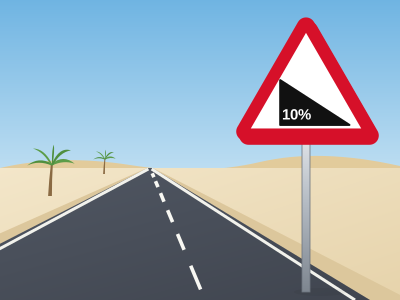
- AContinue, because the downhill vehicle always has priority
- BFlash your lights so the uphill driver reverses
- CKeep as far right as possible and stop if needed so the uphill vehicle can pass
- DThe driver who sounded the horn first has priority
Answer and explanation in the bank
- Q19Safe driving
You are overtaking and realise there is not enough space to complete the manoeuvre safely. What should you do?
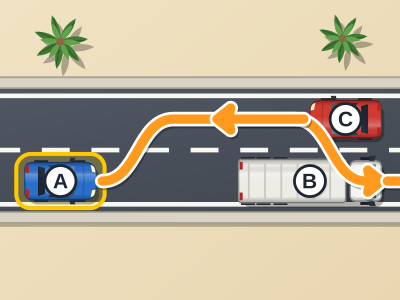
- AAccelerate harder to complete the overtake faster
- BFlash your lights at the oncoming vehicle to ask it to move over
- CSound your horn and continue
- DBrake and return behind the vehicle you were overtaking before it is too late
Answer and explanation in the bank
- Q20Penalties and fines
A driver's vehicle is impounded by Saudi traffic police. What costs does the owner typically face?
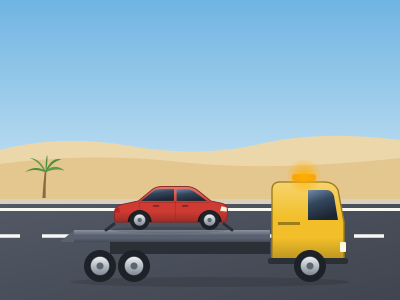
- AOnly the original traffic fine; storage in the pound is provided free of charge
- BA flat release fee of 100 SAR regardless of how long the vehicle was held
- CNo additional fees; the impoundment itself is the penalty
- DThe outstanding traffic fines plus daily storage fees for each day the vehicle remains in the pound
Answer and explanation in the bank
- Q21Road signs and signals
Which of the following correctly lists the four broad categories of traffic signs used in Saudi Arabia?
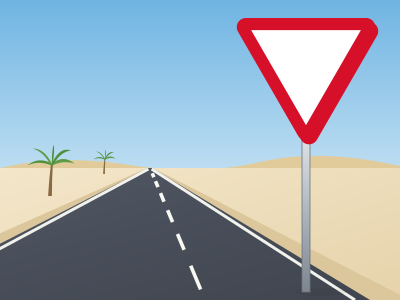
- AWarning, Prohibitory, Advisory, and Temporary
- BDanger, Speed, Direction, and Regulatory
- CWarning, Prohibitory, Mandatory, and Informational
- DRed, Blue, Green, and White
Answer and explanation in the bank
- Q22Traffic rules
You are approaching an uncontrolled level crossing (railway crossing without barriers or lights). What must you do?
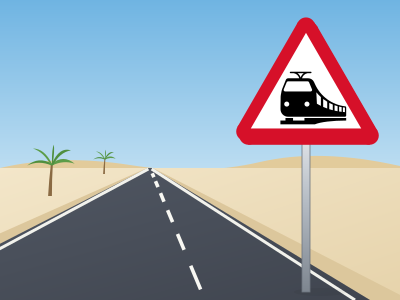
- ASlow down slightly and cross if no train is visible
- BSound your horn and proceed at normal speed
- CGive way to vehicles behind you and then accelerate across quickly
- DStop, look both ways, listen for trains, and only cross when it is clear
Answer and explanation in the bank
- Q23Right of way
How much space should you leave when overtaking a cyclist on a road?
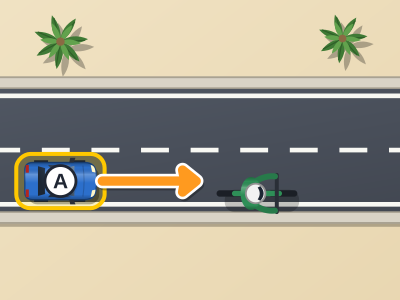
- AAt least 1 metre
- BAt least 0.5 metres
- CAt least 3 metres
- DNo minimum; you just need to avoid contact
Answer and explanation in the bank
- Q24Safe driving
How does dehydration affect driving ability in Saudi Arabia's extreme heat?
- AIt has no effect if you feel alert
- BIt only causes problems after you stop driving
- CIt makes drivers more cautious and therefore safer
- DIt reduces concentration, slows reaction time, and increases irritability similar to low-level intoxication
Answer and explanation in the bank
- Q25Penalties and fines
Saudi Arabia operates a violations-accumulation (points) system. What is the general consequence of accumulating a large number of traffic violation points?
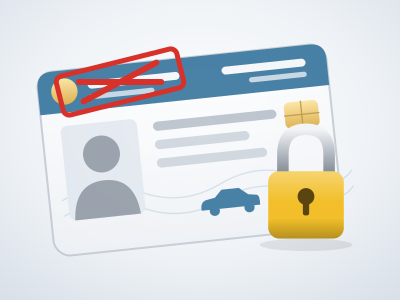
- APoints have no practical effect; only the fines themselves matter
- BAt 24 points the licence is withdrawn: for 3 months the first time in a Hijri year, then 6 months, then 1 year, and it is revoked permanently the fourth time
- CPoints reset automatically every calendar year with no further action required
- DThe only consequence of points is a higher insurance premium
Answer and explanation in the bank
- Q26Road signs and signals
You are on a highway posted at 140 km/h, as shown. From what speed above the limit does a speeding fine start?
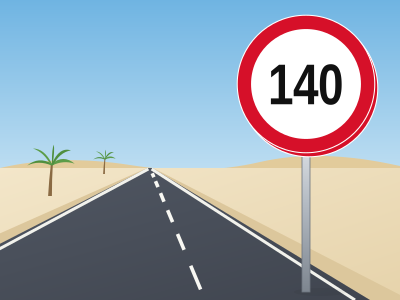
- AMore than 5 km/h over the limit (SR 300-500)
- BMore than 10 km/h over the limit
- CMore than 25 km/h over the limit
- DOnly above 160 km/h
Answer and explanation in the bank
- Q27Traffic rules
Barriers are down and lights are flashing at a level crossing, but you see no train. What should you do?
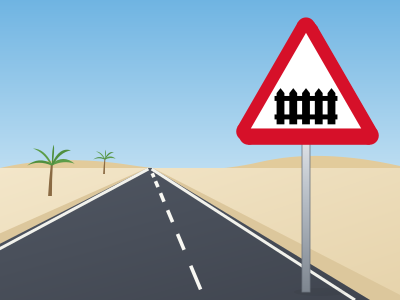
- ADrive around the barrier because the system may be faulty
- BInch forward until you can see the track clearly, then cross
- CWait behind the barrier, a train may be approaching from beyond your line of sight
- DSound your horn to alert the signal operator
Answer and explanation in the bank
- Q28Right of way
A cyclist is approaching a junction from the left at the same time as you. Who has priority at an unmarked crossroads?
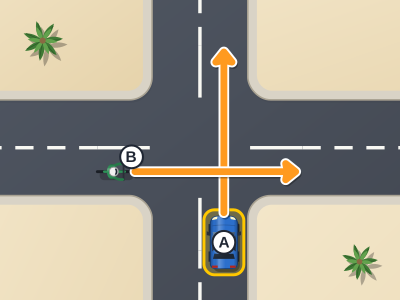
- AYou have priority because you are in a motor vehicle
- BThe cyclist has priority because cyclists are vulnerable road users
- CThe vehicle to the right of the other has priority under right-hand priority rules
- DThe vehicle that arrived first has priority
Answer and explanation in the bank
- Q29Safe driving
How much water is recommended to carry per person for a long desert drive in Saudi Arabia?
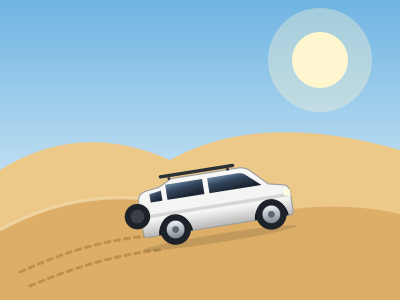
- AHalf a litre is sufficient for most trips
- BWater is not needed if the air conditioning works
- C1 litre only during summer months
- DAt least 2 litres per person, with extra for emergencies
Answer and explanation in the bank
- Q30Penalties and fines
A driver ignores several Saher camera fines and allows them to accumulate unpaid. Which practical problem will this cause?

- ANothing; unpaid camera fines expire after one year with no consequences
- BOnly fines over a certain amount must be paid before Istimara renewal
- CThe driver will be unable to renew the vehicle's Istimara (registration) until all fines are paid
- DThe fines are transferred to the driver's employer for deduction from salary
Answer and explanation in the bank
- Q31Road signs and signals
What is the highest speed limit posted on Saudi highways?
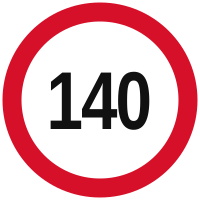
- A120 km/h
- B140 km/h
- C160 km/h
- D100 km/h
Answer and explanation in the bank
- Q32Traffic rules
What general speed restriction should you adopt when driving through a tunnel?
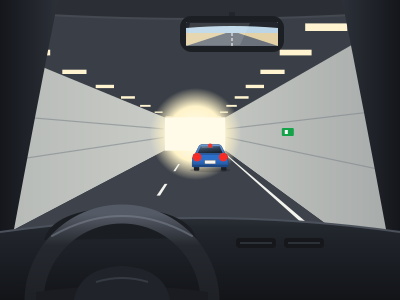
- AMatch the fastest vehicle in the tunnel
- BObey the posted tunnel speed limit and increase following distance due to reduced visibility
- CReduce speed to 20 km/h regardless of signs
- DTunnels have no special rules; normal road speeds apply
Answer and explanation in the bank
- Q33Right of way
You are reversing out of a private driveway onto a public road. Who has priority?
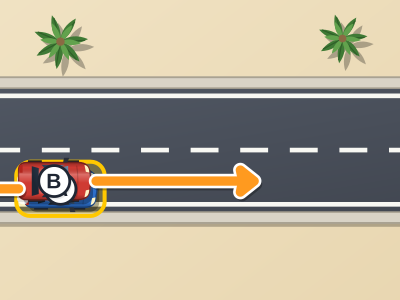
- AYou have priority because you were there first
- BTraffic on the public road has priority
- CBoth you and road traffic share equal priority
- DYou have priority only if you signal before reversing
Answer and explanation in the bank
- Q34Safe driving
Before setting off on a long journey, how should you adjust your seat position?
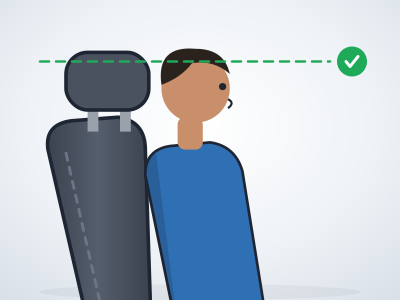
- ARecline the seat fully back for comfort
- BPush the seat as far forward as possible to reach the pedals easily
- CSet the seat so your arms are slightly bent when holding the wheel and your knees are slightly bent when the pedals are fully depressed
- DSeat height does not affect driving safety
Answer and explanation in the bank
- Q35Penalties and fines
A traffic officer signals a driver to stop at a checkpoint but the driver does not stop and drives on. What offence has occurred?
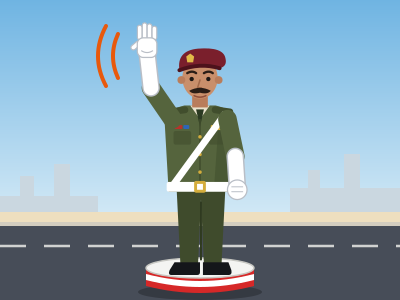
- AFailing to stop at a traffic checkpoint, which is a serious offence that can lead to pursuit, arrest and heavy penalties
- BNo offence, provided the driver was not speeding at the time
- CA minor administrative infraction equivalent to missing a toll payment
- DAn offence only if the checkpoint was a police roadblock, not a routine traffic stop
Answer and explanation in the bank
Every answer above, with the rule it comes from, plus the full 35-question timed test.
Get the Saudi Driving Theory Online Practice Bank - SAR 39What this test covers
Topics include road signs, traffic signals, right of way, roundabouts, speed limits, seat belts, fines and penalties, and the safe-driving rules specific to your vehicle category. Full question-by-question feedback with explanations is shown immediately after you finish the test above.
Frequently asked questions
How many questions is the Madinah General Dept. of Traffic light vehicle theory test?
The official General Dept. of Traffic light vehicle theory test in Madinah has 35 questions and you need 22 correct (63%) to pass. This practice test has 35 questions.
Is this the real exam?
These are practice questions to help you revise, written to the published rules and to what candidates report from the real test. They are not the official Saudi exam and the real question bank, format, fees and pass mark are set by the General Department of Traffic (Moroor) and the driving schools, and can change. Always confirm the current requirements with your driving school or the traffic department.
Is this practice test free?
The first 10 questions are free, with no signup, and each shows the answer and the reason. The full 35-question test, timed, is in the Saudi Driving Theory Online Practice Bank (SAR 39, one payment), with every question in the bank.
What does the Madinah light vehicle theory test cover?
Road signs, traffic signals, right of way, roundabouts, speed limits, seat belts, penalties and safe-driving rules, plus the handling and safety topics specific to your vehicle.