

Madinah General Dept. of Traffic Motorcycle
Timed mock exam· Full mock examsMadinah General Dept. of Traffic - Saudi Motorcycle Theory Mock Test 2
Second full motorcycle mock exam with a fresh 35-question selection across road rules, signs and rider-specific topics. Keep practising without repetition.
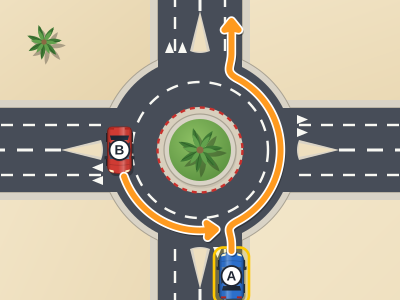
You are about to enter a roundabout. Traffic is already circulating inside. Who has priority?
The other 25 questions in this test
Read them all. The answer and the reason for each, and the timed 35-question run, are in the Saudi Driving Theory Online Practice Bank.
- Q11Road signs and signals
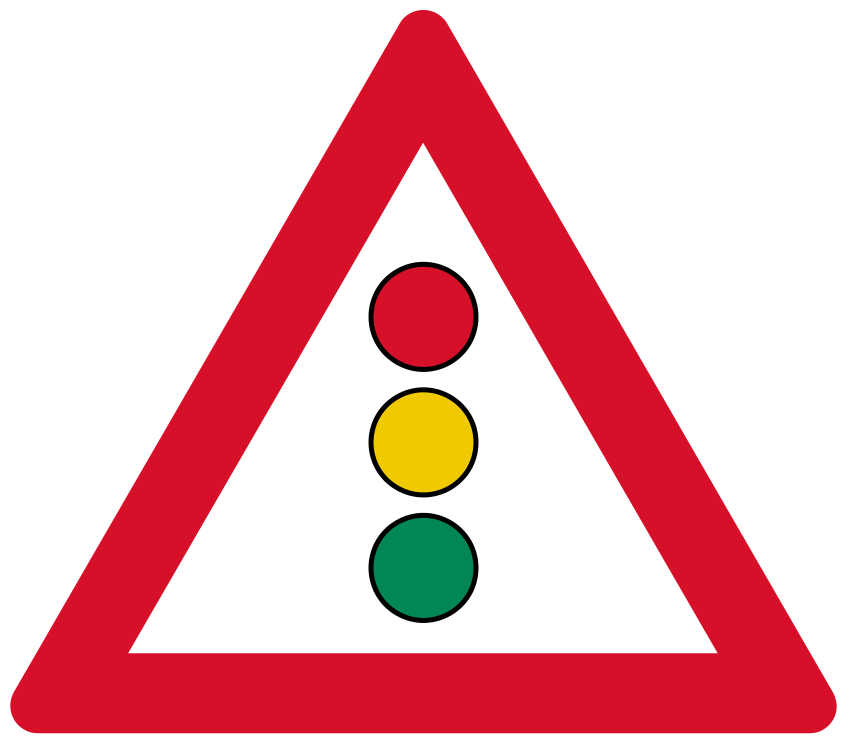
What action should you take when you see this sign ahead?
- ASpeed up to clear the junction before the light changes
- BThe lights are currently green so proceed without slowing
- CSound your horn to alert other drivers of the lights
- DSlow down and be ready to stop at the traffic lights ahead
Answer and explanation in the bank
- Q12Traffic rules
A yellow kerb line is painted along the side of a road. What does this normally indicate?

- AParking is prohibited alongside that kerb
- BLoading is permitted for up to 30 minutes
- CThe road is a bus lane
- DParking is reserved for taxis only
Answer and explanation in the bank
- Q13Right of way
You are on the main road at a T-junction and a vehicle from the side road is waiting to emerge. You have no signs or signals. Who has priority?
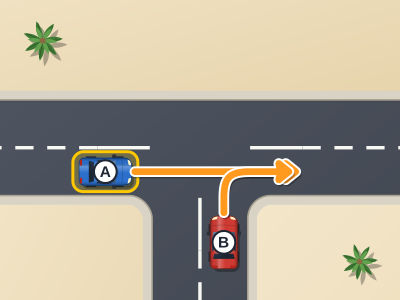
- AThe vehicle emerging from the side road
- BYou, because you are on the continuing main road
- CNeither vehicle; both must stop and negotiate
- DThe vehicle to the right of the waiting driver
Answer and explanation in the bank
- Q14Safe driving
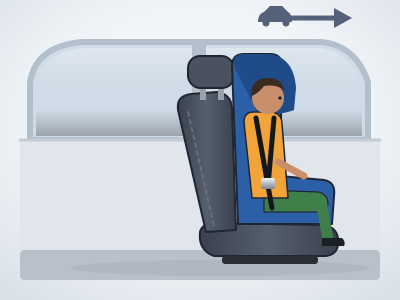
A child aged 4 years and weighing 18 kg must travel in your car. Which restraint is most appropriate?
- AA rear-facing infant seat
- BA forward-facing child seat with a harness suitable for their weight
- CThe adult seat belt without any child seat
- DHeld by an adult passenger
Answer and explanation in the bank
- Q15Penalties and fines
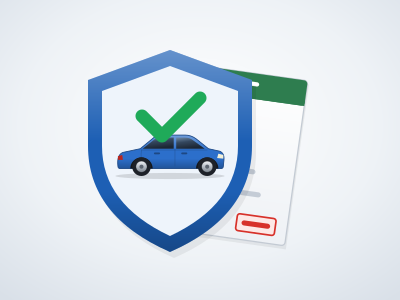
Is it mandatory to have valid motor insurance to drive a vehicle in Saudi Arabia?
- ANo, insurance is optional; the driver is only liable if an accident occurs
- BInsurance is only required for vehicles older than five years
- CInsurance is only mandatory on expressways and highways, not in cities
- DYes, at minimum third-party (TPL) insurance is compulsory for all vehicles driven on public roads
Answer and explanation in the bank
- Q16Motorcycle control
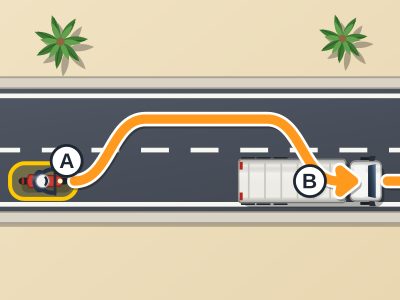
You are riding in fifth gear at 90 km/h and need rapid acceleration to overtake. What should you do first?
- AOpen the throttle fully in fifth gear and wait for speed to build gradually
- BDownshift one or two gears to bring the engine into its peak torque range before opening the throttle
- CPull in the clutch, open the throttle fully, then release the clutch quickly
- DDownshift all the way to second gear for maximum acceleration
Answer and explanation in the bank
- Q17Motorcycle safety
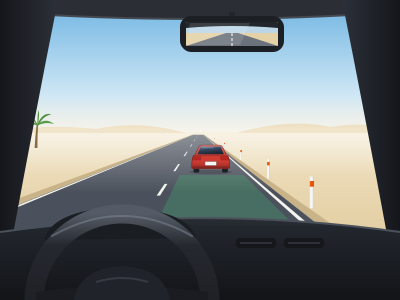
When riding in a group on a Saudi highway, what formation is generally safest?
- ASingle-file formation with all riders in the same wheel track as close together as possible
- BSide-by-side formation with two riders occupying one lane width
- CStaggered formation, with each rider offset to the left or right of the one ahead, maintaining individual following distances
- DRiders should spread across two lanes to make the group more visible
Answer and explanation in the bank
- Q18Road signs and signals
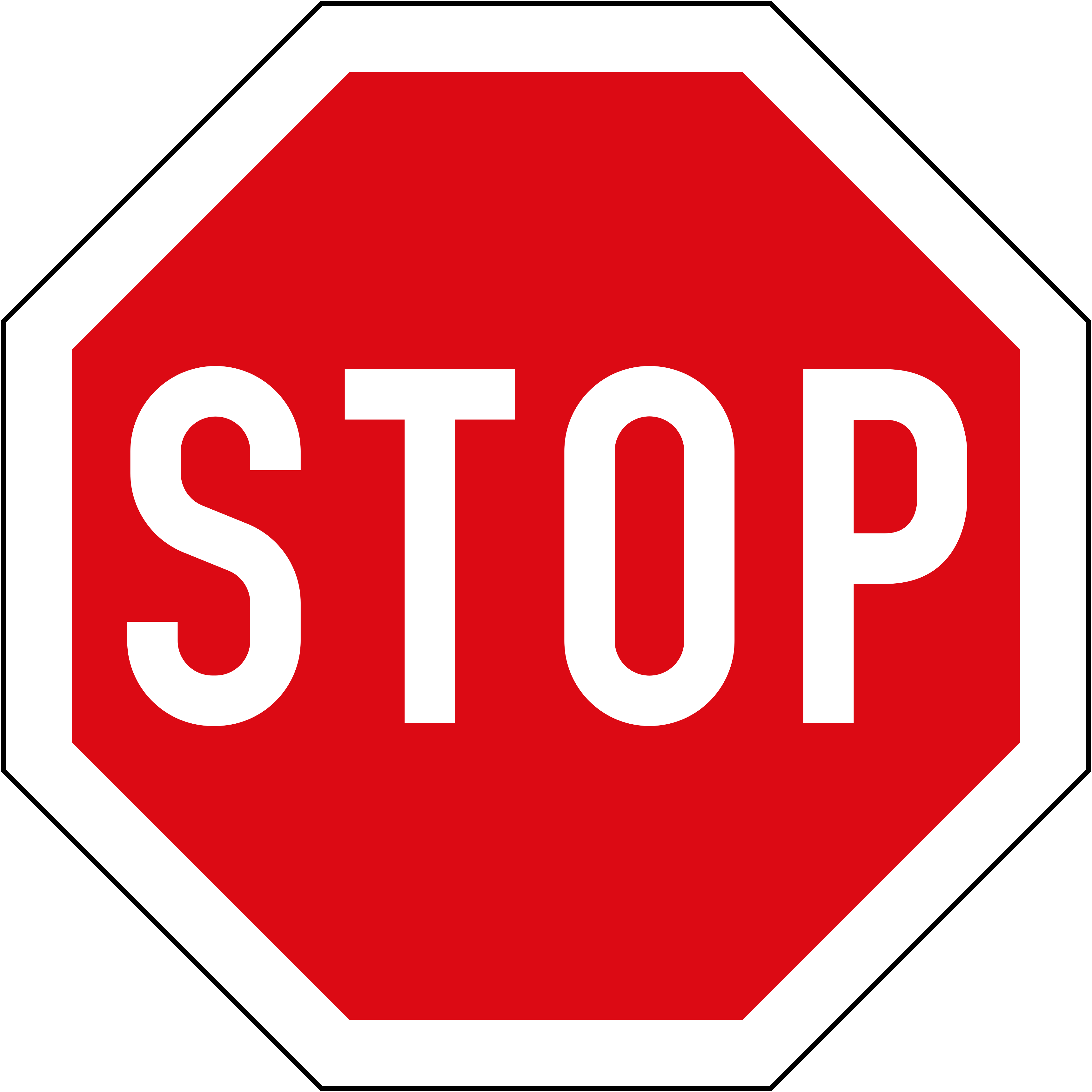
There is no other vehicle visible at this STOP sign junction. What must you do?
- ASlow to 10 km/h and proceed if the road is clear
- BYou may proceed without stopping because there is no traffic
- CFlash your headlights and continue
- DStop completely regardless, then check it is safe before moving off
Answer and explanation in the bank
- Q19Traffic rules
You park on a hill facing downhill and there is no kerb. Which way should you turn your front wheels?
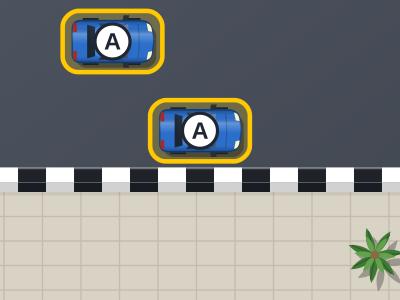
- ATurn wheels to the right so the vehicle would roll away from traffic if it moved
- BTurn wheels to the left to face traffic
- CKeep wheels straight and rely on the handbrake alone
- DDirection of wheels does not matter on a hill
Answer and explanation in the bank
- Q20Right of way
At a Y-junction without signs, two roads merge at an acute angle. How is priority determined?
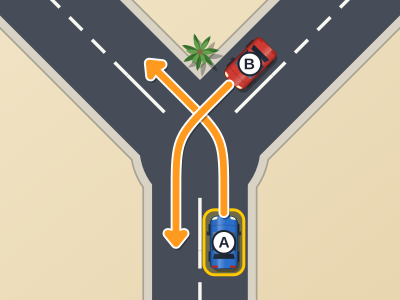
- AApply right-hand priority: give way to any vehicle approaching from your right
- BThe vehicle on the busier road always has priority
- CThe vehicle travelling straight ahead always has priority
- DThere is no rule; drivers must make eye contact and agree
Answer and explanation in the bank
- Q21Safe driving
Why must a rear-facing child seat never be installed in a front seat that has an active passenger airbag?
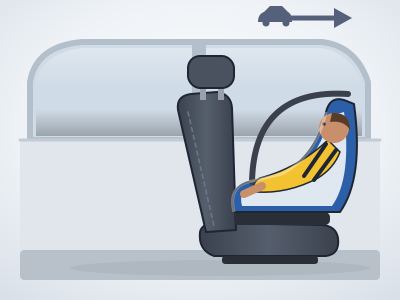
- ABecause the seat belt will not reach around the child seat
- BBecause the front seat is always narrower than the rear seat
- CBecause the deploying airbag can strike the back of the child seat with lethal force
- DBecause it blocks the driver's view of the speedometer
Answer and explanation in the bank
- Q22Penalties and fines
A driver is involved in a collision and is found to have no valid motor insurance. What additional complication arises compared to an insured driver?
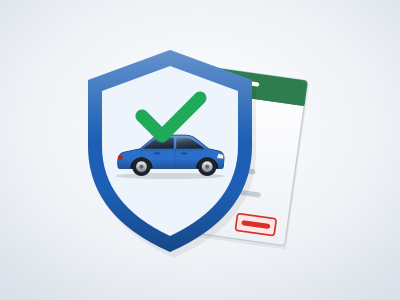
- AThe government insurance fund automatically covers the damages with no penalty to the driver
- BThe uninsured driver is personally liable for all damages and medical costs, and also faces a separate fine for driving without insurance
- CThe uninsured driver's fine is waived if the accident was the other party's fault
- DThe uninsured driver simply pays a flat administration fee to Najm to resolve the claim
Answer and explanation in the bank
- Q23Motorcycle control
Which factor most reduces tyre grip on a sand-covered road surface in Saudi Arabia?
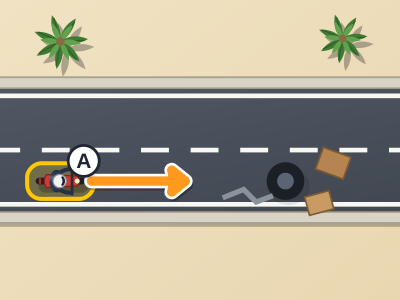
- ASand acts as ball bearings between the tyre and the road, drastically reducing the friction coefficient
- BSand increases grip by filling in surface voids and creating a smoother contact area
- COnly wet sand reduces grip; dry sand on a paved road has negligible effect
- DSand only affects steering feel and does not change actual stopping distance
Answer and explanation in the bank
- Q24Motorcycle safety
What is the correct technique for crossing a loose-gravel or sand-covered section of road on a motorcycle?
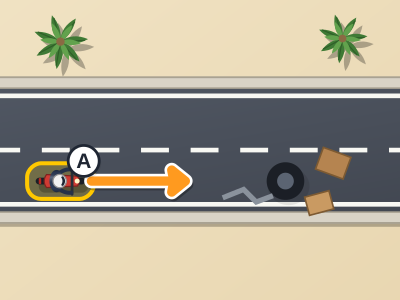
- AReduce speed before the hazard, keep the bike upright, use a light throttle to maintain momentum, and avoid abrupt steering or braking while on the loose surface
- BAccelerate through the section quickly to spend as little time on the loose surface as possible
- CLean the bike heavily and carve a track through the loose material
- DApply both brakes firmly as soon as you enter the loose section to minimise distance on it
Answer and explanation in the bank
- Q25Road signs and signals
This Give Way sign is ahead. How is it different from a STOP sign?
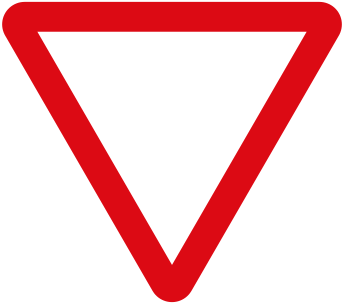
- AA Give Way sign means you have priority over all other traffic
- BA Give Way sign requires a complete stop the same as a STOP sign
- CA Give Way sign only applies at night
- DA Give Way sign lets you proceed without stopping if the road is clearly safe
Answer and explanation in the bank
- Q26Traffic rules
What does a one-way street sign require of you?
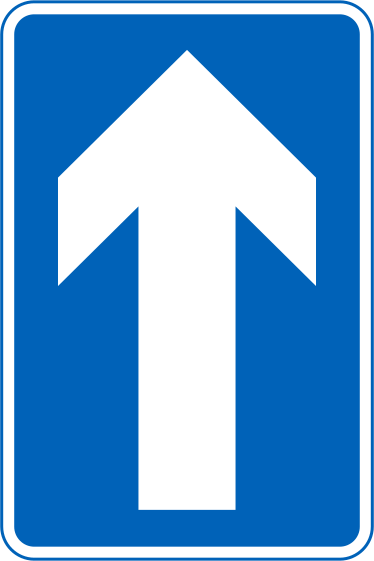
- AGive way to oncoming traffic at all times
- BUse only the rightmost lane
- CSound your horn before entering the street
- DDrive only in the direction shown by the arrow on the sign
Answer and explanation in the bank
- Q27Right of way
You are driving on a one-way street and need to turn left. Is there any difference in right-of-way compared to a two-way road?
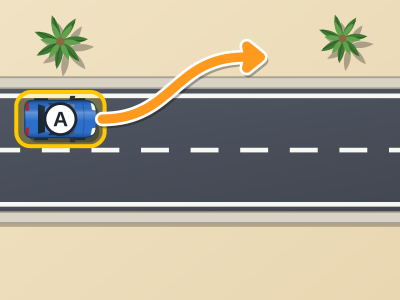
- ANo difference; give way to traffic from the right as usual
- BOn a one-way street you always have priority when turning
- CRight-hand priority does not apply on one-way streets at all
- DOn a one-way street all traffic travels the same direction so you give way to any vehicle already in the flow
Answer and explanation in the bank
- Q28Safe driving
A front airbag is designed to work best when the driver sits at what minimum distance from the steering wheel?
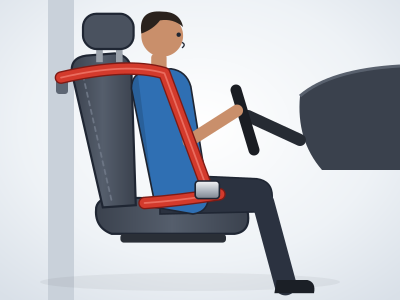
- AAt least 10 cm
- BAt least 50 cm
- CDistance does not matter if a seat belt is worn
- DAt least 25 cm (about 10 inches)
Answer and explanation in the bank
- Q29Penalties and fines
What is Najm and how does it relate to traffic incidents in Saudi Arabia?
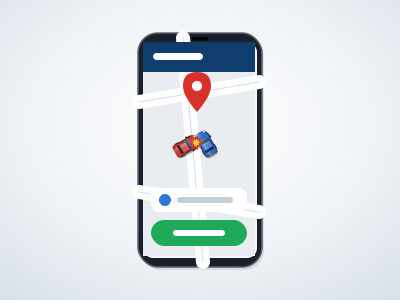
- ANajm is the Ministry of Transport's road-construction authority
- BNajm is the name of the Saher camera network
- CNajm is the Saudi equivalent of a driver's theory test
- DNajm is the official Saudi accident-reporting and insurance-claims platform used to document road traffic collisions
Answer and explanation in the bank
- Q30Motorcycle control
What happens to a motorcycle when the rear brake only is applied hard enough to lock the rear wheel on a straight road?
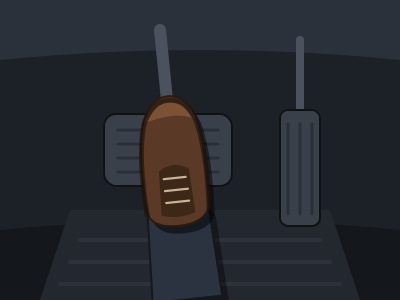
- AThe bike stops in a straight line safely because only the rear wheel is locked
- BThe front wheel immediately locks as well, stopping the bike quickly
- CNothing unusual happens; a locked rear wheel is safe and controllable at any speed
- DThe rear wheel slides sideways (fishtail or highside risk) and control can be regained by easing the brake gently; do not suddenly fully release it
Answer and explanation in the bank
- Q31Motorcycle safety
You are riding behind a large truck on a Saudi dual carriageway and want to overtake. What is the safest approach?
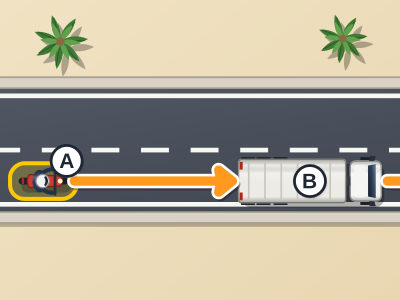
- ADraft closely behind the truck to get maximum speed before pulling out
- BDrop back to increase following distance to improve your view ahead, then accelerate briskly past the truck and move away promptly once clear
- COvertake slowly, staying alongside the truck for as long as possible so drivers behind can see you
- DSound your horn continuously while overtaking to alert the truck driver
Answer and explanation in the bank
- Q32Road signs and signals
This No Overtaking sign is displayed. Which vehicle type is still allowed to overtake under it?
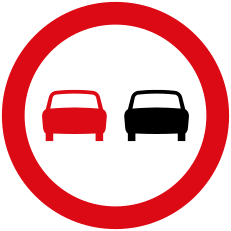
- AMotorcycles, because the sign only shows cars
- BVehicles travelling at less than 40 km/h
- CNone - the restriction applies to all motor vehicles
- DVehicles with a valid highway permit
Answer and explanation in the bank
- Q33Traffic rules
You accidentally enter a one-way street travelling in the wrong direction. What should you do?
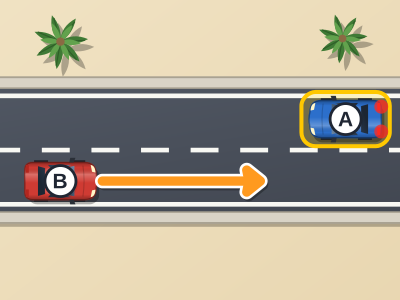
- AContinue in the wrong direction if the road is clear
- BStop immediately in the middle of the road and wait
- CReverse out carefully to the nearest safe point where you can exit legally
- DPerform a U-turn in the middle of the street
Answer and explanation in the bank
- Q34Right of way
You are on a motorway and wish to change from lane 2 to lane 1 (the right lane). What is the right-of-way rule?
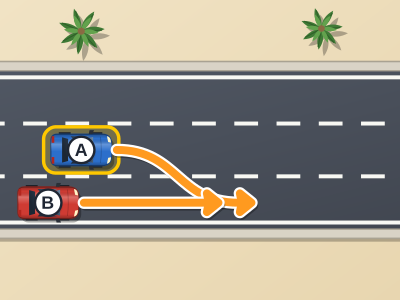
- AYou have priority because you are moving to the slower lane
- BTraffic in lane 1 must give way to you as you are moving right
- CYou must give way to traffic already in lane 1
- DLane changes on motorways are governed by speed, not right of way
Answer and explanation in the bank
- Q35Safe driving
Airbags are designed to work alongside seat belts, not replace them. What happens if you do not wear a seat belt in a car fitted with airbags?
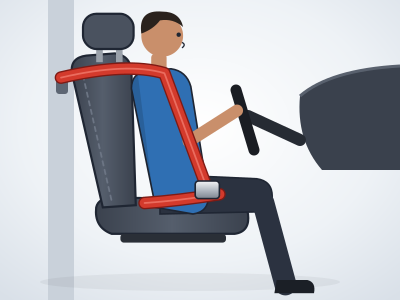
- AThe airbag will protect you just as well as with a seat belt
- BThe airbag will not deploy at all if no seat belt is worn
- CThe airbag only inflates for belted occupants
- DThe airbag may seriously injure an unbelted occupant who is thrown forward into it
Answer and explanation in the bank
Every answer above, with the rule it comes from, plus the full 35-question timed test.
Get the Saudi Driving Theory Online Practice Bank - SAR 39What this test covers
Topics include road signs, traffic signals, right of way, roundabouts, speed limits, seat belts, fines and penalties, and the safe-driving rules specific to your vehicle category. Full question-by-question feedback with explanations is shown immediately after you finish the test above.
Frequently asked questions
How many questions is the Madinah General Dept. of Traffic motorcycle theory test?
The official General Dept. of Traffic motorcycle theory test in Madinah has 35 questions and you need 22 correct (63%) to pass. This practice test has 35 questions.
Is this the real exam?
These are practice questions to help you revise, written to the published rules and to what candidates report from the real test. They are not the official Saudi exam and the real question bank, format, fees and pass mark are set by the General Department of Traffic (Moroor) and the driving schools, and can change. Always confirm the current requirements with your driving school or the traffic department.
Is this practice test free?
The first 10 questions are free, with no signup, and each shows the answer and the reason. The full 35-question test, timed, is in the Saudi Driving Theory Online Practice Bank (SAR 39, one payment), with every question in the bank.
What does the Madinah motorcycle theory test cover?
Road signs, traffic signals, right of way, roundabouts, speed limits, seat belts, penalties and safe-driving rules, plus the handling and safety topics specific to your vehicle.