

Makkah General Dept. of Traffic Light vehicle
Timed mock exam· Full mock examsMakkah General Dept. of Traffic - Saudi Theory Mock Test 3
Third full mock exam - another fresh set of 35 questions drawn from all topics. A great way to check your readiness before the real test.
Where are U-turns generally prohibited in Saudi Arabia?
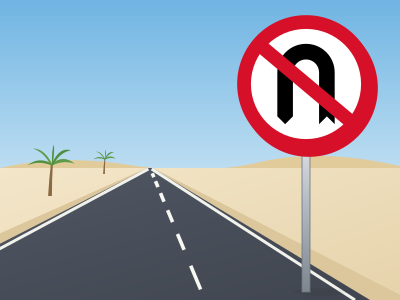
The other 25 questions in this test
Read them all. The answer and the reason for each, and the timed 35-question run, are in the Saudi Driving Theory Online Practice Bank.
- Q11Road signs and signals
You pass this 80 km/h sign and the road continues with no further signs. Which speed limit applies?
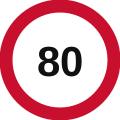
- AThe limit reverts to 120 km/h as a national default once the sign is passed
- BYou may choose a safe speed because there is no further sign
- C80 km/h applies only directly in front of the sign
- D80 km/h continues until you see an end-of-restriction sign or a new limit
Answer and explanation in the bank
- Q12Traffic rules
You are merging onto a motorway but the acceleration lane is very short. Traffic on the motorway is heavy. What is the best action?
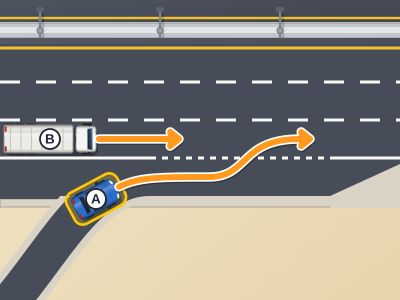
- AUse all available acceleration lane to build speed, and adjust timing to find the smallest safe gap
- BStop at the end and force your way in
- CDrive on the hard shoulder to reach a longer gap
- DReturn to the main road and try a different entry
Answer and explanation in the bank
- Q13Right of way
What does a GIVE WAY (yield) sign require you to do?
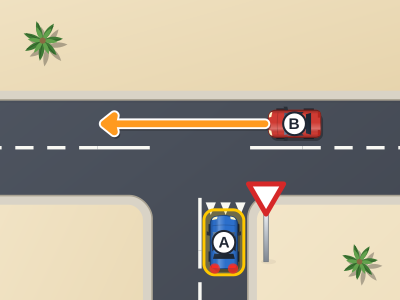
- AStop completely before checking for traffic
- BSlow down, be prepared to stop, and give priority to traffic on the major road
- CProceed at your current speed and let other drivers adjust
- DGive way only to vehicles larger than yours
Answer and explanation in the bank
- Q14Safe driving
You are driving in dense fog on a Saudi highway. Which lights should you use?
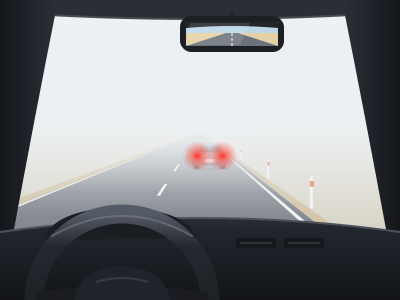
- AHigh beam headlights to see as far ahead as possible
- BHazard warning lights only
- CLow beam headlights and front fog lights if fitted
- DNo lights, as they reflect off the fog
Answer and explanation in the bank
- Q15Penalties and fines
A driver enters a dual carriageway travelling against the flow of traffic (wrong-way driving). Besides the immediate danger, what legal consequence is most likely?
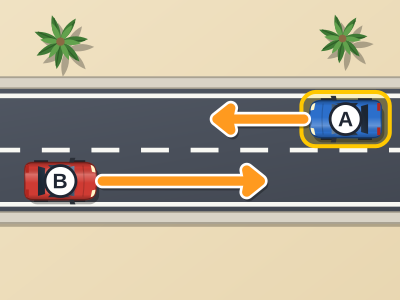
- AOnly a directional-sign violation fine equivalent to ignoring a one-way sign
- BA verbal caution if no collision occurred
- CA serious violation: a SR 3,000-6,000 fine and 12 points, with prosecution possible if it endangers others
- DThe driver's insurance is automatically cancelled but no criminal charge applies
Answer and explanation in the bank
- Q16Road signs and signals
What should you expect after seeing this advance warning sign?
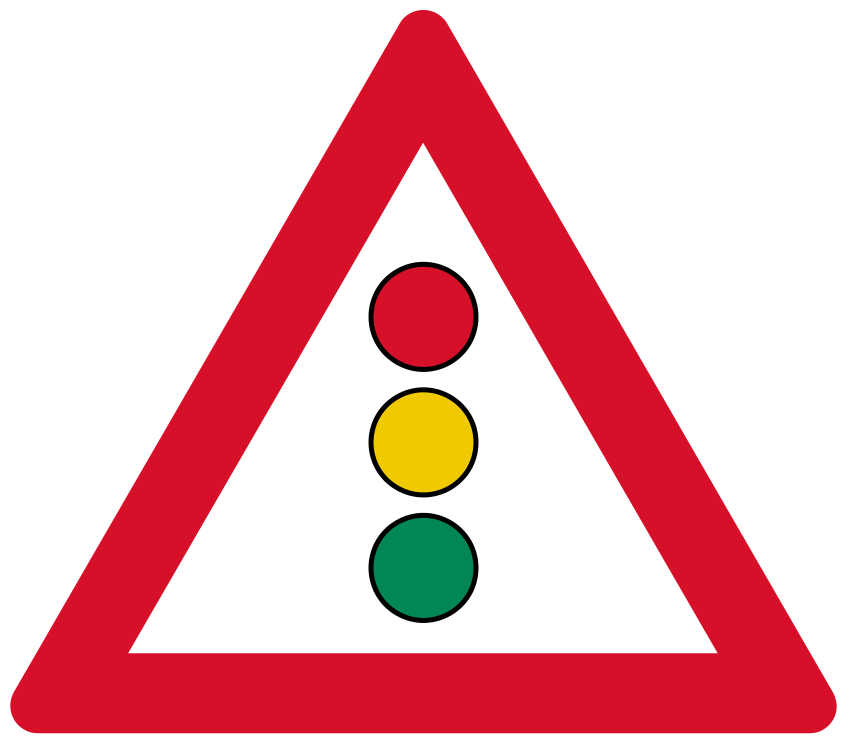
- ATraffic lights controlling the junction ahead
- BA police checkpoint within 500 m
- CA flashing amber beacon used at pedestrian crossings only
- DA level crossing with barrier lights
Answer and explanation in the bank
- Q17Traffic rules
Heavy rain has just reduced visibility on a Saudi highway. What adjustment to following distance is required?
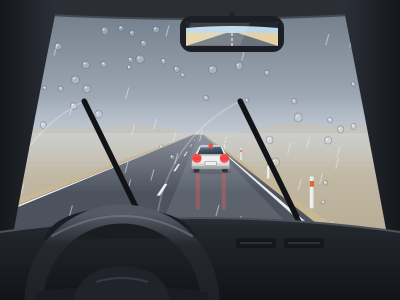
- AIncrease the following distance significantly beyond the normal dry-road gap
- BKeep the same following distance as in dry conditions
- CDecrease the gap so you can see the vehicle ahead better
- DFollowing distance only matters in fog, not rain
Answer and explanation in the bank
- Q18Right of way
What is the key practical difference between a STOP sign and a GIVE WAY sign?
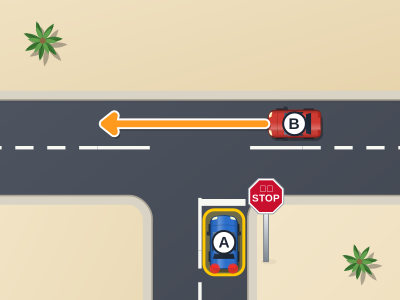
- AA STOP sign applies only to heavy vehicles
- BA STOP sign always requires a full stop even if the road appears clear; a GIVE WAY sign allows you to proceed without stopping if it is safe
- CA GIVE WAY sign is used on faster roads so you must stop at it too
- DBoth signs require a full stop; the shape is just a design choice
Answer and explanation in the bank
- Q19Safe driving
A severe sandstorm reduces visibility to near zero while you are on the highway. What is the safest action?
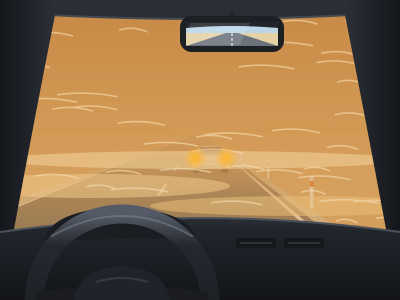
- APull completely off the road onto the hard shoulder, switch off your lights, and activate hazard lights
- BPull as far off the road as safely possible, switch off the engine and headlights, keep hazard lights on, and stay inside with seat belt on
- CKeep driving slowly with hazard lights on so you do not get hit from behind
- DIncrease speed to exit the sandstorm zone quickly
Answer and explanation in the bank
- Q20Penalties and fines
An ambulance with lights flashing and siren sounding approaches from behind. What must a Saudi driver do?
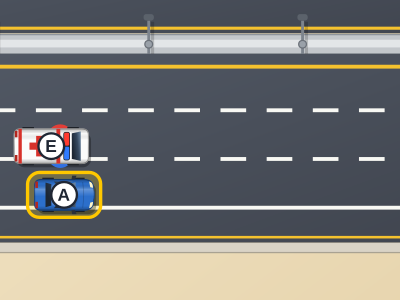
- AMove out of the way immediately by pulling safely to the right and, if necessary, stopping to let the emergency vehicle pass
- BMaintain speed and lane; the emergency vehicle will find a way around
- CFlash headlights to acknowledge the ambulance but continue at the current speed
- DOnly move if on a single-lane road; on multi-lane roads no action is required
Answer and explanation in the bank
- Q21Road signs and signals
What shape are prohibitory (restriction) signs in Saudi Arabia?
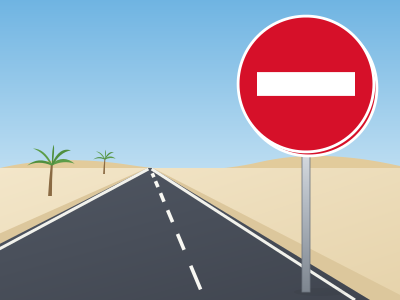
- AA red-bordered upward-pointing triangle
- BA blue circle with a white symbol
- CA green rectangle with white text
- DA red-bordered circle on a white background
Answer and explanation in the bank
- Q22Traffic rules
What is the two-second rule used for when driving?
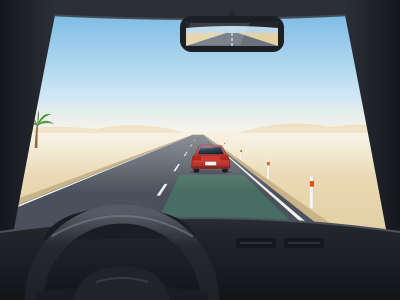
- AThe time allowed for a courtesy wave after being let in
- BThe maximum time to check mirrors before changing lanes
- CMaintaining a minimum safe following distance from the vehicle ahead
- DThe interval between indicator flashes
Answer and explanation in the bank
- Q23Right of way
The traffic signals at a junction have failed and show no light at all. How should you proceed?
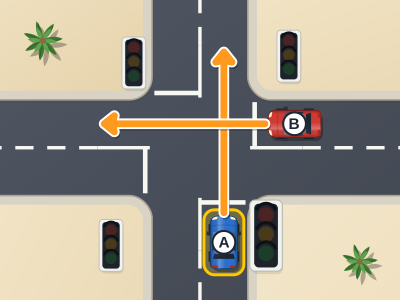
- ATraffic on the larger road proceeds freely while others wait
- BThe first vehicle to arrive at the junction has priority
- CStop until authorities arrive to direct traffic
- DTreat the junction as an unmarked crossroads and give way to traffic from your right
Answer and explanation in the bank
- Q24Safe driving
When driving in heavy rain at night, why should you avoid using full high beam headlights?
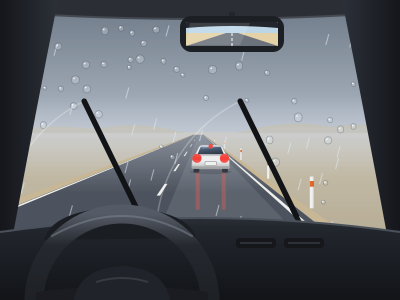
- AHigh beams use more fuel in wet conditions
- BHigh beams are illegal on wet roads in Saudi Arabia
- CRain droplets reflect high beam light back at the driver, creating glare that reduces visibility
- DHigh beams cause the windscreen wipers to operate incorrectly
Answer and explanation in the bank
- Q25Penalties and fines
A driver blocks an emergency vehicle by refusing to move aside on a Saudi road. What is the consequence?
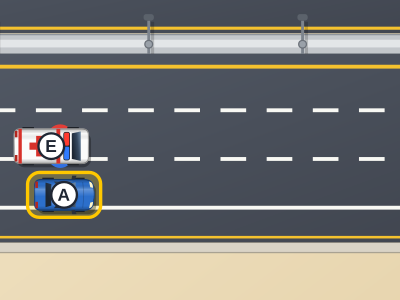
- AA traffic fine for failing to give way to an emergency vehicle
- BNo penalty exists; giving way is a courtesy, not a legal requirement
- CThe driver is only penalised if the delay caused the patient to be harmed
- DThe driver receives a warning letter mailed to their home address
Answer and explanation in the bank
- Q26Road signs and signals
What colour border do hazard warning signs have in Saudi Arabia?
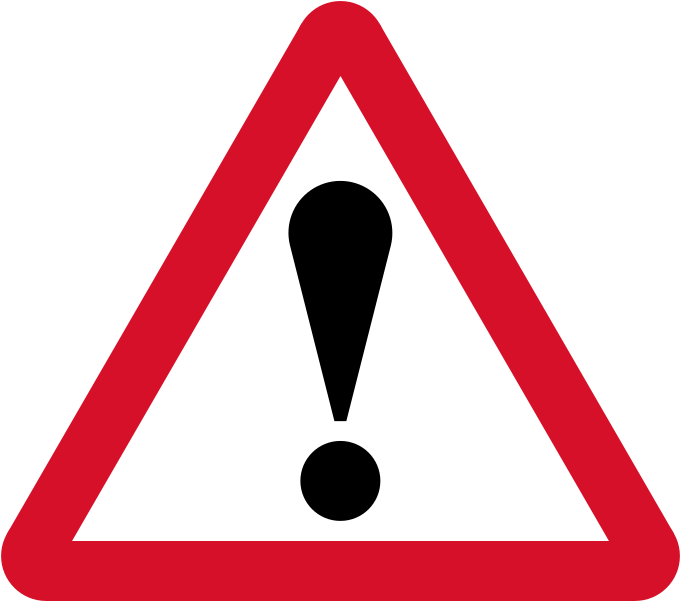
- ABlue
- BYellow
- CRed
- DBlack
Answer and explanation in the bank
- Q27Traffic rules
A large truck is travelling ahead of you. How should your following distance compare to the gap you would keep behind a car?
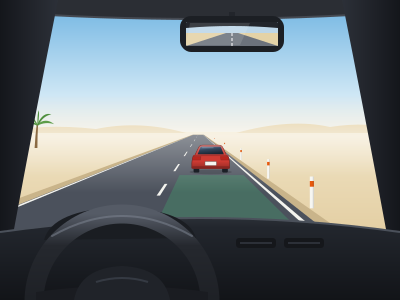
- AIt should be the same as behind a car
- BIt should be smaller, to reduce the chance of other vehicles cutting in
- CFollowing distance behind trucks is not regulated
- DIt should be greater, because trucks are longer and take more time to stop
Answer and explanation in the bank
- Q28Right of way
A traffic light is showing a steady flashing amber at a junction. What should you do?
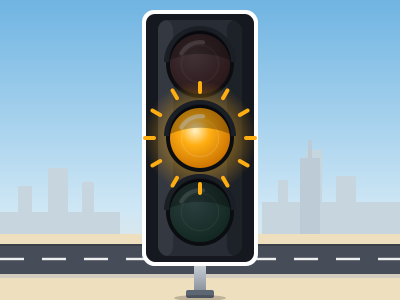
- AStop and wait for the light to change to green
- BProceed at normal speed because amber means caution only
- CTreat the junction as if there are no signals
- DSlow down, apply caution, give way where necessary, and proceed only when safe
Answer and explanation in the bank
- Q29Safe driving
You are approaching oncoming traffic at night whose driver has not dipped their high beams. What should you do?
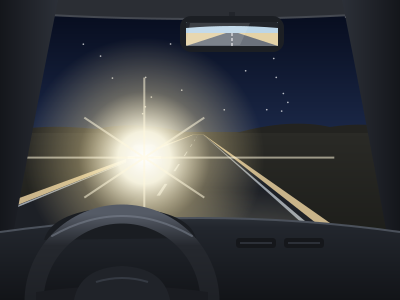
- AFlash your high beams repeatedly until they dim theirs
- BClose one eye and maintain speed
- CSlow down, look towards the left edge of your lane to avoid the glare, and do not retaliate with high beams
- DSteer towards the centre line to get closer and force them to dip
Answer and explanation in the bank
- Q30Penalties and fines
Which of the following is an example of illegal parking in Saudi Arabia that would attract a fine?
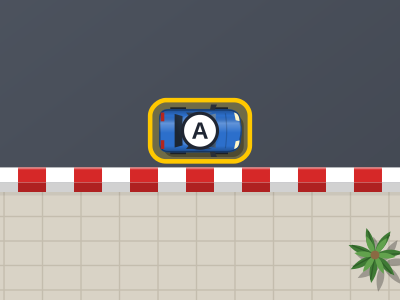
- AParking in front of a fire-hydrant access point or blocking a driveway
- BParking in a designated paid parking bay after paying the meter fee
- CParking in a marked residential bay with the owner's permission
- DParking in a multi-storey car park on an upper level
Answer and explanation in the bank
- Q31Road signs and signals
What is the shape of a hazard warning sign in the Saudi / GCC road-sign system?
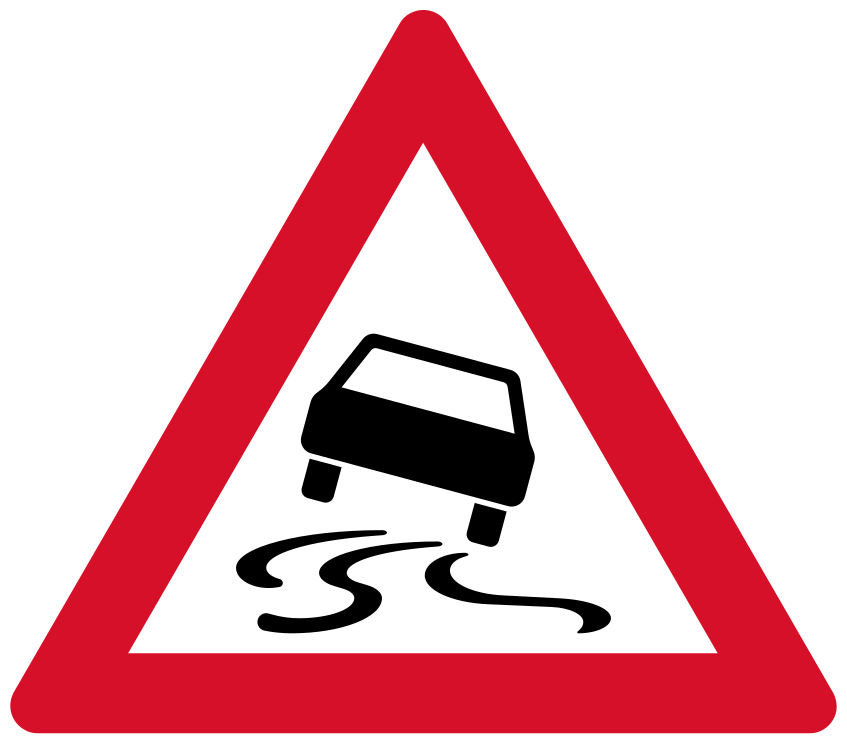
- AUpward-pointing triangle with a red border
- BDiamond shape with a yellow border
- CCircle with a red border
- DSquare with a black border
Answer and explanation in the bank
- Q32Traffic rules
Who must wear a seat belt in a Saudi vehicle?
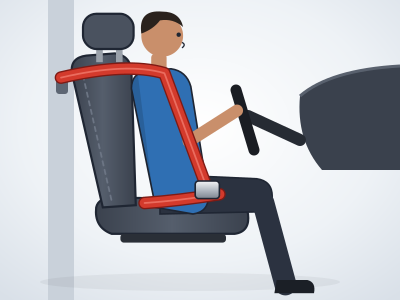
- AOnly the driver and front passenger
- BOnly the driver
- CSeat belts are optional for adults in the rear
- DThe driver and all passengers, including those in the rear seats
Answer and explanation in the bank
- Q33Right of way
A traffic light is showing a steady flashing red at a junction. What does this mean?
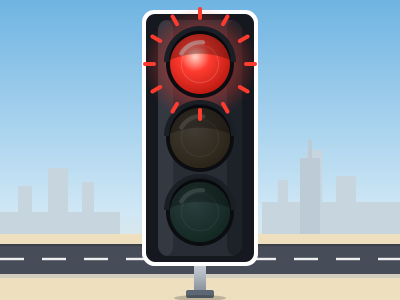
- AStop completely, give way to all traffic, then proceed when safe
- BProceed carefully at reduced speed
- CThe light is broken so treat the junction as unmarked
- DOnly emergency vehicles may proceed
Answer and explanation in the bank
- Q34Safe driving
What is the core principle of defensive driving?
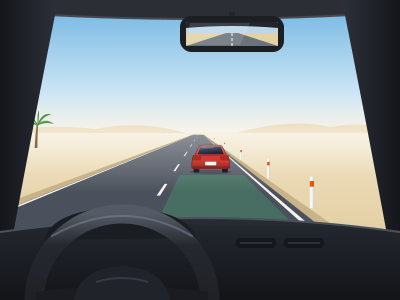
- AAnticipate hazards created by other road users and conditions, and always have an escape plan
- BAlways drive at the speed limit regardless of conditions
- CDrive as close behind the vehicle ahead as possible to prevent others from cutting in
- DUse the horn frequently to warn others of your presence
Answer and explanation in the bank
- Q35Penalties and fines
A driver double-parks on a busy street in Riyadh, blocking another vehicle. What is likely to happen?
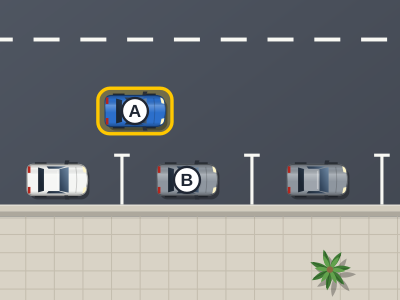
- ANo action is taken as long as the driver returns within 15 minutes
- BThe driver receives a parking fine and the vehicle may be clamped or towed at the owner's expense
- CThe blocked driver can legally move the offending vehicle themselves
- DOnly a verbal warning from municipal inspectors is issued
Answer and explanation in the bank
Every answer above, with the rule it comes from, plus the full 35-question timed test.
Get the Saudi Driving Theory Online Practice Bank - SAR 39What this test covers
Topics include road signs, traffic signals, right of way, roundabouts, speed limits, seat belts, fines and penalties, and the safe-driving rules specific to your vehicle category. Full question-by-question feedback with explanations is shown immediately after you finish the test above.
Frequently asked questions
How many questions is the Makkah General Dept. of Traffic light vehicle theory test?
The official General Dept. of Traffic light vehicle theory test in Makkah has 35 questions and you need 22 correct (63%) to pass. This practice test has 35 questions.
Is this the real exam?
These are practice questions to help you revise, written to the published rules and to what candidates report from the real test. They are not the official Saudi exam and the real question bank, format, fees and pass mark are set by the General Department of Traffic (Moroor) and the driving schools, and can change. Always confirm the current requirements with your driving school or the traffic department.
Is this practice test free?
The first 10 questions are free, with no signup, and each shows the answer and the reason. The full 35-question test, timed, is in the Saudi Driving Theory Online Practice Bank (SAR 39, one payment), with every question in the bank.
What does the Makkah light vehicle theory test cover?
Road signs, traffic signals, right of way, roundabouts, speed limits, seat belts, penalties and safe-driving rules, plus the handling and safety topics specific to your vehicle.