

Makkah General Dept. of Traffic Light vehicle
Practice mode· Right of way & safetyMakkah General Dept. of Traffic - Saudi Right of Way Practice Test
Tests your understanding of priority rules: unmarked junctions, roundabouts, emergency vehicles, merging lanes and more. Getting right of way right can prevent serious accidents.
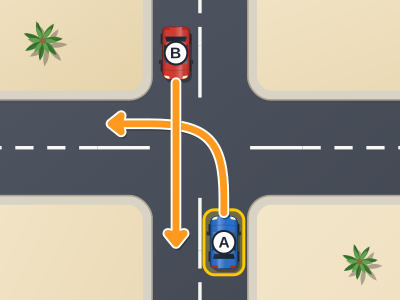
You want to turn left across oncoming traffic at a junction. The oncoming lane is busy. What must you do?
The other 12 questions in this test
Read them all. The answer and the reason for each, and the timed 22-question run, are in the Saudi Driving Theory Online Practice Bank.
- Q11Right of way
What is the key practical difference between a STOP sign and a GIVE WAY sign?
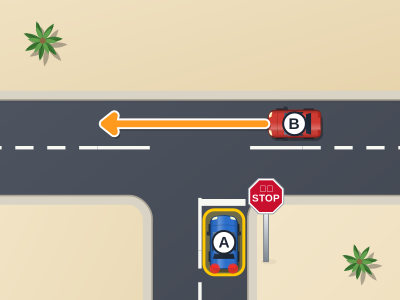
- AA STOP sign applies only to heavy vehicles
- BA STOP sign always requires a full stop even if the road appears clear; a GIVE WAY sign allows you to proceed without stopping if it is safe
- CA GIVE WAY sign is used on faster roads so you must stop at it too
- DBoth signs require a full stop; the shape is just a design choice
Answer and explanation in the bank
- Q12Right of way
The traffic signals at a junction have failed and show no light at all. How should you proceed?
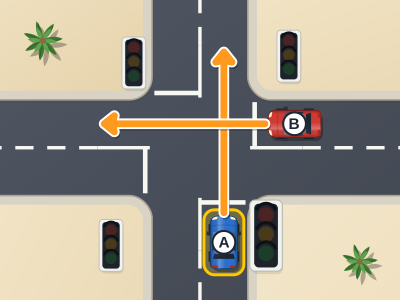
- ATraffic on the larger road proceeds freely while others wait
- BThe first vehicle to arrive at the junction has priority
- CStop until authorities arrive to direct traffic
- DTreat the junction as an unmarked crossroads and give way to traffic from your right
Answer and explanation in the bank
- Q13Right of way
A traffic light is showing a steady flashing amber at a junction. What should you do?
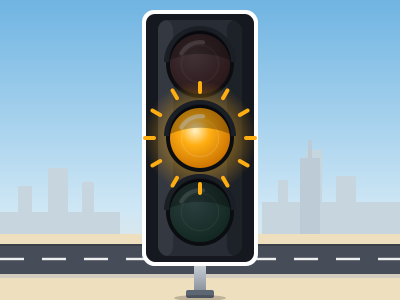
- AStop and wait for the light to change to green
- BProceed at normal speed because amber means caution only
- CTreat the junction as if there are no signals
- DSlow down, apply caution, give way where necessary, and proceed only when safe
Answer and explanation in the bank
- Q14Right of way
A traffic light is showing a steady flashing red at a junction. What does this mean?
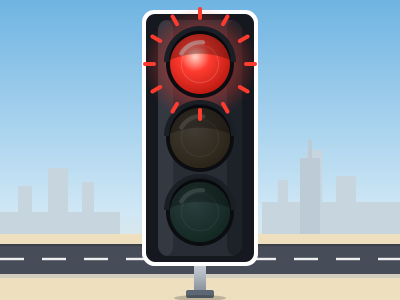
- AStop completely, give way to all traffic, then proceed when safe
- BProceed carefully at reduced speed
- CThe light is broken so treat the junction as unmarked
- DOnly emergency vehicles may proceed
Answer and explanation in the bank
- Q15Right of way
You approach a level crossing with barriers. The barriers are down and red lights are flashing. What must you do?
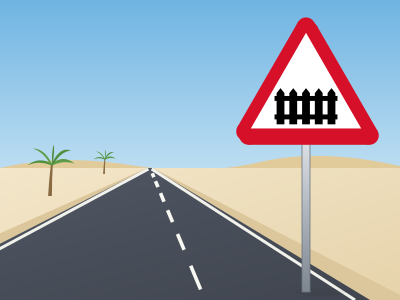
- AStop before the barrier and wait until it rises and the lights stop flashing
- BProceed slowly between the barriers if the gap is wide enough
- CSound your horn and proceed at reduced speed
- DStop only if you can see a train approaching
Answer and explanation in the bank
- Q16Right of way
You approach a level crossing without barriers. The red warning lights are flashing. What must you do?
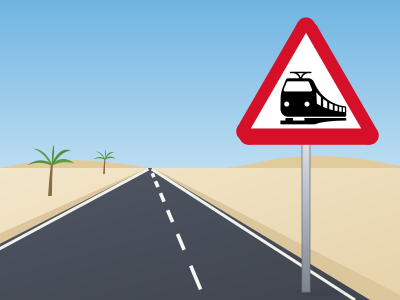
- ASlow down and cross quickly before the train arrives
- BLook both ways and cross if no train is visible
- CStop at the white line, wait for the lights to stop flashing, then check and cross
- DSound your horn to warn the train and proceed
Answer and explanation in the bank
- Q17Right of way
You are on a narrow road and meet an oncoming vehicle. There is a passing place on your right. What should you do?
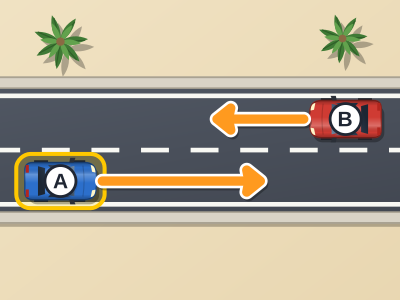
- APull into the passing place on your right so the other vehicle can pass
- BSound your horn and drive forward, forcing the other driver to reverse
- CStop in the middle of the road and wait
- DThe larger vehicle always has priority on narrow roads
Answer and explanation in the bank
- Q18Right of way
On a narrow, steep mountain road you are driving downhill and meet a vehicle coming uphill. Neither of you can pass. What should you do?
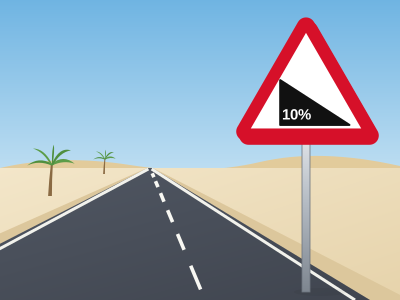
- AContinue, because the downhill vehicle always has priority
- BFlash your lights so the uphill driver reverses
- CKeep as far right as possible and stop if needed so the uphill vehicle can pass
- DThe driver who sounded the horn first has priority
Answer and explanation in the bank
- Q19Right of way
How much space should you leave when overtaking a cyclist on a road?
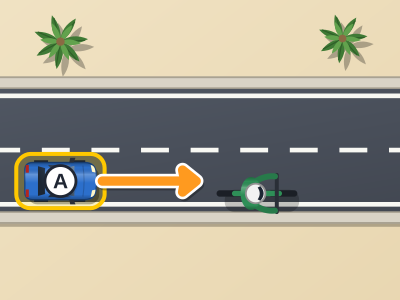
- AAt least 1 metre
- BAt least 0.5 metres
- CAt least 3 metres
- DNo minimum; you just need to avoid contact
Answer and explanation in the bank
- Q20Right of way
A cyclist is approaching a junction from the left at the same time as you. Who has priority at an unmarked crossroads?
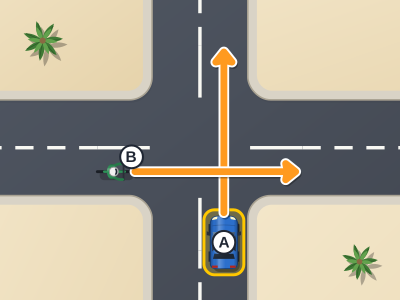
- AYou have priority because you are in a motor vehicle
- BThe cyclist has priority because cyclists are vulnerable road users
- CThe vehicle to the right of the other has priority under right-hand priority rules
- DThe vehicle that arrived first has priority
Answer and explanation in the bank
- Q21Right of way
You are reversing out of a private driveway onto a public road. Who has priority?
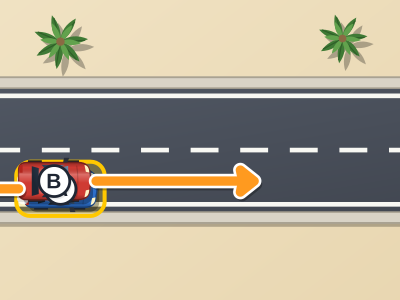
- AYou have priority because you were there first
- BTraffic on the public road has priority
- CBoth you and road traffic share equal priority
- DYou have priority only if you signal before reversing
Answer and explanation in the bank
- Q22Right of way
You are approaching a convoy of vehicles with hazard lights flashing. What should you do?
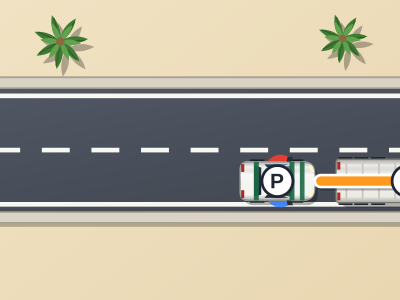
- AOvertake the last vehicle and insert yourself into the convoy
- BFlash your lights to signal you wish to pass and the convoy must let you through
- CMaintain a safe following distance; do not enter the convoy or attempt to overtake it as a whole
- DMove to the hard shoulder and wait for the entire convoy to pass
Answer and explanation in the bank
Every answer above, with the rule it comes from, plus the full 22-question timed test.
Get the Saudi Driving Theory Online Practice Bank - SAR 39What this test covers
Topics include road signs, traffic signals, right of way, roundabouts, speed limits, seat belts, fines and penalties, and the safe-driving rules specific to your vehicle category. Full question-by-question feedback with explanations is shown immediately after you finish the test above.
Frequently asked questions
How many questions is the Makkah General Dept. of Traffic light vehicle theory test?
The official General Dept. of Traffic light vehicle theory test in Makkah has 35 questions and you need 22 correct (63%) to pass. This practice test has 22 questions.
Is this the real exam?
These are practice questions to help you revise, written to the published rules and to what candidates report from the real test. They are not the official Saudi exam and the real question bank, format, fees and pass mark are set by the General Department of Traffic (Moroor) and the driving schools, and can change. Always confirm the current requirements with your driving school or the traffic department.
Is this practice test free?
The first 10 questions are free, with no signup, and each shows the answer and the reason. The full 22-question test, timed, is in the Saudi Driving Theory Online Practice Bank (SAR 39, one payment), with every question in the bank.
What does the Makkah light vehicle theory test cover?
Road signs, traffic signals, right of way, roundabouts, speed limits, seat belts, penalties and safe-driving rules, plus the handling and safety topics specific to your vehicle.