

Makkah General Dept. of Traffic Truck & Bus
Timed mock exam· Full mock examsMakkah General Dept. of Traffic - Saudi Truck & Bus Theory Mock Test 1
A full 35-question timed practice exam for the Saudi heavy-vehicle (truck and bus) theory test. Covers shared road rules and signs plus heavy-vehicle handling and safety. Aim for 22/35 to pass.
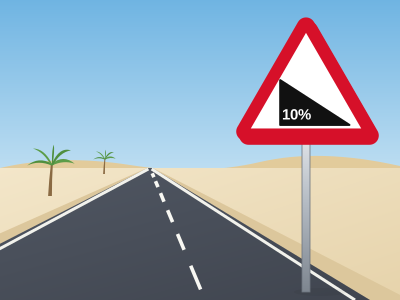
What is brake fade, and which situation most commonly causes it on a heavy truck?
The other 25 questions in this test
Read them all. The answer and the reason for each, and the timed 35-question run, are in the Saudi Driving Theory Online Practice Bank.
- Q11Safe driving
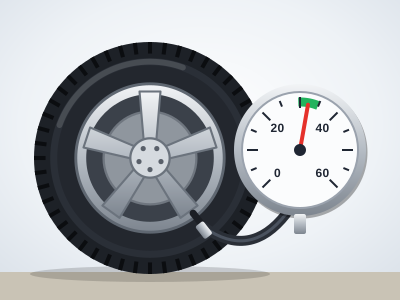
When should you ideally check your tyre pressure for the most accurate reading?
- AImmediately after a long highway drive
- BWhile the engine is running and warm
- CWhen the tyres are cold, before driving or after parking for at least 3 hours
- DOnly when the tyre warning light appears
Answer and explanation in the bank
- Q12Penalties and fines
A driver exceeds the posted speed limit by more than 30 km/h on a Saudi highway. Compared to exceeding the limit by 10 km/h, the penalty is likely to be:
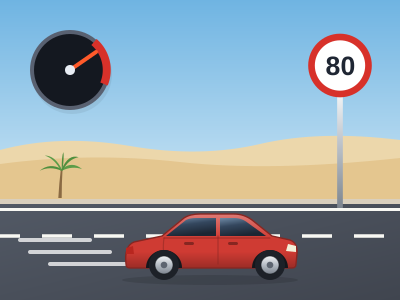
- ASignificantly higher, because Saudi speeding penalties increase in tiers based on how far above the limit you are travelling
- BThe same flat fine regardless of how much over the limit the driver is
- CLower, because highways are designed for higher speeds
- DOnly a warning for the first 50 km/h over the limit
Answer and explanation in the bank
- Q13Heavy vehicle
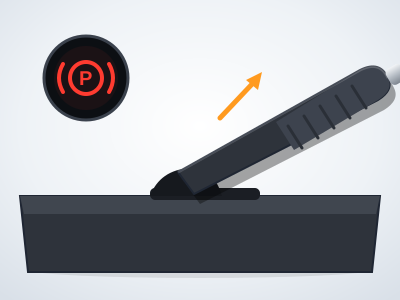
A heavy truck fitted with spring-brake actuators is left parked on a slope without connecting the hand-brake control. What happens to the spring brakes if the air pressure in the system drops to zero?
- AThe spring brakes release fully, allowing the vehicle to roll freely down the slope
- BThe spring brakes apply automatically, holding the vehicle stationary because the springs are released by air pressure and engage when pressure is lost
- CNothing changes because spring brakes are independent of air pressure
- DThe service brakes apply instead, but only on the front axle
Answer and explanation in the bank
- Q14Road signs and signals
How is this No Stopping sign stricter than a No Parking sign?
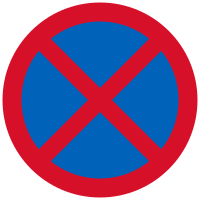
- AIt only applies between 8 am and 8 pm
- BIt applies only to heavy vehicles
- CIt means parking costs a fee
- DIt prohibits stopping entirely, even to drop off passengers
Answer and explanation in the bank
- Q15Traffic rules
You are on a divided highway with a concrete median barrier. Can you perform a U-turn?
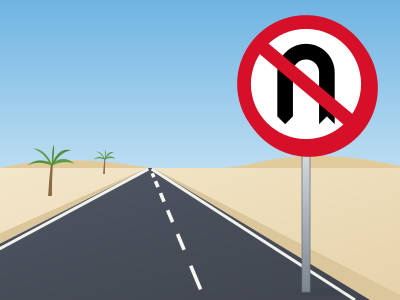
- AYes, at any gap in the median barrier
- BYes, provided you give way to oncoming traffic
- CNo, only at designated median openings where signs or road markings permit it
- DOnly if you have a 4WD vehicle
Answer and explanation in the bank
- Q16Right of way
You want to turn left across oncoming traffic at a junction. The oncoming lane is busy. What must you do?
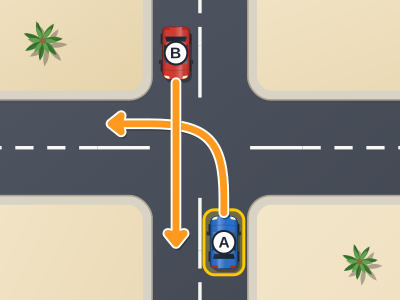
- AEdge forward slowly into the oncoming lane to signal your intention
- BSound your horn to request oncoming drivers to let you through
- CWait for a safe gap in oncoming traffic before turning
- DTurn immediately because left turns always have priority
Answer and explanation in the bank
- Q17Safe driving
You experience a sudden front tyre blowout at highway speed. What is the correct immediate response?
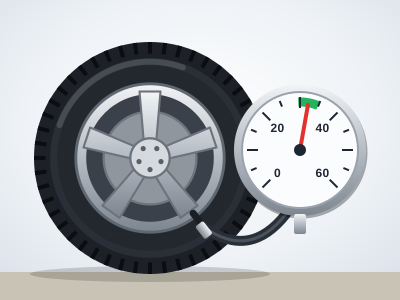
- ABrake hard and steer to the shoulder immediately
- BGrip the wheel firmly, keep straight, ease off the accelerator, and brake gently only after the car slows
- CPull the handbrake to slow quickly
- DTurn off the engine immediately
Answer and explanation in the bank
- Q18Penalties and fines
A Saher camera captures a speeding violation. How does the registered vehicle owner typically find out about the fine and pay it?

- AA traffic officer visits the owner's home address to deliver a paper notice
- BThrough the Absher digital government platform, which shows all outstanding traffic violations linked to the owner's ID
- CThe driver is stopped at the next police checkpoint automatically
- DNo notification is sent; fines only become apparent when renewing the vehicle registration (Istimara)
Answer and explanation in the bank
- Q19Heavy vehicle
Why should a driver use the engine brake or exhaust brake on a long downhill gradient rather than relying on the service (foot) brakes alone?
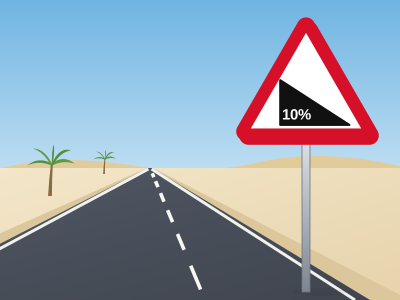
- ATo save fuel because using the engine brake charges the air compressor
- BTo prevent the service brakes from overheating and fading, which could lead to brake failure
- CBecause service brakes are not permitted on downhill gradients under Saudi regulations
- DTo keep the engine revs high enough for the alternator to charge the batteries
Answer and explanation in the bank
- Q20Road signs and signals
You see this warning sign mounted before an intersection. What does it mean?
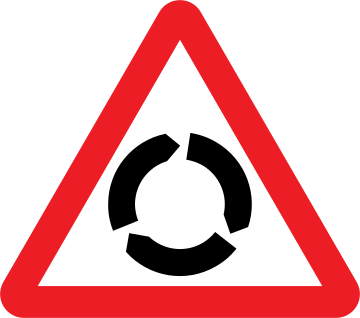
- ANo U-turn is allowed in this area
- BA roundabout is ahead - prepare to give way to traffic already on it
- CTraffic must go around the central island to the left only
- DThe road turns back on itself
Answer and explanation in the bank
- Q21Traffic rules
How far in advance should you activate your indicator before turning at a junction?
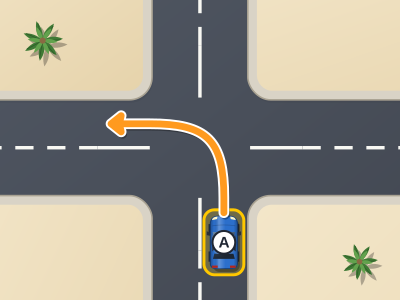
- AJust as you start to turn the steering wheel
- BEarly enough for other road users to see it and react before you slow down or turn
- COnly if another vehicle is close behind you
- DIndicators are optional if you slow down first
Answer and explanation in the bank
- Q22Right of way
You are turning left at a junction where a dedicated right-turn filter lane exists for oncoming traffic. The filter light is green for oncoming drivers. What should you do?
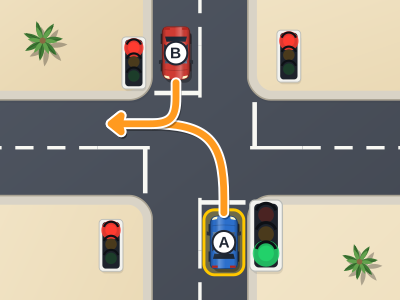
- AProceed with your left turn because left turns never conflict with right-turn filters
- BWait and give way to oncoming vehicles using the green right-turn filter
- CFlash your lights to warn oncoming right-turning vehicles
- DTurn left at the same time as the filter vehicles to keep traffic flowing
Answer and explanation in the bank
- Q23Safe driving
What does ABS (Anti-lock Braking System) allow a driver to do during emergency braking?
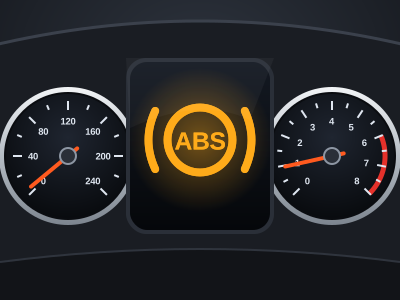
- AStop in a shorter distance than normal braking on all surfaces
- BBrake without pressing the pedal
- CBrake only with the rear wheels
- DSteer around a hazard while braking hard
Answer and explanation in the bank
- Q24Penalties and fines
What happens to a driver who runs a red traffic light in Saudi Arabia?
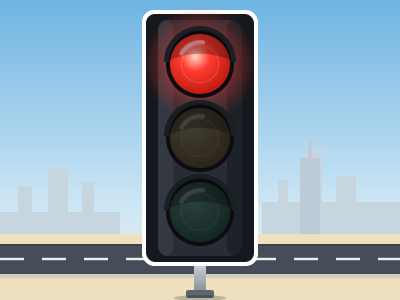
- AA SR 3,000-6,000 fine and 12 points; Saher cameras also record it
- BNothing, unless an accident results from the action
- CA verbal caution is issued for the first offence only
- DThe vehicle is impounded immediately for at least one week
Answer and explanation in the bank
- Q25Heavy vehicle
Before descending a long steep grade, a heavy truck driver should select an appropriate gear. What is the correct principle?
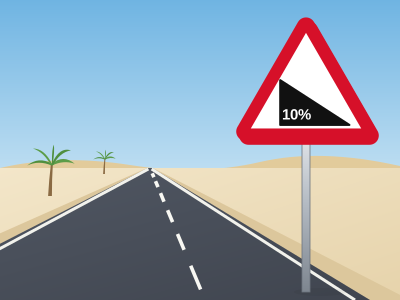
- ASelect a low gear before reaching the descent so engine braking can hold the truck at a safe speed throughout
- BDescend in a high gear to keep engine revs low and reduce noise
- CDescend in neutral so the engine does not drag and overheat
- DBegin the descent in any gear and change down only if speed rises above the limit
Answer and explanation in the bank
- Q26Road signs and signals
What does this blue circular sign at a roundabout require of drivers?
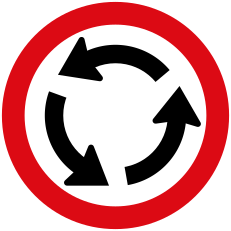
- AYou may choose any direction on the roundabout
- BEmergency vehicles have priority here
- CThe roundabout is restricted to one lane only
- DTravel in the direction shown - anticlockwise around the roundabout
Answer and explanation in the bank
- Q27Traffic rules
When must you cancel your indicator after completing a lane change or turn?
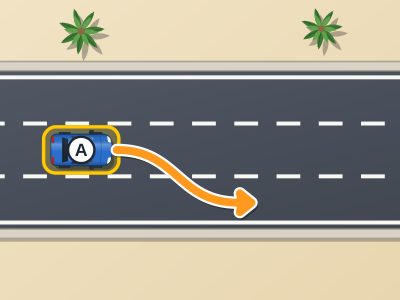
- AImmediately after completing the manoeuvre
- BAfter 100 metres have passed
- CThe indicator cancels itself automatically, so no action is needed
- DOnly if another driver flashes their lights at you
Answer and explanation in the bank
- Q28Right of way
A filter lane on a dual carriageway is coming to an end and you need to merge with the main carriageway. Who must give way?
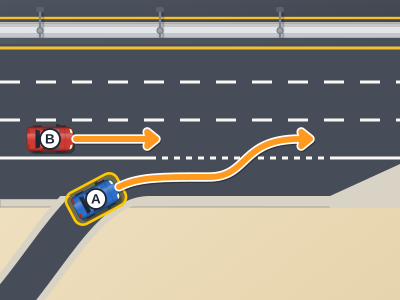
- ATraffic in the main carriageway must slow to let you merge
- BYou must give way and merge only when there is a safe gap in the main carriageway
- CBoth vehicles must slow down equally to allow the merge
- DWhichever vehicle is ahead at the merge point has priority
Answer and explanation in the bank
- Q29Safe driving
When your ABS activates you will feel the brake pedal pulsating or vibrating under your foot. What should you do?
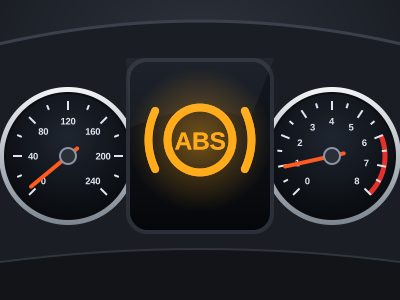
- ARelease the brake pedal because the system has malfunctioned
- BKeep pressing firmly on the pedal and steer as needed
- CPump the brake pedal quickly to help the ABS
- DApply the handbrake simultaneously
Answer and explanation in the bank
- Q30Penalties and fines
A driver repeatedly tailgates other vehicles on a Saudi expressway. Which offence category does this fall under?
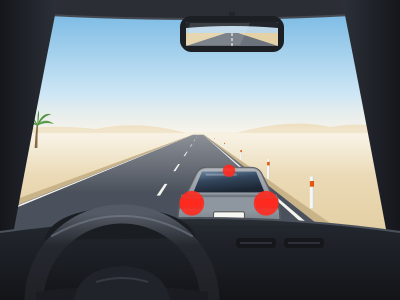
- ANo offence exists for following distance; only speed is regulated on expressways
- BThe offence only applies within city limits, not on expressways
- CFailing to maintain a safe following distance, which is a fineable traffic violation
- DTailgating is only penalised if the driver is also using a mobile phone at the same time
Answer and explanation in the bank
- Q31Heavy vehicle
How does an exhaust brake (Jake brake or compression release brake) slow a heavy truck?
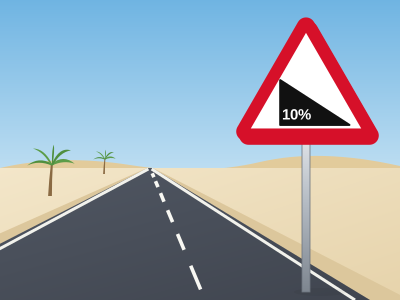
- AIt partially blocks the exhaust pipe to create back-pressure that slows the driveshaft
- BIt uses engine compression to retard vehicle speed by opening exhaust valves at the top of the compression stroke, turning the engine into an air compressor
- CIt diverts exhaust gases back into the intake manifold to stall the engine gently
- DIt applies hydraulic pressure to all four wheel brakes through a separate circuit
Answer and explanation in the bank
- Q32Road signs and signals
What does this sign warn you about?
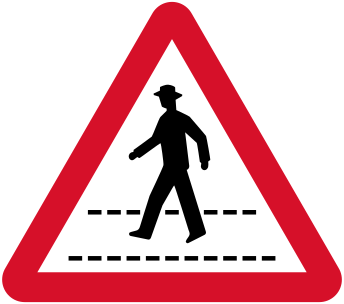
- APedestrians are not allowed to cross here
- BSchool children only may cross at this point
- CThe pavement ends and pedestrians must use the road
- DA pedestrian crossing is ahead - watch for people on the road
Answer and explanation in the bank
- Q33Traffic rules
When driving on a Saudi highway at night, when must you dip (switch from high-beam to low-beam) headlights?
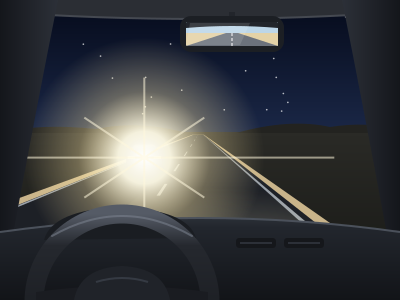
- AOnly inside city limits
- BOnly when a police vehicle is present
- CHigh-beam must be used at all times outside cities
- DWhenever an oncoming vehicle is close enough that high-beam could dazzle its driver
Answer and explanation in the bank
- Q34Right of way
You are joining a motorway from a slip road. How should you merge with motorway traffic?
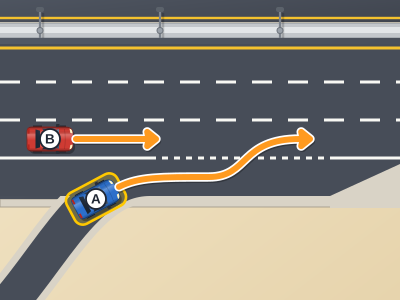
- AStop at the end of the slip road and wait for a clear gap
- BDrive to the end of the slip road and then signal right to force a gap
- CMotorway traffic must move left to allow your entry
- DMatch your speed to motorway traffic and merge when a safe gap appears
Answer and explanation in the bank
- Q35Safe driving
How often should you check your mirrors while driving on a Saudi highway?
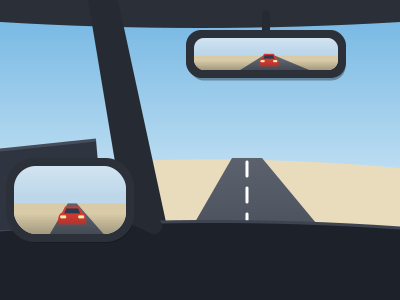
- AOnly before overtaking
- BOnce every few minutes
- CEvery 5 to 8 seconds
- DOnly when changing lanes
Answer and explanation in the bank
Every answer above, with the rule it comes from, plus the full 35-question timed test.
Get the Saudi Driving Theory Online Practice Bank - SAR 39What this test covers
Topics include road signs, traffic signals, right of way, roundabouts, speed limits, seat belts, fines and penalties, and the safe-driving rules specific to your vehicle category. Full question-by-question feedback with explanations is shown immediately after you finish the test above.
Frequently asked questions
How many questions is the Makkah General Dept. of Traffic truck & bus theory test?
The official General Dept. of Traffic truck & bus theory test in Makkah has 35 questions and you need 22 correct (63%) to pass. This practice test has 35 questions.
Is this the real exam?
These are practice questions to help you revise, written to the published rules and to what candidates report from the real test. They are not the official Saudi exam and the real question bank, format, fees and pass mark are set by the General Department of Traffic (Moroor) and the driving schools, and can change. Always confirm the current requirements with your driving school or the traffic department.
Is this practice test free?
The first 10 questions are free, with no signup, and each shows the answer and the reason. The full 35-question test, timed, is in the Saudi Driving Theory Online Practice Bank (SAR 39, one payment), with every question in the bank.
What does the Makkah truck & bus theory test cover?
Road signs, traffic signals, right of way, roundabouts, speed limits, seat belts, penalties and safe-driving rules, plus the handling and safety topics specific to your vehicle.