

Makkah General Dept. of Traffic Truck & Bus
Timed mock exam· Full mock examsMakkah General Dept. of Traffic - Saudi Truck & Bus Theory Mock Test 3
Third full heavy-vehicle mock exam and a strong final readiness check before your real truck or bus theory test. Another distinct set of 35 timed questions.
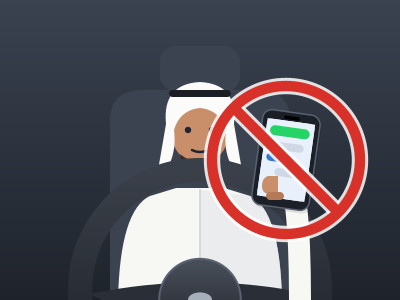
Is a driver allowed to use a hands-free phone system (e.g., Bluetooth speaker) while driving in Saudi Arabia?
The other 25 questions in this test
Read them all. The answer and the reason for each, and the timed 35-question run, are in the Saudi Driving Theory Online Practice Bank.
- Q11Safe driving
A front airbag is designed to work best when the driver sits at what minimum distance from the steering wheel?
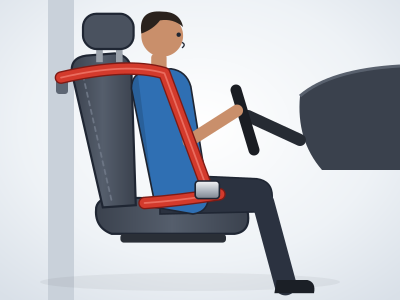
- AAt least 10 cm
- BAt least 50 cm
- CDistance does not matter if a seat belt is worn
- DAt least 25 cm (about 10 inches)
Answer and explanation in the bank
- Q12Penalties and fines
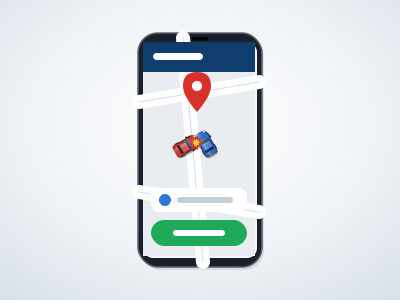
What is Najm and how does it relate to traffic incidents in Saudi Arabia?
- ANajm is the Ministry of Transport's road-construction authority
- BNajm is the name of the Saher camera network
- CNajm is the Saudi equivalent of a driver's theory test
- DNajm is the official Saudi accident-reporting and insurance-claims platform used to document road traffic collisions
Answer and explanation in the bank
- Q13Heavy vehicle
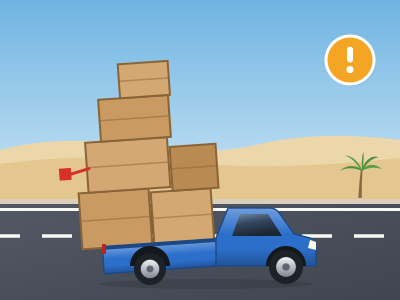
Which axle load limit principle is most important when loading a tandem-axle trailer in Saudi Arabia?
- AOnly the total GVW matters; individual axle loads are not regulated
- BThe heaviest axle can carry up to 50% of the total GVW without restriction
- CNo individual axle or axle group must exceed its rated limit, even if the total GVW is within the permitted maximum
- DAxle loads only matter on bridges, not on normal roads
Answer and explanation in the bank
- Q14Road signs and signals
This No Overtaking sign is displayed. Which vehicle type is still allowed to overtake under it?
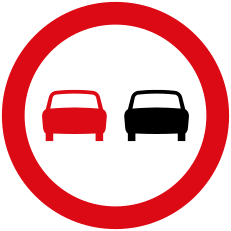
- AMotorcycles, because the sign only shows cars
- BVehicles travelling at less than 40 km/h
- CNone - the restriction applies to all motor vehicles
- DVehicles with a valid highway permit
Answer and explanation in the bank
- Q15Traffic rules
You accidentally enter a one-way street travelling in the wrong direction. What should you do?
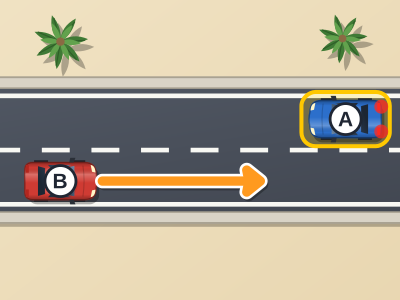
- AContinue in the wrong direction if the road is clear
- BStop immediately in the middle of the road and wait
- CReverse out carefully to the nearest safe point where you can exit legally
- DPerform a U-turn in the middle of the street
Answer and explanation in the bank
- Q16Right of way
You are on a motorway and wish to change from lane 2 to lane 1 (the right lane). What is the right-of-way rule?
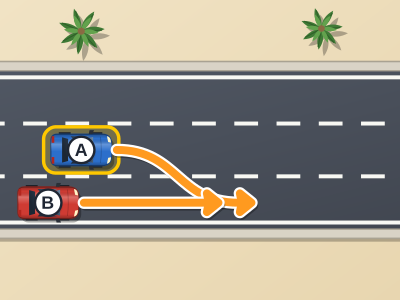
- AYou have priority because you are moving to the slower lane
- BTraffic in lane 1 must give way to you as you are moving right
- CYou must give way to traffic already in lane 1
- DLane changes on motorways are governed by speed, not right of way
Answer and explanation in the bank
- Q17Safe driving
Airbags are designed to work alongside seat belts, not replace them. What happens if you do not wear a seat belt in a car fitted with airbags?
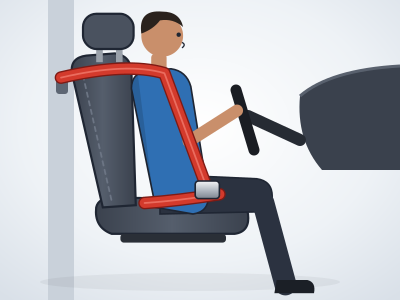
- AThe airbag will protect you just as well as with a seat belt
- BThe airbag will not deploy at all if no seat belt is worn
- CThe airbag only inflates for belted occupants
- DThe airbag may seriously injure an unbelted occupant who is thrown forward into it
Answer and explanation in the bank
- Q18Penalties and fines
Which behaviour is most likely to result in a reckless driving charge rather than a standard speeding fine in Saudi Arabia?
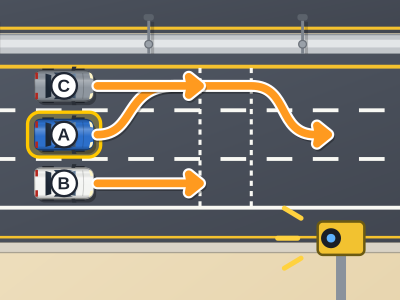
- ATravelling 5 km/h above a posted speed limit in light traffic
- BParking on a yellow line in a shopping-centre car park
- CWeaving aggressively between lanes at high speed while ignoring other road users
- DFailing to use an indicator when changing lanes once
Answer and explanation in the bank
- Q19Heavy vehicle
What is the most serious safety consequence of driving an overloaded heavy truck?
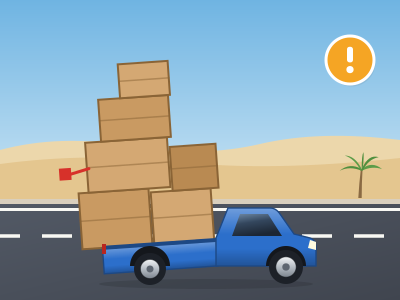
- ASlightly higher fuel consumption but no significant safety risk
- BIncreased stopping distances, greater rollover risk, tyre and brake overloading, and potential structural damage to roads and bridges
- CHigher engine temperature that triggers automatic speed limiting
- DThe vehicle's GPS tracking system alerts the traffic authority automatically
Answer and explanation in the bank
- Q20Road signs and signals
Under this No Parking sign, which of the following actions is still permitted?
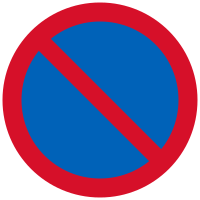
- ALeaving the car with the engine off for less than five minutes
- BStopping briefly to drop off a passenger and immediately driving away
- CParking with hazard lights on
- DDouble-parking while delivering goods quickly
Answer and explanation in the bank
- Q21Traffic rules
When joining a motorway (highway) from an on-ramp, how should you match your speed?
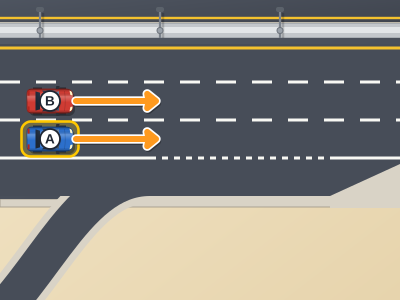
- AStop at the end of the on-ramp and wait for a gap
- BAccelerate on the acceleration lane to match the speed of motorway traffic, then merge smoothly
- CMerge immediately at whatever speed you are travelling
- DEnter the motorway at 60 km/h and speed up once on it
Answer and explanation in the bank
- Q22Right of way
You are leaving a motorway via an exit ramp. Traffic on the motorway wants to continue straight. Who has priority?
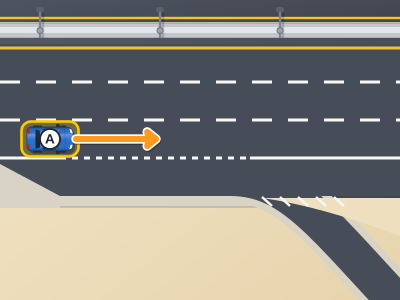
- AYou, because you are leaving the motorway
- BTraffic continuing on the motorway has priority; you must adjust your speed to exit safely
- CBoth vehicles have equal priority at the exit point
- DPriority is given to the faster-moving vehicle
Answer and explanation in the bank
- Q23Safe driving
What is the safest approach to a long desert drive of 400 km or more in Saudi Arabia?
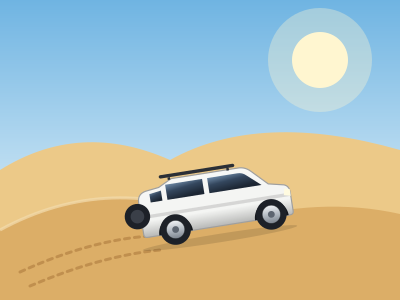
- ADrive non-stop to reach the destination as quickly as possible
- BIncrease speed to shorten time behind the wheel
- CDrive only at midday to make the most of daylight
- DPlan rest stops every 2 hours, carry sufficient water, and travel during cooler parts of the day if possible
Answer and explanation in the bank
- Q24Penalties and fines
What is 'tafheet' and why does Saudi Arabia treat it with particular severity?
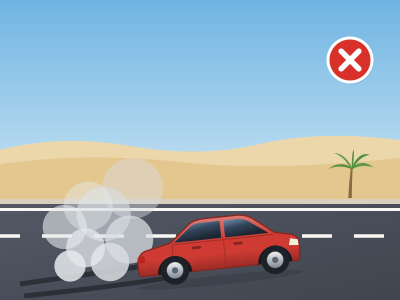
- ATafheet is illegal street drifting (spinning a vehicle at high speed), which causes deaths and injuries and is treated as a serious criminal offence with imprisonment and vehicle confiscation
- BTafheet is the Arabic term for using a mobile phone while driving, penalised with a small fine
- CTafheet refers to illegal window tinting and carries only a minor administrative penalty
- DTafheet is the offence of driving without a seatbelt on expressways
Answer and explanation in the bank
- Q25Heavy vehicle
A truck driver is stopped at a weigh station and told that one drive axle group is over the permitted limit by 2 tonnes, even though the vehicle's total GVW is within the maximum. What must happen before the truck can continue its journey?
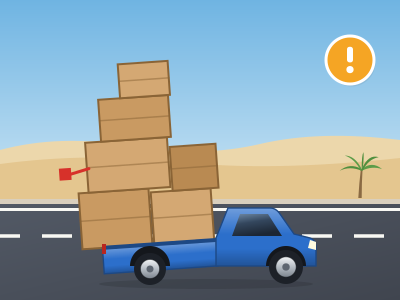
- AThe driver can pay the fine and continue immediately
- BNo action is needed because the total GVW is within limits
- CThe load must be redistributed or partially offloaded to bring the overloaded axle group within its permitted limit
- DThe truck may continue if the driver reduces speed to 60 km/h
Answer and explanation in the bank
- Q26Road signs and signals
A pedestrian steps onto a marked crossing ahead of you. What must you do?
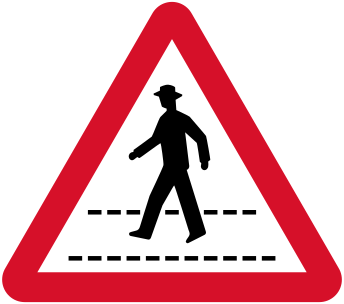
- AStop and let the pedestrian cross safely
- BSound your horn to alert the pedestrian and continue
- CSlow down only if the pedestrian is more than halfway across
- DFlash your headlights and proceed
Answer and explanation in the bank
- Q27Traffic rules
When leaving a motorway via an off-ramp, when should you begin reducing your speed?
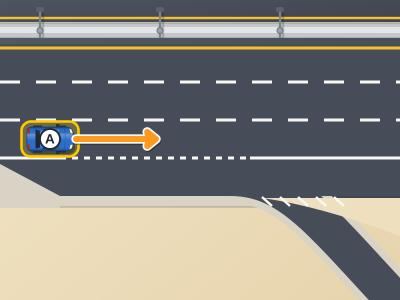
- AAs soon as you see the exit sign, in the main lane
- BAfter moving into the deceleration lane, not on the main carriageway
- COnly after you have fully entered the slip road
- DIt does not matter where you reduce speed
Answer and explanation in the bank
- Q28Right of way
What does a STOP sign require you to do?
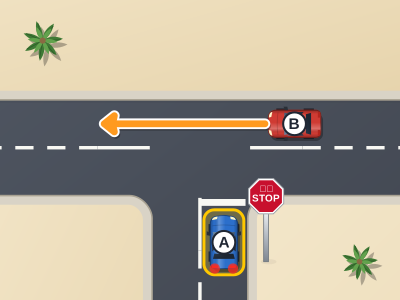
- ACome to a complete stop, give way to all traffic and pedestrians, then proceed when safe
- BSlow to 20 km/h and proceed if the road is clear
- CStop only if another vehicle is approaching from the left
- DYield without stopping if you can see the road is clear
Answer and explanation in the bank
- Q29Safe driving
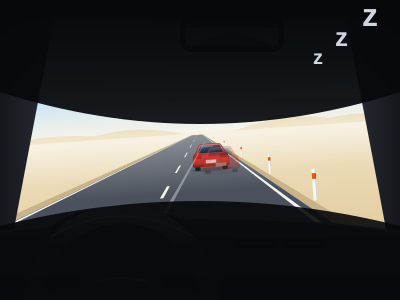
Which of the following is a reliable early warning sign that a driver is becoming dangerously fatigued?
- AFeeling thirsty
- BFeeling slightly warm inside the vehicle
- CNoticing the fuel gauge is low
- DRepeatedly blinking, micro-sleeps, or not remembering the last few kilometres driven
Answer and explanation in the bank
- Q30Penalties and fines
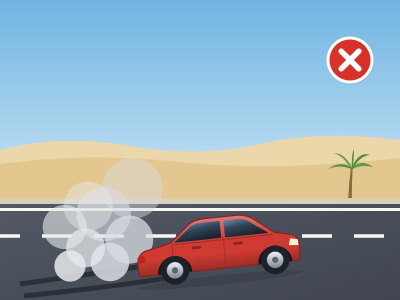
A driver is caught participating in tafheet (street drifting) in Saudi Arabia. Which combination of penalties is most likely?
- AA standard traffic fine with no points and the vehicle returned the same day
- BFor a first offence: a SR 20,000 fine, the car impounded for 15 days and possible prison; on a third offence the car is confiscated
- CA one-week driving suspension and a written warning
- DCommunity service hours and a conditional discharge on the first offence
Answer and explanation in the bank
- Q31Heavy vehicle
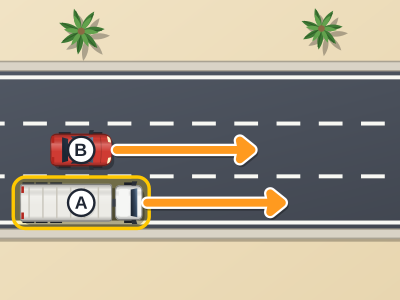
On a multi-lane road, which lane must trucks and heavy equipment use?
- AAny lane, as long as they keep to the speed limit
- BThe left lane, to keep away from the hard shoulder
- CThe right lane; not doing so is a SR 3,000-6,000 violation
- DThe middle lane, to leave the right lane for buses
Answer and explanation in the bank
- Q32Road signs and signals
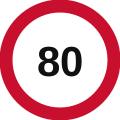
You pass this 80 km/h sign and the road continues with no further signs. Which speed limit applies?
- AThe limit reverts to 120 km/h as a national default once the sign is passed
- BYou may choose a safe speed because there is no further sign
- C80 km/h applies only directly in front of the sign
- D80 km/h continues until you see an end-of-restriction sign or a new limit
Answer and explanation in the bank
- Q33Traffic rules
You are merging onto a motorway but the acceleration lane is very short. Traffic on the motorway is heavy. What is the best action?
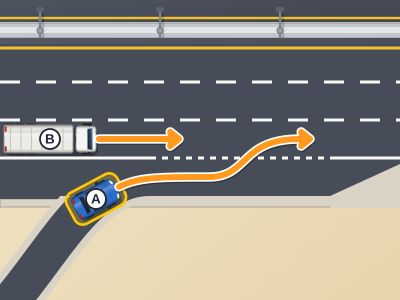
- AUse all available acceleration lane to build speed, and adjust timing to find the smallest safe gap
- BStop at the end and force your way in
- CDrive on the hard shoulder to reach a longer gap
- DReturn to the main road and try a different entry
Answer and explanation in the bank
- Q34Right of way
What does a GIVE WAY (yield) sign require you to do?
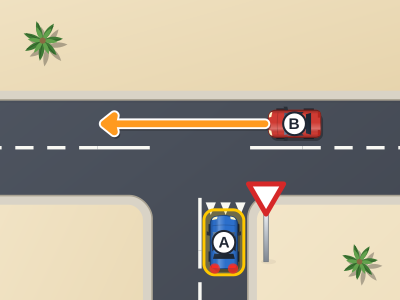
- AStop completely before checking for traffic
- BSlow down, be prepared to stop, and give priority to traffic on the major road
- CProceed at your current speed and let other drivers adjust
- DGive way only to vehicles larger than yours
Answer and explanation in the bank
- Q35Safe driving
You are driving in dense fog on a Saudi highway. Which lights should you use?
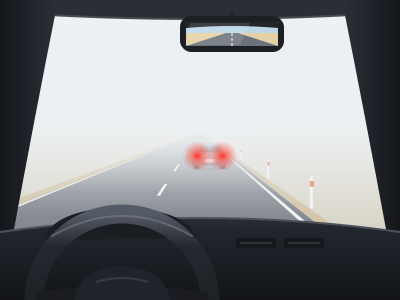
- AHigh beam headlights to see as far ahead as possible
- BHazard warning lights only
- CLow beam headlights and front fog lights if fitted
- DNo lights, as they reflect off the fog
Answer and explanation in the bank
Every answer above, with the rule it comes from, plus the full 35-question timed test.
Get the Saudi Driving Theory Online Practice Bank - SAR 39What this test covers
Topics include road signs, traffic signals, right of way, roundabouts, speed limits, seat belts, fines and penalties, and the safe-driving rules specific to your vehicle category. Full question-by-question feedback with explanations is shown immediately after you finish the test above.
Frequently asked questions
How many questions is the Makkah General Dept. of Traffic truck & bus theory test?
The official General Dept. of Traffic truck & bus theory test in Makkah has 35 questions and you need 22 correct (63%) to pass. This practice test has 35 questions.
Is this the real exam?
These are practice questions to help you revise, written to the published rules and to what candidates report from the real test. They are not the official Saudi exam and the real question bank, format, fees and pass mark are set by the General Department of Traffic (Moroor) and the driving schools, and can change. Always confirm the current requirements with your driving school or the traffic department.
Is this practice test free?
The first 10 questions are free, with no signup, and each shows the answer and the reason. The full 35-question test, timed, is in the Saudi Driving Theory Online Practice Bank (SAR 39, one payment), with every question in the bank.
What does the Makkah truck & bus theory test cover?
Road signs, traffic signals, right of way, roundabouts, speed limits, seat belts, penalties and safe-driving rules, plus the handling and safety topics specific to your vehicle.