

Najran General Dept. of Traffic Motorcycle
Timed mock exam· Full mock examsNajran General Dept. of Traffic - Saudi Motorcycle Theory Mock Test 2
Second full motorcycle mock exam with a fresh 35-question selection across road rules, signs and rider-specific topics. Keep practising without repetition.
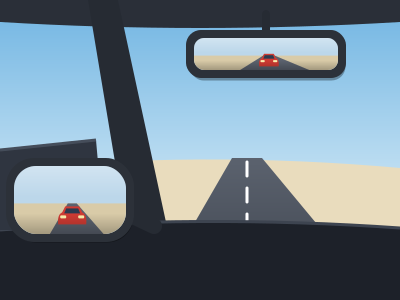
Which area around your vehicle is NOT covered by any mirror and must always be checked with a shoulder glance before changing lanes?
The other 25 questions in this test
Read them all. The answer and the reason for each, and the timed 35-question run, are in the Saudi Driving Theory Online Practice Bank.
- Q11Road signs and signals
What colour are emergency and service facility directional signs (hospitals, police, petrol stations) in Saudi Arabia?
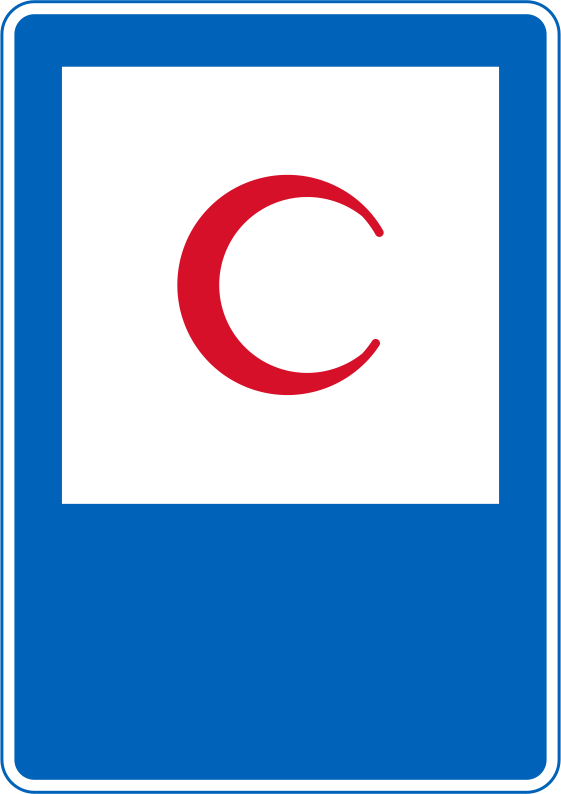
- ARed rectangle with white text
- BYellow rectangle with black text
- CGreen rectangle with white text
- DBlue rectangle with white symbols or text
Answer and explanation in the bank
- Q12Traffic rules
What is the safest position to adopt when waiting to make a right turn at a junction?
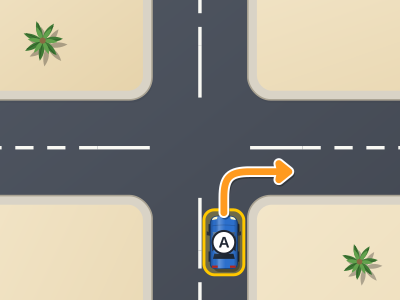
- AStop in the middle of the road straddling both lanes
- BWait in the right turn lane or as close to the right kerb as possible without blocking pedestrians
- CMove to the left lane and then cross all lanes while turning
- DAny position is acceptable provided you use your indicator
Answer and explanation in the bank
- Q13Right of way
A large truck is navigating a roundabout and its rear swings wide into the outer lane due to its length. What should you do if you are in the outer lane alongside it?
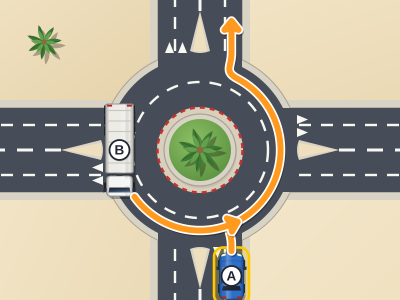
- AGive way to the truck; drop back to avoid being in its blind spot and swing path
- BHold your position; the truck must not cross your lane
- CAccelerate to pass the truck before it swings
- DSound your horn to warn the truck driver and proceed normally
Answer and explanation in the bank
- Q14Safe driving
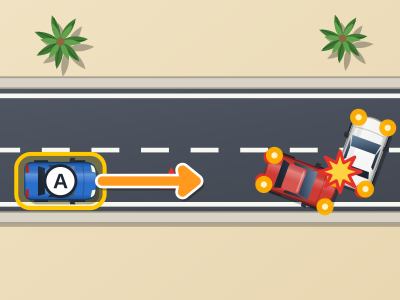
You see an accident ahead on the highway and slow down to look. This behaviour is known as what and why is it dangerous?
- ADefensive driving; it is not dangerous
- BHazard scanning; it is recommended in driver training
- CGap-following; it is safe because traffic is already slow
- DRubbernecking; it creates secondary accidents because drivers are distracted and may rear-end slowing traffic
Answer and explanation in the bank
- Q15Penalties and fines
A vehicle owner receives a fine for a Saher speeding violation but claims they were not driving the vehicle at the time. What should they do?

- AFile an appeal through Absher or Moroor, providing evidence of who was driving, within the permitted appeal window
- BSimply pay the fine; registered owners are always responsible and cannot appeal
- CIgnore the fine until it appears at Istimara renewal, then explain verbally
- DContact Najm to have the fine transferred to the actual driver's record automatically
Answer and explanation in the bank
- Q16Road signs and signals
Green rectangular signs with white text on Saudi roads are used for what purpose?
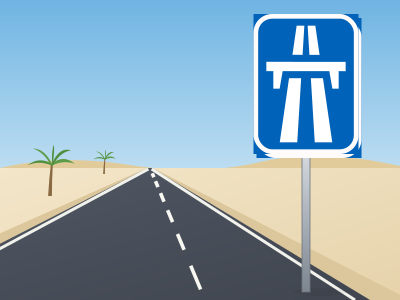
- ARoute directions and destinations on major roads and expressways
- BWarning of environmental hazards
- CIndicating mandatory speed zones
- DShowing tourist attractions only
Answer and explanation in the bank
- Q17Traffic rules
What does the word 'Moroor' refer to in Saudi traffic and licensing matters?
- AA type of Saudi motorway
- BThe mandatory vehicle registration document
- CA Saudi driving school qualification
- DThe General Department of Traffic, the authority responsible for road safety and licensing in Saudi Arabia
Answer and explanation in the bank
- Q18Right of way
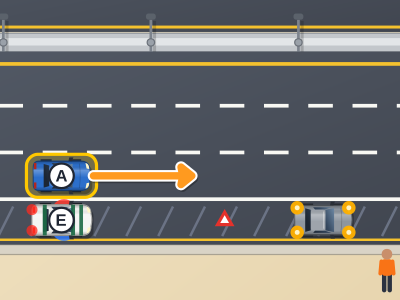
An emergency vehicle is parked on the hard shoulder with its warning lights flashing. You are in the lane nearest the hard shoulder. What should you do?
- AMaintain your speed and position
- BMove to a lane further from the hard shoulder if safe to do so, or slow down significantly
- CSpeed up to pass the stationary vehicle quickly
- DStop on the hard shoulder behind the emergency vehicle
Answer and explanation in the bank
- Q19Safe driving
Why is it important to signal before every lane change on a Saudi highway?
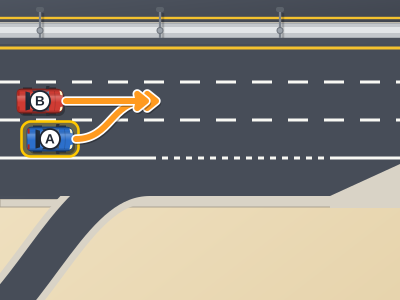
- AIndicators improve fuel economy
- BSignalling gives other drivers time to react and maintain safe spacing around you
- CIndicators are only needed when turning off a highway
- DYou only need to signal if another vehicle is directly behind you
Answer and explanation in the bank
- Q20Penalties and fines
A driver is caught using a mobile phone to watch a video while the vehicle is moving on a Saudi road. How serious is this offence?
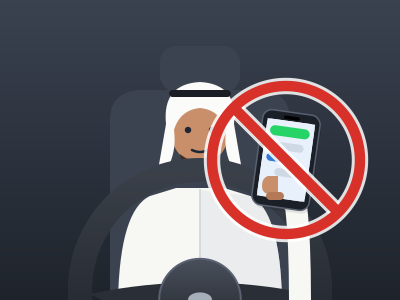
- AA minor administrative matter with no points, just a small fee
- BOnly serious if the driver exceeds the speed limit at the same time
- CNot an offence if the phone is mounted in a cradle on the dashboard
- DVery serious, as it constitutes both a mobile-phone-use violation and potentially distracted or reckless driving, compounding the penalty
Answer and explanation in the bank
- Q21Road signs and signals
A blue circular sign shows a car with its headlights illuminated. What does this mandatory sign require?

- AHigh-beam headlights are prohibited here
- BHeadlights must be switched off in the tunnel
- CYou must use your headlights on this section of road
- DOnly vehicles with working lights may enter
Answer and explanation in the bank
- Q22Traffic rules
At what distance should you generally place warning triangles behind a broken-down vehicle on a Saudi road?
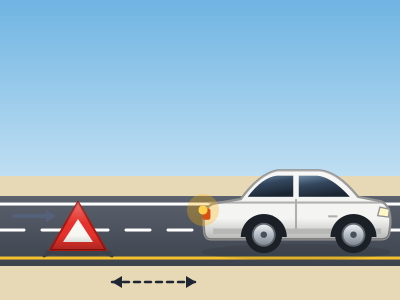
- ADirectly behind the vehicle, touching the bumper
- BFar enough behind the vehicle for approaching drivers to see it and slow down in time, and further back on fast roads
- CWarning triangles are only required on highways, not city roads
- DOn the roof of the vehicle so it is seen from far away
Answer and explanation in the bank
- Q23Right of way
You are in the closing lane of a two-to-one merge caused by a lane drop. The lane next to you is the continuing lane. What is the correct zip-merge behaviour?
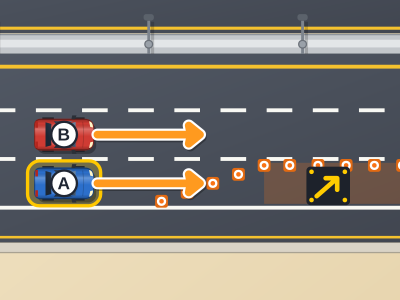
- AImmediately move to the continuing lane as soon as you see the signs
- BStop in your lane and wait for the continuing lane to clear completely
- CContinue to the merge point and then alternate with traffic in the continuing lane
- DAccelerate past as many vehicles as possible before the merge point
Answer and explanation in the bank
- Q24Safe driving
What is the danger of driving with a heavily loaded roof rack that raises the vehicle's centre of gravity?
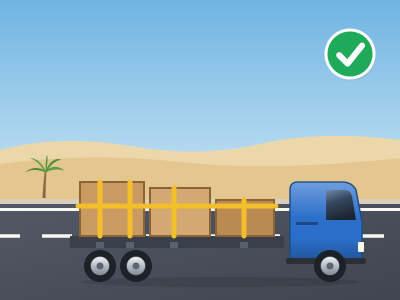
- AIt increases the risk of rollover, especially during sudden lane changes or when cornering at speed
- BIt reduces fuel consumption
- CIt only affects braking on gravel roads
- DIt improves traction in sand
Answer and explanation in the bank
- Q25Penalties and fines
A driver accumulates enough violation points in Saudi Arabia to trigger a licence suspension. During the suspension period, what happens if they continue to drive?
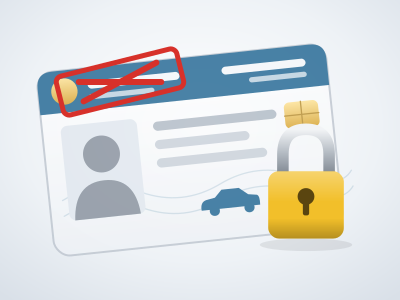
- ADriving while suspended is a serious additional offence that can lead to arrest, heavy fines and an extended or permanent licence ban
- BThe suspension is only advisory; the driver can appeal and continue driving normally
- CNo additional penalty applies; the original suspension is the only consequence
- DThe driver is permitted to drive to work only during a licence suspension
Answer and explanation in the bank
- Q26Road signs and signals
What should you do when you see a warning sign indicating animals on the road ahead?
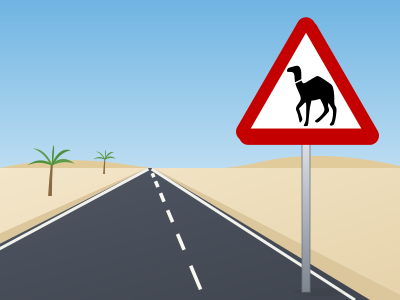
- ASound your horn continuously to frighten the animals away
- BReduce speed and be prepared to stop - animals may appear suddenly
- CSwitch on your hazard lights and accelerate past quickly
- DContinue at normal speed as animals usually move off the road
Answer and explanation in the bank
- Q27Traffic rules
You are involved in a minor road traffic collision with no injuries in Saudi Arabia. What must you do?
- ALeave the scene immediately to avoid causing more congestion
- BArgue with the other driver and decide who was at fault privately, then drive away
- COnly report the collision if the damage exceeds a certain cost, which you estimate yourself
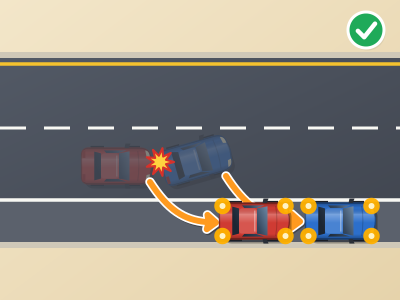
- DMove vehicles off the road if safe to do so, exchange details, and report to traffic police or use the official app as required
Answer and explanation in the bank
- Q28Right of way
You are leaving a private road and joining a public road. There is no GIVE WAY or STOP sign. Who has priority?
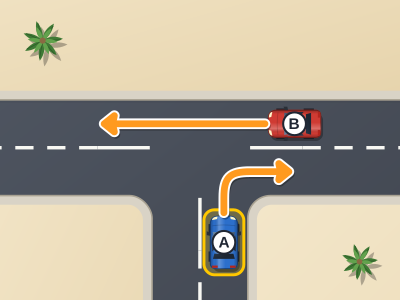
- AYou have priority because you are joining the road
- BTraffic already on the public road has priority
- CRight-hand priority applies so give way to traffic from your right only
- DBoth vehicles must stop and negotiate
Answer and explanation in the bank
- Q29Safe driving
You suspect the driver in front has been driving erratically. What is the safest defensive action?
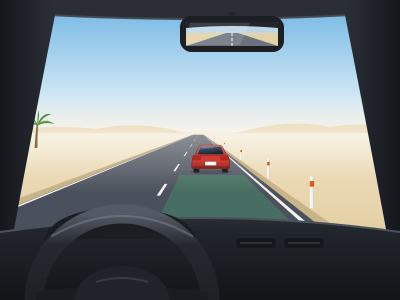
- AOvertake them quickly to get away from the risk
- BIncrease your following distance significantly, avoid overtaking unless clearly safe, and if necessary pull over and report to police
- CFlash your lights to warn them to drive better
- DFollow at exactly 2 seconds to monitor them closely
Answer and explanation in the bank
- Q30Penalties and fines
A driver changes lanes without using an indicator on a Saudi motorway and nearly causes a collision. Which offence applies?
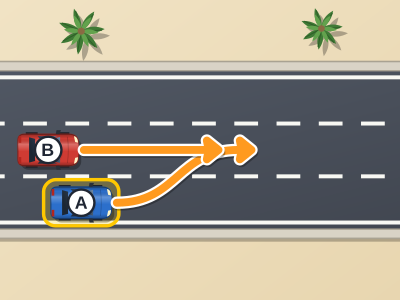
- AFailing to signal when changing lanes, and depending on the circumstances, also potentially dangerous driving
- BNo offence, as indicators are advisory on motorways
- COnly an offence at night when visibility is reduced
- DOnly an offence if physical contact is made with another vehicle
Answer and explanation in the bank
- Q31Road signs and signals
Why are warning signs placed some distance before the hazard they show?
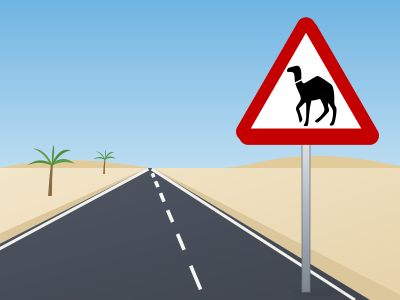
- ATo mark the exact point where the hazard begins
- BTo show that parking is allowed until the hazard
- CThey are placed after the hazard to confirm you have passed it
- DTo give you time to slow down and prepare before you reach the hazard
Answer and explanation in the bank
- Q32Traffic rules
A driver in front of you brakes heavily. You maintain a safe following distance and stop without colliding. The driver behind you, however, rear-ends you. Who is generally considered at fault for the rear collision?
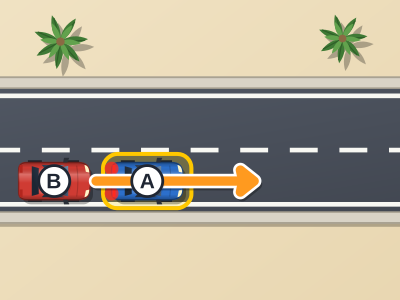
- AThe driver who struck you from behind, for failing to maintain a safe following distance
- BYou, because you were stationary on the road
- CThe driver ahead who braked, because they caused the chain reaction
- DFault is shared equally among all three drivers
Answer and explanation in the bank
- Q33Right of way
At a Y-junction a GIVE WAY line is marked across the branch you are on. The other branch has no marking. What does this mean?
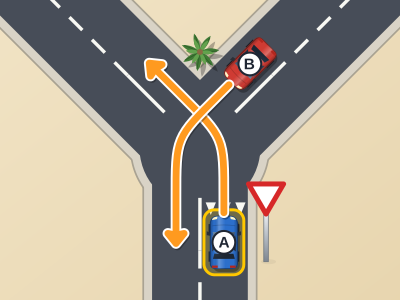
- AYou must give way to traffic on the other branch
- BYou and the other branch share equal priority
- CThe GIVE WAY line applies to both branches equally
- DYou only give way if a vehicle is already in the junction
Answer and explanation in the bank
- Q34Safe driving
Why is it especially important to check for motorcycles in your blind spot before changing lanes?
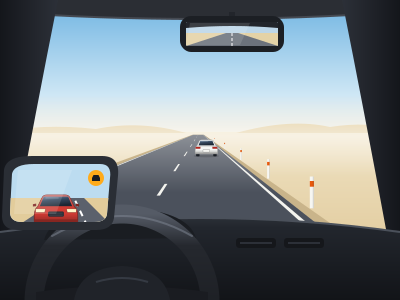
- AMotorcycles are narrow and can easily be hidden in a blind spot that a larger vehicle would not fit in
- BMotorcycles always travel faster than cars
- CMotorcycle riders have the right of way in all situations
- DMotorcycles are not required to follow lane discipline
Answer and explanation in the bank
- Q35Penalties and fines
A Saudi-registered vehicle is found to have no number plate (licence plate) fitted at the front. Is this an offence?
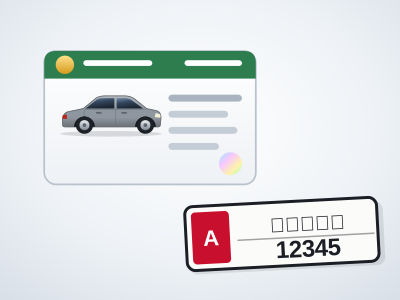
- ANo, only the rear plate is legally required in Saudi Arabia
- BYes, both front and rear plates must be properly fitted and clearly legible; missing or obscured plates are a fineable offence
- COnly an offence if the vehicle is also unregistered
- DPermitted as long as the plate is displayed inside the windscreen
Answer and explanation in the bank
Every answer above, with the rule it comes from, plus the full 35-question timed test.
Get the Saudi Driving Theory Online Practice Bank - SAR 39What this test covers
Topics include road signs, traffic signals, right of way, roundabouts, speed limits, seat belts, fines and penalties, and the safe-driving rules specific to your vehicle category. Full question-by-question feedback with explanations is shown immediately after you finish the test above.
Frequently asked questions
How many questions is the Najran General Dept. of Traffic motorcycle theory test?
The official General Dept. of Traffic motorcycle theory test in Najran has 35 questions and you need 22 correct (63%) to pass. This practice test has 35 questions.
Is this the real exam?
These are practice questions to help you revise, written to the published rules and to what candidates report from the real test. They are not the official Saudi exam and the real question bank, format, fees and pass mark are set by the General Department of Traffic (Moroor) and the driving schools, and can change. Always confirm the current requirements with your driving school or the traffic department.
Is this practice test free?
The first 10 questions are free, with no signup, and each shows the answer and the reason. The full 35-question test, timed, is in the Saudi Driving Theory Online Practice Bank (SAR 39, one payment), with every question in the bank.
What does the Najran motorcycle theory test cover?
Road signs, traffic signals, right of way, roundabouts, speed limits, seat belts, penalties and safe-driving rules, plus the handling and safety topics specific to your vehicle.