

Northern Borders General Dept. of Traffic Motorcycle
Timed mock exam· Full mock examsNorthern Borders General Dept. of Traffic - Saudi Motorcycle Theory Mock Test 2
Second full motorcycle mock exam with a fresh 35-question selection across road rules, signs and rider-specific topics. Keep practising without repetition.
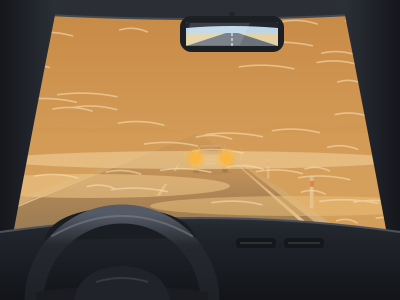
Under what conditions should you at least double your following distance to 6 seconds or more?
The other 25 questions in this test
Read them all. The answer and the reason for each, and the timed 35-question run, are in the Saudi Driving Theory Online Practice Bank.
- Q11Motorcycle control
Why is heavy front-brake use mid-corner especially dangerous on a motorcycle?
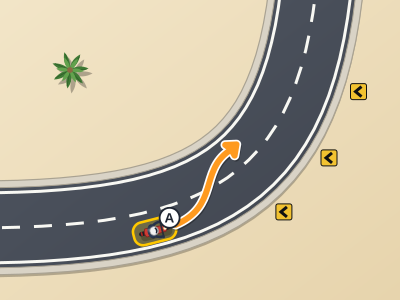
- AIt shifts weight to the rear and causes the back wheel to lift
- BIt loads the front tyre while it is already at maximum lean, exceeding its grip limit and causing a sudden front-wheel slide
- CIt locks the steering and forces the bike to go straight regardless of lean angle
- DIt is only dangerous on wet roads; on dry surfaces mid-corner braking is safe
Answer and explanation in the bank
- Q12Motorcycle safety
Is lane splitting or lane filtering (riding between lanes of stopped or slow traffic) permitted in Saudi Arabia?
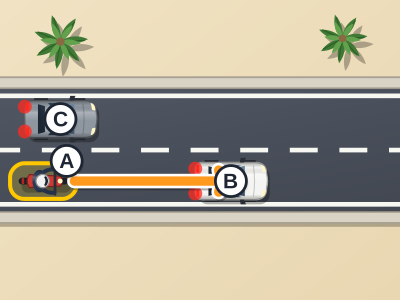
- ANo, riders must stay within their marked lane
- BIt is fully legal and encouraged to reduce urban congestion
- CIt is permitted only on roads with a speed limit above 80 km/h
- DIt is legal if done at less than 30 km/h and in daylight hours
Answer and explanation in the bank
- Q13Road signs and signals
What does this sign prohibit?
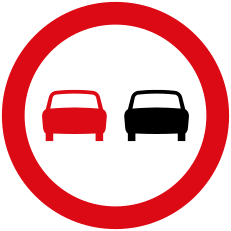
- AOvertaking any motor vehicle
- BDriving side by side only if you have a passenger
- COvertaking only trucks and buses
- DUsing the right-hand lane
Answer and explanation in the bank
- Q14Traffic rules
You wish to overtake a long truck on a two-lane highway. Which check is MOST important before you start the manoeuvre?
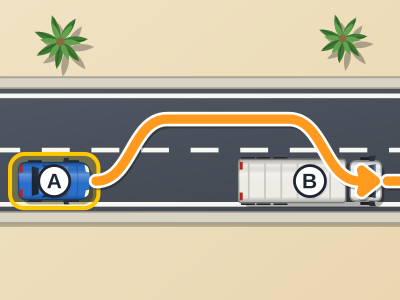
- AThat you are travelling at exactly the speed limit
- BThat you have enough clear road ahead to complete the entire overtake and return safely
- CThat the truck driver has acknowledged you in their mirror
- DThat your passenger agrees it is safe
Answer and explanation in the bank
- Q15Right of way
A pedestrian is waiting at a marked zebra crossing. What must you do?
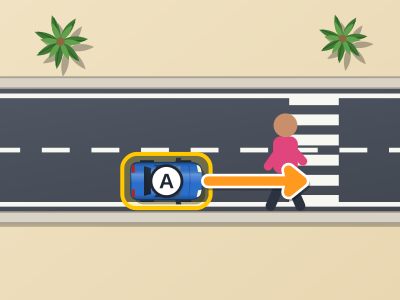
- ASlow down and give way to the pedestrian
- BSound your horn to warn the pedestrian and continue
- CFlash your headlights so the pedestrian knows you are coming
- DProceed at the same speed because pedestrians must wait for a gap
Answer and explanation in the bank
- Q16Safe driving
How does driving at high speed in Saudi Arabia's extreme heat affect your tyre pressure?
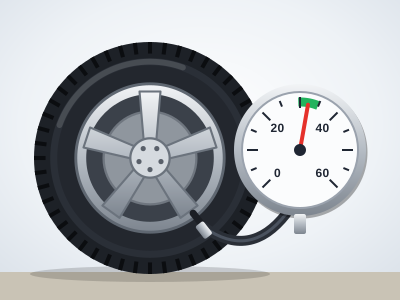
- APressure decreases because the rubber softens
- BPressure stays the same regardless of temperature
- CPressure increases only in rear tyres
- DPressure increases as the air inside heats up
Answer and explanation in the bank
- Q17Penalties and fines
Saudi Arabia uses the Saher system of automated speed cameras on roads across the Kingdom. What is the primary purpose of Saher?
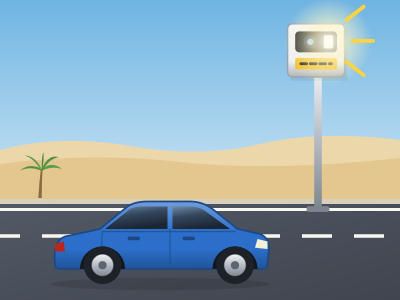
- ATo monitor fuel consumption and direct drivers to the nearest petrol station
- BTo count vehicles for road-planning statistics only, with no enforcement function
- CTo automatically detect and record speeding violations, red-light running and other traffic offences without requiring a police officer to be present
- DTo charge a toll fee on all expressways
Answer and explanation in the bank
- Q18Motorcycle control
When should you change to a lower gear on a motorcycle?
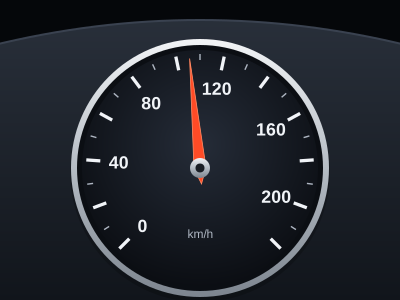
- AEvery time you apply the brakes, regardless of speed
- BOnly when the speedometer drops below 60 km/h
- COnly when coming to a complete stop
- DWhen engine speed falls to the point where the engine struggles or lugs, requiring more torque
Answer and explanation in the bank
- Q19Motorcycle safety
Why should a motorcyclist maintain a larger following distance behind vehicles than a car driver would?
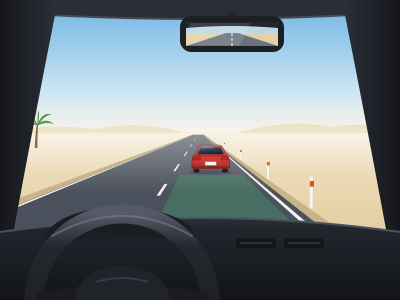
- ABecause motorcycles have longer braking distances than cars in all circumstances
- BBecause the law in Saudi Arabia requires motorcycles to maintain a 5-second gap
- CBecause the rider needs time to identify road surface hazards such as sand, gravel, and potholes that a car would drive over without incident
- DFollowing distance is not more important for motorcycles than for cars
Answer and explanation in the bank
- Q20Road signs and signals
What does this sign tell a driver?
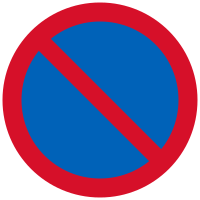
- AStopping briefly to drop passengers is also forbidden
- BParking is reserved for permit holders only
- CParking is not allowed here
- DNo entry to any vehicle
Answer and explanation in the bank
- Q21Traffic rules
Where are U-turns generally prohibited in Saudi Arabia?
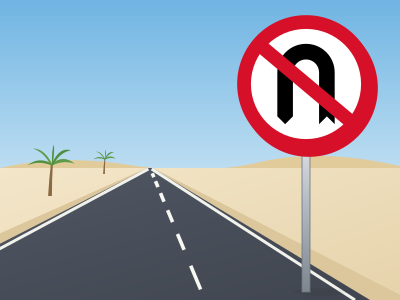
- AOnly on motorways
- BOnly in residential areas after midnight
- CU-turns are always permitted if no other traffic is present
- DAt intersections controlled by a no-U-turn sign or solid centre line
Answer and explanation in the bank
- Q22Right of way
You are approaching a pedestrian crossing in a school zone and a group of children is about to cross. What is the correct action?
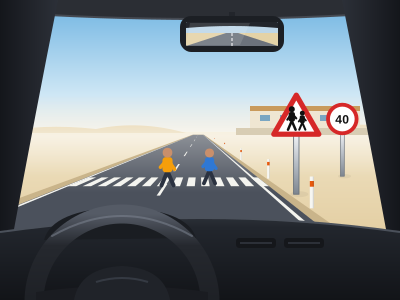
- ASlow down only if a school guard is present
- BSound your horn twice and drive through carefully
- CPass quickly so the children do not have to wait
- DStop and give way to the children before proceeding
Answer and explanation in the bank
- Q23Safe driving
When should you ideally check your tyre pressure for the most accurate reading?
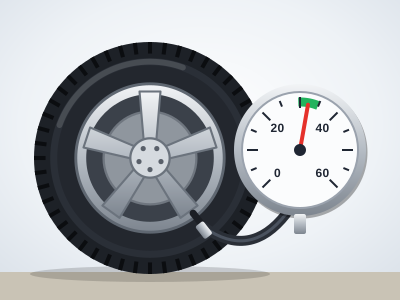
- AImmediately after a long highway drive
- BWhile the engine is running and warm
- CWhen the tyres are cold, before driving or after parking for at least 3 hours
- DOnly when the tyre warning light appears
Answer and explanation in the bank
- Q24Penalties and fines
A driver exceeds the posted speed limit by more than 30 km/h on a Saudi highway. Compared to exceeding the limit by 10 km/h, the penalty is likely to be:
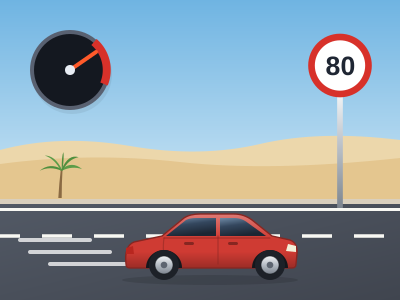
- ASignificantly higher, because Saudi speeding penalties increase in tiers based on how far above the limit you are travelling
- BThe same flat fine regardless of how much over the limit the driver is
- CLower, because highways are designed for higher speeds
- DOnly a warning for the first 50 km/h over the limit
Answer and explanation in the bank
- Q25Motorcycle control
You are approaching a sharp bend on a rural Saudi road. In what order should you perform your pre-corner routine?
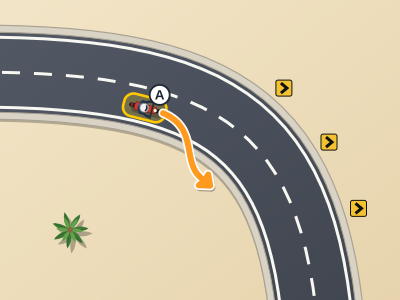
- ASteer in, then brake, then select a lower gear once the apex is reached
- BSelect a higher gear first to keep revs low, then brake through the corner
- CMirror check, signal if needed, brake in a straight line, select the correct gear, then steer into the corner with a steady throttle
- DApply light braking throughout the bend while simultaneously downshifting
Answer and explanation in the bank
- Q26Motorcycle safety
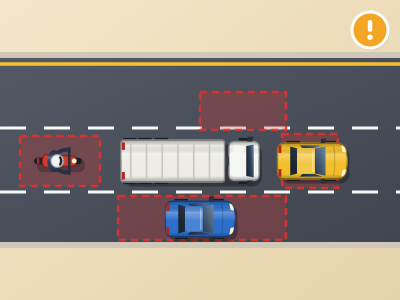
Where are the main blind spots of a typical car or truck that a motorcyclist must be aware of?
- AOnly directly behind the vehicle; modern mirrors cover all other angles
- BOnly at night; in daylight all vehicles can see motorcycles easily in mirrors
- CBlind spots only affect large trucks; passenger cars can see motorcycles from all angles
- DDirectly behind and to the rear sides of the vehicle (B-pillar zone), immediately alongside the vehicle parallel to the door, and in some trucks, directly in front of the cab
Answer and explanation in the bank
- Q27Road signs and signals
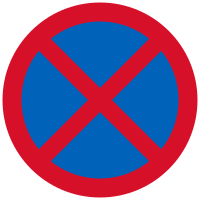
How is this No Stopping sign stricter than a No Parking sign?
- AIt only applies between 8 am and 8 pm
- BIt applies only to heavy vehicles
- CIt means parking costs a fee
- DIt prohibits stopping entirely, even to drop off passengers
Answer and explanation in the bank
- Q28Traffic rules
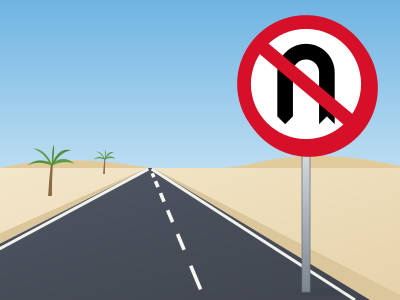
You are on a divided highway with a concrete median barrier. Can you perform a U-turn?
- AYes, at any gap in the median barrier
- BYes, provided you give way to oncoming traffic
- CNo, only at designated median openings where signs or road markings permit it
- DOnly if you have a 4WD vehicle
Answer and explanation in the bank
- Q29Right of way
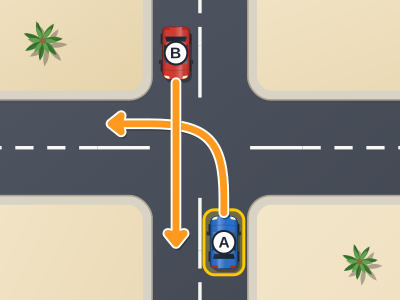
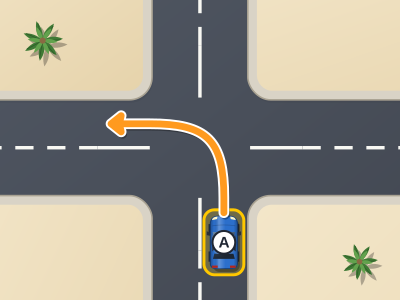
You want to turn left across oncoming traffic at a junction. The oncoming lane is busy. What must you do?
- AEdge forward slowly into the oncoming lane to signal your intention
- BSound your horn to request oncoming drivers to let you through
- CWait for a safe gap in oncoming traffic before turning
- DTurn immediately because left turns always have priority
Answer and explanation in the bank
- Q30Safe driving
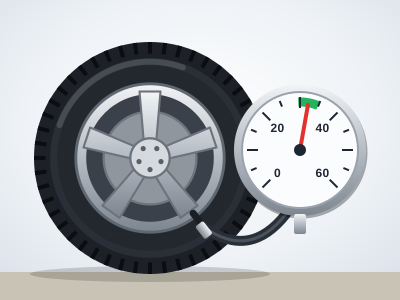
You experience a sudden front tyre blowout at highway speed. What is the correct immediate response?
- ABrake hard and steer to the shoulder immediately
- BGrip the wheel firmly, keep straight, ease off the accelerator, and brake gently only after the car slows
- CPull the handbrake to slow quickly
- DTurn off the engine immediately
Answer and explanation in the bank
- Q31Penalties and fines
A Saher camera captures a speeding violation. How does the registered vehicle owner typically find out about the fine and pay it?

- AA traffic officer visits the owner's home address to deliver a paper notice
- BThrough the Absher digital government platform, which shows all outstanding traffic violations linked to the owner's ID
- CThe driver is stopped at the next police checkpoint automatically
- DNo notification is sent; fines only become apparent when renewing the vehicle registration (Istimara)
Answer and explanation in the bank
- Q32Motorcycle control
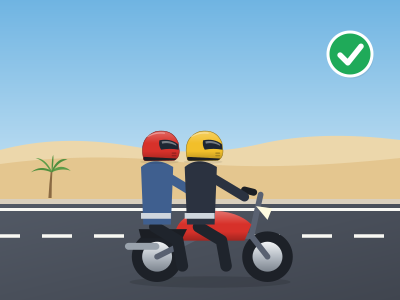
How does carrying a pillion passenger affect the braking distance of a motorcycle?
- AIt reduces braking distance because the extra weight increases tyre contact patch pressure
- BIt has no effect on braking distance if the passenger holds on tightly
- CIt increases braking distance because the total weight is greater, so you must start braking earlier
- DIt reduces braking distance only if the passenger also applies the rear brake
Answer and explanation in the bank
- Q33Motorcycle safety
Which colour of motorcycle gear most improves daytime visibility to other road users?
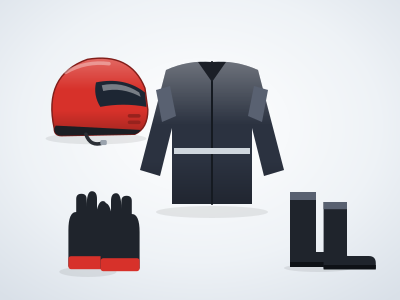
- AHigh-visibility yellow or fluorescent orange, which contrast strongly against road and desert backgrounds
- BBlack, which is the traditional motorcycling colour and is equally visible
- CWhite, because it matches lane markings and is easiest for other drivers to track
- DColour makes no practical difference; other drivers must look for motorcycles regardless
Answer and explanation in the bank
- Q34Road signs and signals
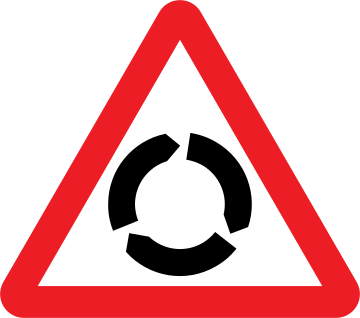
You see this warning sign mounted before an intersection. What does it mean?
- ANo U-turn is allowed in this area
- BA roundabout is ahead - prepare to give way to traffic already on it
- CTraffic must go around the central island to the left only
- DThe road turns back on itself
Answer and explanation in the bank
- Q35Traffic rules
How far in advance should you activate your indicator before turning at a junction?
- AJust as you start to turn the steering wheel
- BEarly enough for other road users to see it and react before you slow down or turn
- COnly if another vehicle is close behind you
- DIndicators are optional if you slow down first
Answer and explanation in the bank
Every answer above, with the rule it comes from, plus the full 35-question timed test.
Get the Saudi Driving Theory Online Practice Bank - SAR 39What this test covers
Topics include road signs, traffic signals, right of way, roundabouts, speed limits, seat belts, fines and penalties, and the safe-driving rules specific to your vehicle category. Full question-by-question feedback with explanations is shown immediately after you finish the test above.
Frequently asked questions
How many questions is the Northern Borders General Dept. of Traffic motorcycle theory test?
The official General Dept. of Traffic motorcycle theory test in Northern Borders has 35 questions and you need 22 correct (63%) to pass. This practice test has 35 questions.
Is this the real exam?
These are practice questions to help you revise, written to the published rules and to what candidates report from the real test. They are not the official Saudi exam and the real question bank, format, fees and pass mark are set by the General Department of Traffic (Moroor) and the driving schools, and can change. Always confirm the current requirements with your driving school or the traffic department.
Is this practice test free?
The first 10 questions are free, with no signup, and each shows the answer and the reason. The full 35-question test, timed, is in the Saudi Driving Theory Online Practice Bank (SAR 39, one payment), with every question in the bank.
What does the Northern Borders motorcycle theory test cover?
Road signs, traffic signals, right of way, roundabouts, speed limits, seat belts, penalties and safe-driving rules, plus the handling and safety topics specific to your vehicle.