

Northern Borders General Dept. of Traffic Truck & Bus
Timed mock exam· Full mock examsNorthern Borders General Dept. of Traffic - Saudi Truck & Bus Theory Mock Test 1
A full 35-question timed practice exam for the Saudi heavy-vehicle (truck and bus) theory test. Covers shared road rules and signs plus heavy-vehicle handling and safety. Aim for 22/35 to pass.
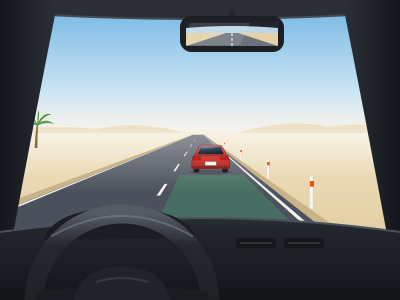
Why does a fully loaded articulated truck require a much greater stopping distance than a private car travelling at the same speed?
The other 25 questions in this test
Read them all. The answer and the reason for each, and the timed 35-question run, are in the Saudi Driving Theory Online Practice Bank.
- Q11Safe driving
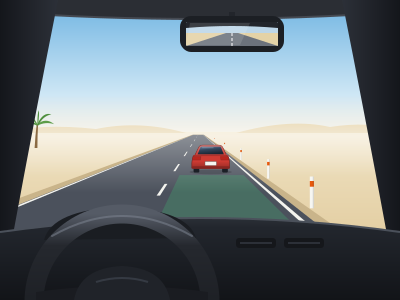
At 100 km/h on a dry road, approximately how far does a typical car travel from the moment the driver sees a hazard to the moment the car stops completely?
- AAbout 50 metres
- BAbout 70 to 80 metres
- CAbout 130 metres (about 30 m thinking distance plus 100 m braking distance)
- DAbout 300 metres
Answer and explanation in the bank
- Q12Penalties and fines
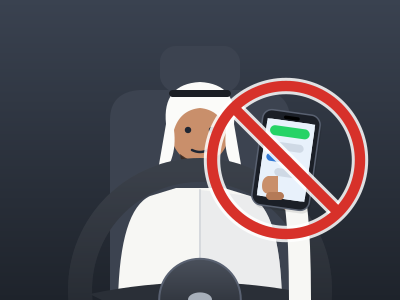
A driver is caught using a hand-held mobile phone while driving on a Saudi road. What type of penalty does this attract?
- AA traffic fine and recorded violation points against the driving licence
- BOnly a verbal warning from the traffic officer
- CImmediate vehicle impoundment for 30 days
- DA criminal prosecution identical to a reckless driving charge
Answer and explanation in the bank
- Q13Heavy vehicle
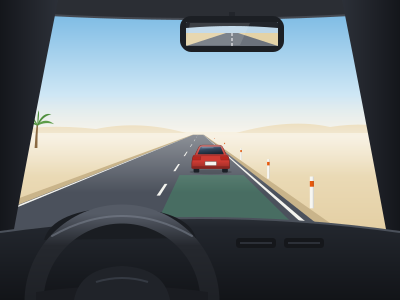
When following another vehicle on a Saudi highway in a fully loaded 40-tonne articulated truck, what following distance approach should you use?
- AThe same two-second rule used for a light vehicle at the same speed
- BA gap well beyond the two-second rule, because heavy vehicles need far more distance to stop safely
- CA fixed 20-metre gap regardless of speed
- DOne vehicle length for every 10 km/h of speed
Answer and explanation in the bank
- Q14Road signs and signals
What is the maximum speed permitted where this sign is displayed?
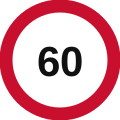
- A80 km/h
- B50 km/h
- C60 km/h
- D100 km/h
Answer and explanation in the bank
- Q15Traffic rules
At a three-lane roundabout you want to take the second exit (straight ahead). Which lane should you use?
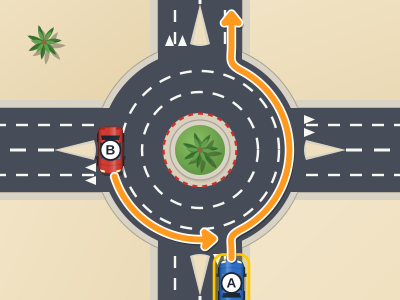
- AThe right lane, then cut across to the left lane inside
- BThe left lane, signalling left the whole way
- CAny lane, because lane choice does not matter at roundabouts
- DThe middle lane (lane 2), staying in it around the roundabout
Answer and explanation in the bank
- Q16Right of way
At a roundabout with two entry lanes, you are in the right-hand entry lane. Which exits can you generally use?
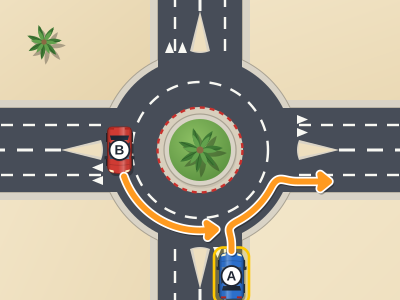
- AOnly the first exit to the left
- BAny exit, regardless of your entry lane position
- CThe first exit or turning right, keeping to the outer lane inside the roundabout
- DOnly exits that do not require crossing other lanes
Answer and explanation in the bank
- Q17Safe driving
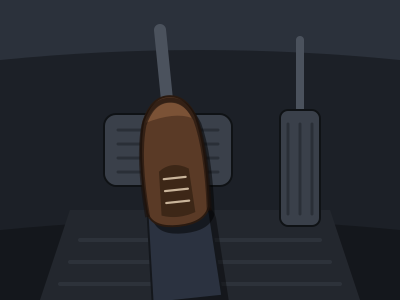
How does braking distance change when you double your speed from 60 km/h to 120 km/h?
- AIt doubles
- BIt triples
- CIt quadruples (increases by four times)
- DIt stays roughly the same if the road is dry
Answer and explanation in the bank
- Q18Penalties and fines
Is a driver allowed to use a hands-free phone system (e.g., Bluetooth speaker) while driving in Saudi Arabia?
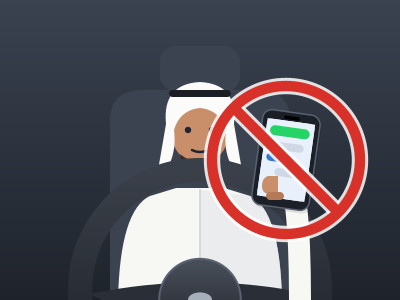
- ANo, all mobile phone use in any form is completely banned while the engine is running
- BYes, hands-free use is generally permitted, but the driver must still remain fully attentive to the road
- COnly permitted on motorways, not in urban areas
- DPermitted only if the vehicle is stationary at a red light
Answer and explanation in the bank
- Q19Heavy vehicle
You are driving a laden heavy truck at 90 km/h on a dry Saudi highway when the vehicle in front stops suddenly. Which factor most increases your stopping distance compared with a light vehicle?
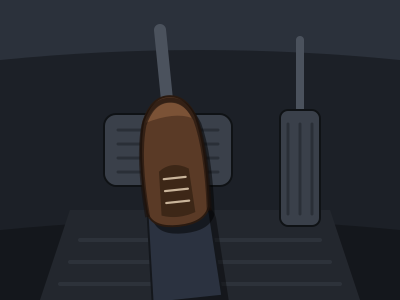
- AThe high kinetic energy of the truck's greater mass, which requires much more braking force and distance to dissipate
- BThe longer wheelbase, which forces the rear wheels to travel further before locking
- CThe elevated driving position, which reduces the driver's ability to judge distance accurately
- DAir resistance acting against the front of the cab, which pushes the truck forward
Answer and explanation in the bank
- Q20Road signs and signals
You are driving on a Saudi inter-city road and see this sign. What does it mean?
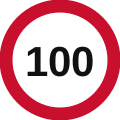
- AYou must maintain at least 100 km/h
- BThe recommended speed in good conditions is 100 km/h
- CHeavy vehicles may travel at 100 km/h here
- DThe maximum speed on this section is 100 km/h
Answer and explanation in the bank
- Q21Traffic rules
On a Saudi highway, when are you allowed to overtake on the right side of another vehicle?
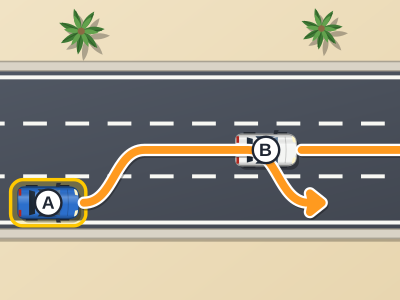
- AWhenever the right lane is clear and faster
- BNever, unless the vehicle in front is turning left and has signalled
- CAt any time as long as you signal
- DOnly if the speed limit is above 120 km/h
Answer and explanation in the bank
- Q22Right of way
You hear the siren of an emergency vehicle approaching from behind. What must you do?
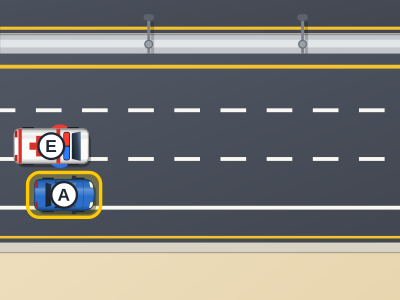
- AMove safely to the right side and slow down or stop to let it pass
- BAccelerate to get out of its way as quickly as possible
- CStop immediately wherever you are
- DContinue at your current speed but move slightly left
Answer and explanation in the bank
- Q23Safe driving
You are driving on a wet road after rain. What is the safest approach to braking?
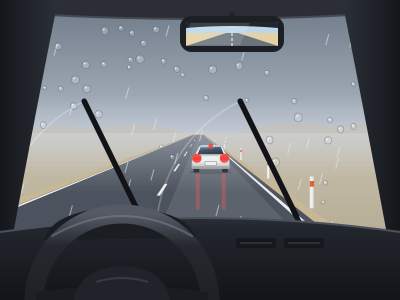
- ABrake firmly and late to maintain speed
- BBrake early, gently and progressively to avoid wheel lock
- CUse only the handbrake on wet roads
- DPump the brakes very rapidly at all times
Answer and explanation in the bank
- Q24Penalties and fines
Who is required to wear a seatbelt in a private car travelling in Saudi Arabia?
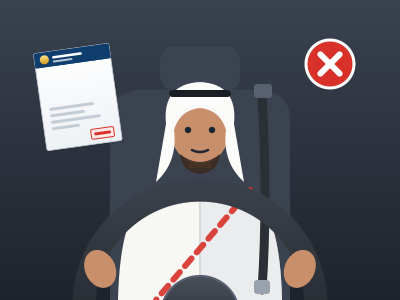
- AThe driver only; passengers are responsible for their own choice
- BThe driver and all passengers in every seat
- CFront-seat occupants only; rear passengers are exempt
- DOnly passengers aged 12 and above
Answer and explanation in the bank
- Q25Heavy vehicle
What type of braking system is fitted to most heavy trucks and buses operating in Saudi Arabia?
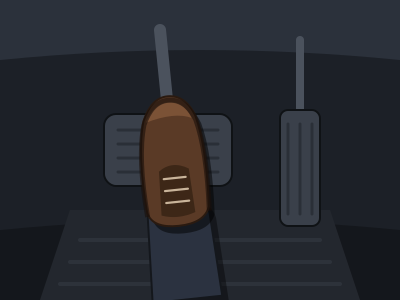
- AHydraulic disc brakes identical to those fitted on light vehicles
- BElectric regenerative brakes that charge the battery on every stop
- CPneumatic (air) brakes, which use compressed air to actuate the brake chambers
- DCable-operated drum brakes similar to those used on motorcycles
Answer and explanation in the bank
- Q26Road signs and signals
What is the significance of this sign on a Saudi expressway?
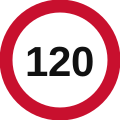
- AThe distance to the next rest area is 120 km
- BVehicles must travel at exactly 120 km/h in this lane
- CThe maximum speed limit on this expressway section is 120 km/h
- DOnly vehicles capable of 120 km/h may use this road
Answer and explanation in the bank
- Q27Traffic rules
In which of the following situations is overtaking strictly forbidden?
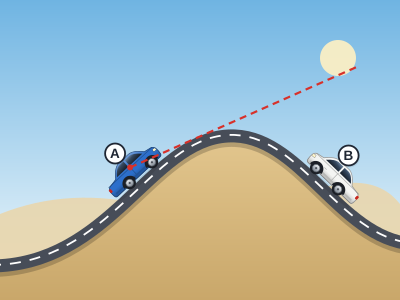
- AOn a straight road with clear visibility for 200 metres
- BWhen approaching the brow of a hill where visibility ahead is limited
- COn a dual carriageway with a solid white centre line
- DWhen following a vehicle travelling at the speed limit
Answer and explanation in the bank
- Q28Right of way
An ambulance with lights and siren is approaching a red traffic signal from behind you. You are also waiting at the red light. What should you do?
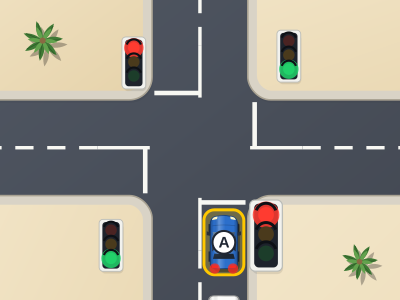
- APull as far to the right as safely possible without crossing the stop line
- BDrive through the red light immediately to clear the way
- CStay where you are because running a red light is never permitted
- DTurn left onto any available road
Answer and explanation in the bank
- Q29Safe driving
Your vehicle enters a sand drift on the highway. What braking technique is safest for a car without ABS?
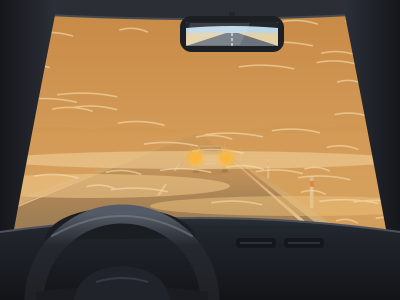
- AStamp the brake pedal hard and hold it
- BRelease the accelerator, steer gently, and if braking is needed use threshold braking (just below wheel lock)
- CApply the handbrake immediately
- DSteer sharply to the right to exit the sand
Answer and explanation in the bank
- Q30Penalties and fines
A parent is driving with a toddler on their lap in the front seat instead of using an approved child seat. What does Saudi traffic law say about this?
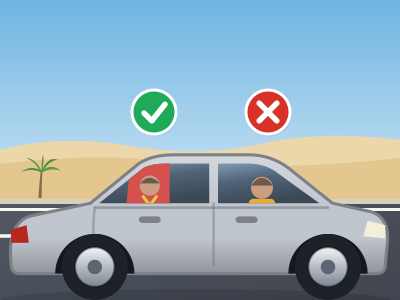
- AIt is allowed as long as the adult is wearing a seatbelt
- BChildren under two years old are exempt from child-seat requirements
- CIt is prohibited; young children must be secured in an approved child restraint system appropriate for their age and weight
- DIt is only an offence on highways, not on city roads
Answer and explanation in the bank
- Q31Heavy vehicle
What is brake fade, and which situation most commonly causes it on a heavy truck?
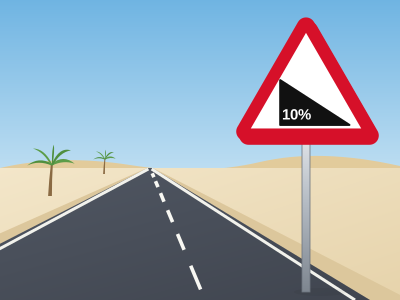
- AA sudden increase in braking force caused by air pressure building up too quickly in the chambers
- BA reduction in braking power caused by overheated brake drums or discs, most commonly on long downhill descents when brakes are applied repeatedly
- CThe delay between pressing the brake pedal and the air reaching the rear axle chambers
- DThe locking of the rear wheels caused by excessive brake pedal pressure on a slippery surface
Answer and explanation in the bank
- Q32Road signs and signals
What does this sign prohibit?
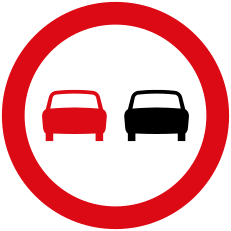
- AOvertaking any motor vehicle
- BDriving side by side only if you have a passenger
- COvertaking only trucks and buses
- DUsing the right-hand lane
Answer and explanation in the bank
- Q33Traffic rules
You wish to overtake a long truck on a two-lane highway. Which check is MOST important before you start the manoeuvre?
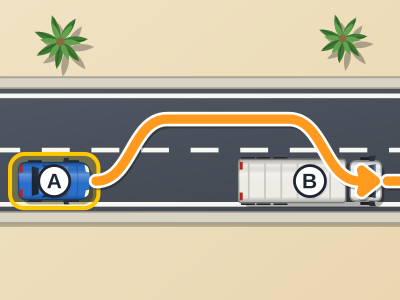
- AThat you are travelling at exactly the speed limit
- BThat you have enough clear road ahead to complete the entire overtake and return safely
- CThat the truck driver has acknowledged you in their mirror
- DThat your passenger agrees it is safe
Answer and explanation in the bank
- Q34Right of way
A pedestrian is waiting at a marked zebra crossing. What must you do?
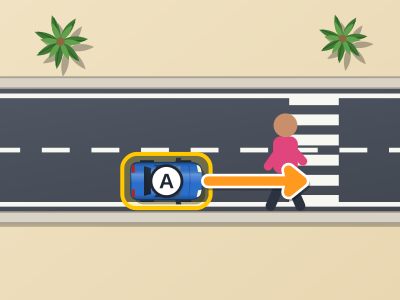
- ASlow down and give way to the pedestrian
- BSound your horn to warn the pedestrian and continue
- CFlash your headlights so the pedestrian knows you are coming
- DProceed at the same speed because pedestrians must wait for a gap
Answer and explanation in the bank
- Q35Safe driving
How does driving at high speed in Saudi Arabia's extreme heat affect your tyre pressure?
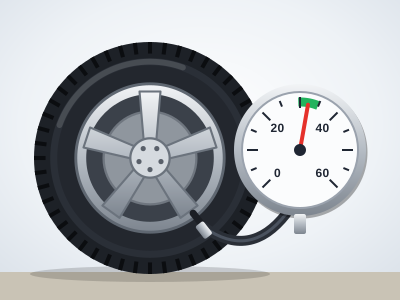
- APressure decreases because the rubber softens
- BPressure stays the same regardless of temperature
- CPressure increases only in rear tyres
- DPressure increases as the air inside heats up
Answer and explanation in the bank
Every answer above, with the rule it comes from, plus the full 35-question timed test.
Get the Saudi Driving Theory Online Practice Bank - SAR 39What this test covers
Topics include road signs, traffic signals, right of way, roundabouts, speed limits, seat belts, fines and penalties, and the safe-driving rules specific to your vehicle category. Full question-by-question feedback with explanations is shown immediately after you finish the test above.
Frequently asked questions
How many questions is the Northern Borders General Dept. of Traffic truck & bus theory test?
The official General Dept. of Traffic truck & bus theory test in Northern Borders has 35 questions and you need 22 correct (63%) to pass. This practice test has 35 questions.
Is this the real exam?
These are practice questions to help you revise, written to the published rules and to what candidates report from the real test. They are not the official Saudi exam and the real question bank, format, fees and pass mark are set by the General Department of Traffic (Moroor) and the driving schools, and can change. Always confirm the current requirements with your driving school or the traffic department.
Is this practice test free?
The first 10 questions are free, with no signup, and each shows the answer and the reason. The full 35-question test, timed, is in the Saudi Driving Theory Online Practice Bank (SAR 39, one payment), with every question in the bank.
What does the Northern Borders truck & bus theory test cover?
Road signs, traffic signals, right of way, roundabouts, speed limits, seat belts, penalties and safe-driving rules, plus the handling and safety topics specific to your vehicle.