

Qassim General Dept. of Traffic Motorcycle
Practice mode· Motorcycle skillsQassim General Dept. of Traffic - Saudi Motorcycle Safety Practice Test
Rider safety essentials: protective gear, visibility, safe following distances, hazard awareness, lane position and sharing the road with larger vehicles.
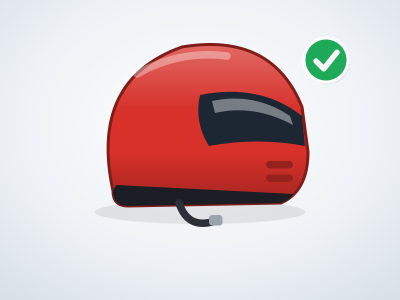
Which helmet standard is generally recognised for motorcycle use in Saudi Arabia?
The other 10 questions in this test
Read them all. The answer and the reason for each, and the timed 20-question run, are in the Saudi Driving Theory Online Practice Bank.
- Q11Motorcycle safety
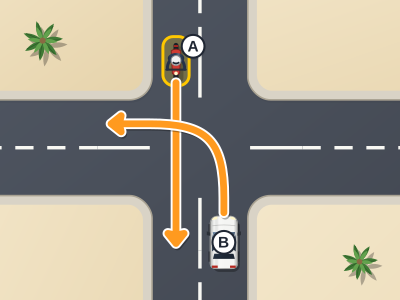
What is the 'hurt report' finding most relevant to Saudi urban motorcycle safety regarding the direction of collisions?
- AMost motorcycle crashes are rear-end collisions caused by following cars
- BA high proportion of motorcycle crashes involve another vehicle failing to yield or turning across the motorcycle's path, rather than the rider making an error
- CSingle-vehicle crashes caused by excessive speed are the dominant crash type in all environments
- DMost urban crashes involve motorcycles running red lights
Answer and explanation in the bank
- Q12Motorcycle safety
You are riding on a Saudi motorway at 120 km/h and realise you are about to miss your exit. What should you do?
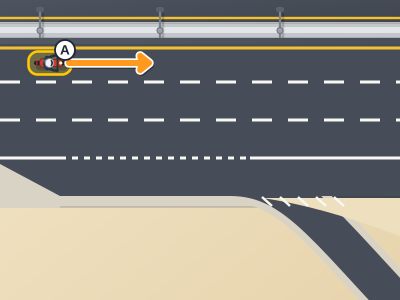
- AContinue to the next exit; do not swerve or brake sharply across lanes to make the exit at speed
- BSignal and brake hard across all lanes immediately to make the exit
- CUse the hard shoulder to slow down and re-enter the exit ramp
- DReverse along the hard shoulder to reach the exit
Answer and explanation in the bank
- Q13Motorcycle safety
Why is a pre-ride inspection (T-CLOCS check) important before every ride?
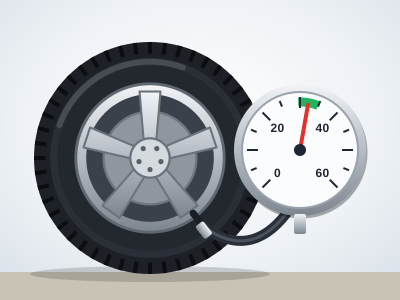
- AIt identifies mechanical defects such as low tyre pressure, fluid leaks, and brake issues before they cause a breakdown or crash
- BIt is a legal requirement that must be documented and carried in writing on every ride
- CIt is only necessary for older motorcycles; modern bikes have electronic self-diagnostics
- DIt is useful only before long-distance trips; urban riding does not require a pre-ride check
Answer and explanation in the bank
- Q14Motorcycle safety
What extra safety action should a rider take when approaching a junction where the view to the right is blocked by a wall or parked vehicle?
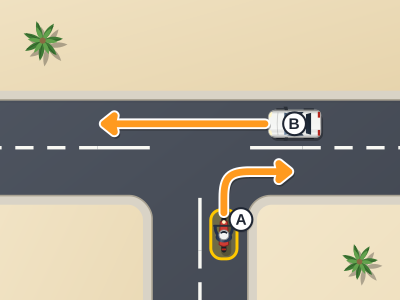
- ASound the horn and proceed quickly to clear the junction before any unseen vehicle arrives
- BStay to the left of the lane and emerge at normal speed, relying on your right of way
- CFlash headlights to warn any oncoming drivers before proceeding
- DSlow down significantly, position to improve the view as early as possible, and be prepared to stop before emerging
Answer and explanation in the bank
- Q15Motorcycle safety
You feel unusually tired and your concentration is drifting during a long desert highway ride in Saudi Arabia. What is the correct action?
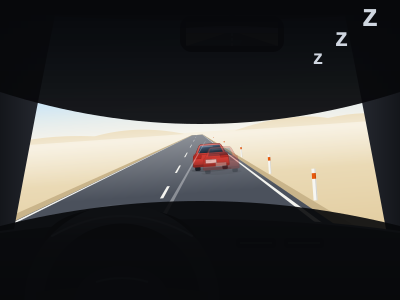
- AOpen the throttle and ride faster to increase adrenaline and stay alert
- BPull off at the next safe stopping point, rest or sleep for at least 20 minutes, hydrate, and do not continue until fully alert
- CTurn up the music on your earphones so stimulation keeps you awake
- DDrink an energy drink at the next fuel stop and push through to your destination
Answer and explanation in the bank
- Q16Motorcycle safety
What road-surface hazard is particularly common at Saudi intersections and petrol stations?
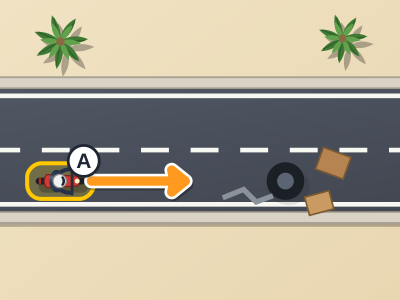
- ASpeed bumps that are only dangerous for trucks
- BWet leaves accumulated by roadside vegetation
- CIce patches, which form under shade from overpass bridges in winter
- DDiesel and oil spills, which make the surface extremely slippery especially when light rain first falls
Answer and explanation in the bank
- Q17Motorcycle safety
Why is night riding especially hazardous for motorcyclists in Saudi Arabia compared to daytime?

- AReduced visibility makes it harder to spot road hazards (sand drifts, animals, unlit vehicles) and makes the rider much less visible to other drivers
- BMotorcycle engines produce less power at night due to cooler air temperatures
- CNight riding is safer because there is less traffic on Saudi roads after dark
- DTyre grip is reduced at night because rubber compounds harden in cooler temperatures
Answer and explanation in the bank
- Q18Motorcycle safety
When does rain pose the greatest grip risk to a motorcyclist on Saudi roads?
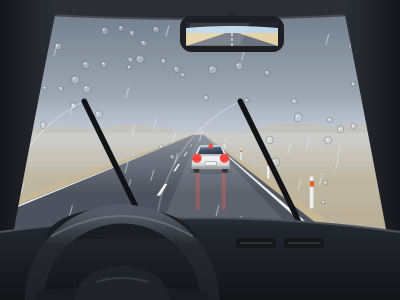
- AAfter the road has been wet for more than 30 minutes, when the tarmac has fully absorbed water
- BAt the very start of a rain shower, before sufficient water has washed accumulated oil and dust off the road surface
- COnly in the winter months when rain falls at low temperatures
- DRain poses no additional risk on Saudi roads because rain is infrequent and brief
Answer and explanation in the bank
- Q19Motorcycle safety
What is the recommended minimum following distance (in seconds) for a motorcyclist behind a car on a dry Saudi highway?
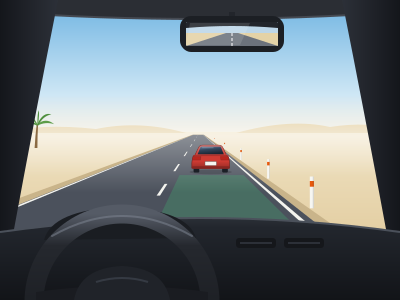
- AHalf a second, because motorcycles brake faster than cars
- BExactly one second, which is the legal minimum for all vehicles in Saudi Arabia
- CFollowing distance is irrelevant as long as you are watching the car's brake lights
- DAt least two seconds, and preferably three to four seconds, to allow time to react and brake
Answer and explanation in the bank
- Q20Motorcycle safety
What is defensive riding as applied to motorcyclists in Saudi Arabia?
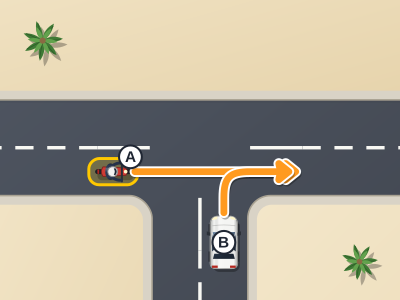
- ARiding aggressively to claim road space before other vehicles can crowd the motorcyclist
- BRiding only on roads with dedicated motorcycle lanes
- CFitting a dashcam so that you have evidence if another driver causes a crash
- DAnticipating and preparing for the mistakes of other road users rather than assuming they will always behave correctly
Answer and explanation in the bank
Every answer above, with the rule it comes from, plus the full 20-question timed test.
Get the Saudi Driving Theory Online Practice Bank - SAR 39What this test covers
Topics include road signs, traffic signals, right of way, roundabouts, speed limits, seat belts, fines and penalties, and the safe-driving rules specific to your vehicle category. Full question-by-question feedback with explanations is shown immediately after you finish the test above.
Frequently asked questions
How many questions is the Qassim General Dept. of Traffic motorcycle theory test?
The official General Dept. of Traffic motorcycle theory test in Qassim has 35 questions and you need 22 correct (63%) to pass. This practice test has 20 questions.
Is this the real exam?
These are practice questions to help you revise, written to the published rules and to what candidates report from the real test. They are not the official Saudi exam and the real question bank, format, fees and pass mark are set by the General Department of Traffic (Moroor) and the driving schools, and can change. Always confirm the current requirements with your driving school or the traffic department.
Is this practice test free?
The first 10 questions are free, with no signup, and each shows the answer and the reason. The full 20-question test, timed, is in the Saudi Driving Theory Online Practice Bank (SAR 39, one payment), with every question in the bank.
What does the Qassim motorcycle theory test cover?
Road signs, traffic signals, right of way, roundabouts, speed limits, seat belts, penalties and safe-driving rules, plus the handling and safety topics specific to your vehicle.