

Riyadh General Dept. of Traffic Light vehicle
Practice mode· Right of way & safetyRiyadh General Dept. of Traffic - Saudi Right of Way Practice Test
Tests your understanding of priority rules: unmarked junctions, roundabouts, emergency vehicles, merging lanes and more. Getting right of way right can prevent serious accidents.
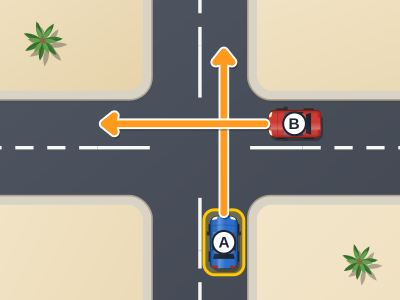
You arrive at an unmarked crossroads at the same time as another vehicle coming from your right. Who has priority?
The other 12 questions in this test
Read them all. The answer and the reason for each, and the timed 22-question run, are in the Saudi Driving Theory Online Practice Bank.
- Q11Right of way
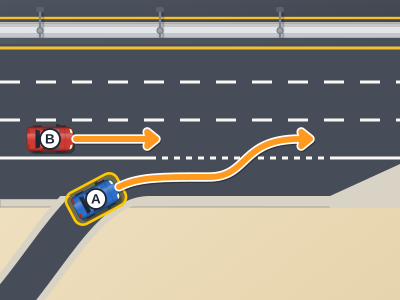
A filter lane on a dual carriageway is coming to an end and you need to merge with the main carriageway. Who must give way?
- ATraffic in the main carriageway must slow to let you merge
- BYou must give way and merge only when there is a safe gap in the main carriageway
- CBoth vehicles must slow down equally to allow the merge
- DWhichever vehicle is ahead at the merge point has priority
Answer and explanation in the bank
- Q12Right of way
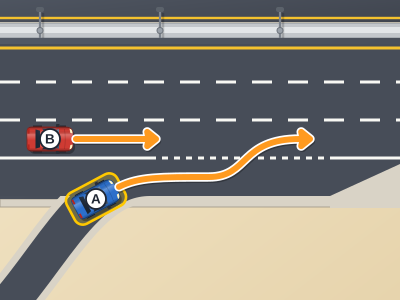
You are joining a motorway from a slip road. How should you merge with motorway traffic?
- AStop at the end of the slip road and wait for a clear gap
- BDrive to the end of the slip road and then signal right to force a gap
- CMotorway traffic must move left to allow your entry
- DMatch your speed to motorway traffic and merge when a safe gap appears
Answer and explanation in the bank
- Q13Right of way
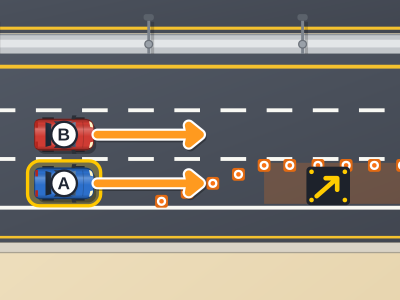
Two lanes of traffic merge into one due to roadworks. What is the correct zip-merge behaviour?
- ADrivers in the lane that is not closing must never allow anyone to merge
- BAll traffic should move into the open lane as early as possible
- CEach lane takes turns merging one by one at the merge point
- DThe driver with the longest journey has priority to merge first
Answer and explanation in the bank
- Q14Right of way
A bus has signalled to pull away from a bus stop on a road with a speed limit of 60 km/h. What should you do?
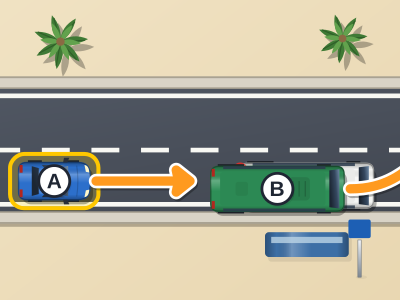
- AGive way to the bus if it is safe to do so
- BSound your horn and overtake the bus before it moves
- CMaintain your speed because the bus must wait for a gap
- DFlash your headlights to indicate you are not stopping
Answer and explanation in the bank
- Q15Right of way
You are on a minor road approaching a T-junction where your road meets a major road. Who must give way?
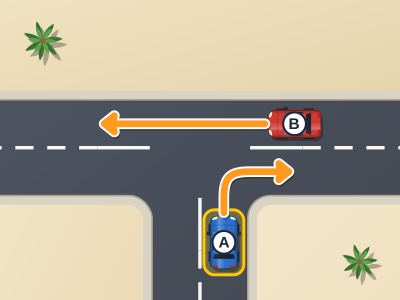
- ATraffic on the major road must give way to you
- BRight-hand priority applies so you give way to traffic from the right only
- CWhoever arrives first at the junction has priority
- DYou must give way to traffic on the major road
Answer and explanation in the bank
- Q16Right of way
You are on the main road at a T-junction and a vehicle from the side road is waiting to emerge. You have no signs or signals. Who has priority?
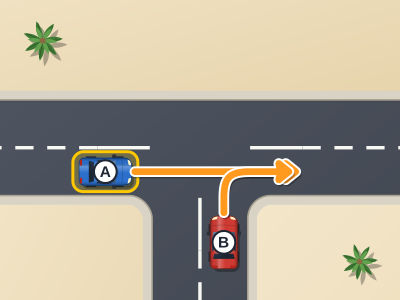
- AThe vehicle emerging from the side road
- BYou, because you are on the continuing main road
- CNeither vehicle; both must stop and negotiate
- DThe vehicle to the right of the waiting driver
Answer and explanation in the bank
- Q17Right of way
At a Y-junction without signs, two roads merge at an acute angle. How is priority determined?
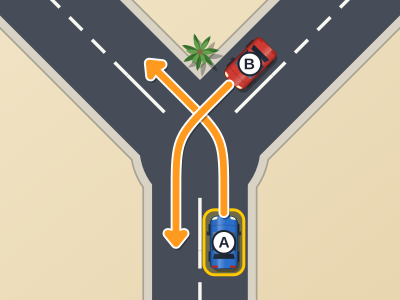
- AApply right-hand priority: give way to any vehicle approaching from your right
- BThe vehicle on the busier road always has priority
- CThe vehicle travelling straight ahead always has priority
- DThere is no rule; drivers must make eye contact and agree
Answer and explanation in the bank
- Q18Right of way
You are driving on a one-way street and need to turn left. Is there any difference in right-of-way compared to a two-way road?
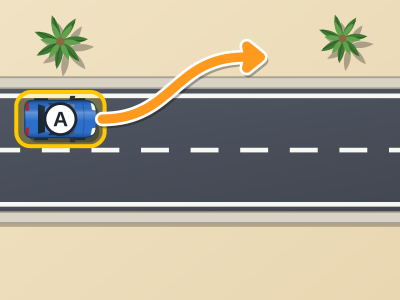
- ANo difference; give way to traffic from the right as usual
- BOn a one-way street you always have priority when turning
- CRight-hand priority does not apply on one-way streets at all
- DOn a one-way street all traffic travels the same direction so you give way to any vehicle already in the flow
Answer and explanation in the bank
- Q19Right of way
You are on a motorway and wish to change from lane 2 to lane 1 (the right lane). What is the right-of-way rule?
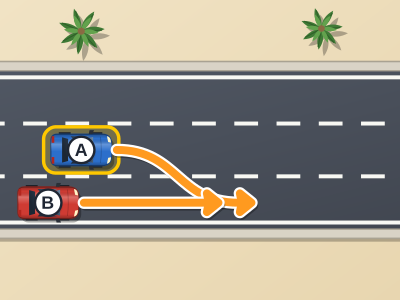
- AYou have priority because you are moving to the slower lane
- BTraffic in lane 1 must give way to you as you are moving right
- CYou must give way to traffic already in lane 1
- DLane changes on motorways are governed by speed, not right of way
Answer and explanation in the bank
- Q20Right of way
You are leaving a motorway via an exit ramp. Traffic on the motorway wants to continue straight. Who has priority?
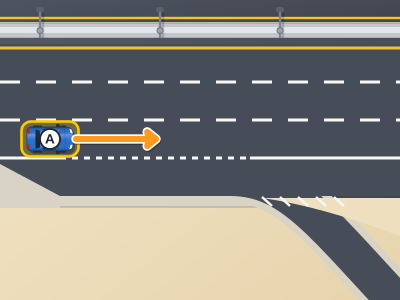
- AYou, because you are leaving the motorway
- BTraffic continuing on the motorway has priority; you must adjust your speed to exit safely
- CBoth vehicles have equal priority at the exit point
- DPriority is given to the faster-moving vehicle
Answer and explanation in the bank
- Q21Right of way
What does a STOP sign require you to do?
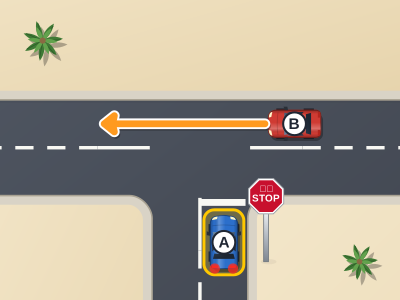
- ACome to a complete stop, give way to all traffic and pedestrians, then proceed when safe
- BSlow to 20 km/h and proceed if the road is clear
- CStop only if another vehicle is approaching from the left
- DYield without stopping if you can see the road is clear
Answer and explanation in the bank
- Q22Right of way
What does a GIVE WAY (yield) sign require you to do?
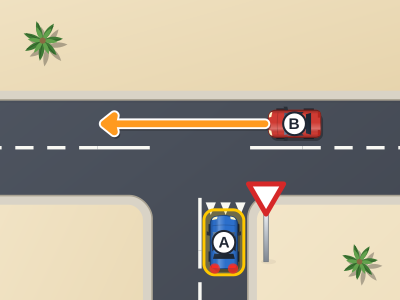
- AStop completely before checking for traffic
- BSlow down, be prepared to stop, and give priority to traffic on the major road
- CProceed at your current speed and let other drivers adjust
- DGive way only to vehicles larger than yours
Answer and explanation in the bank
Every answer above, with the rule it comes from, plus the full 22-question timed test.
Get the Saudi Driving Theory Online Practice Bank - SAR 39What this test covers
Topics include road signs, traffic signals, right of way, roundabouts, speed limits, seat belts, fines and penalties, and the safe-driving rules specific to your vehicle category. Full question-by-question feedback with explanations is shown immediately after you finish the test above.
Frequently asked questions
How many questions is the Riyadh General Dept. of Traffic light vehicle theory test?
The official General Dept. of Traffic light vehicle theory test in Riyadh has 35 questions and you need 22 correct (63%) to pass. This practice test has 22 questions.
Is this the real exam?
These are practice questions to help you revise, written to the published rules and to what candidates report from the real test. They are not the official Saudi exam and the real question bank, format, fees and pass mark are set by the General Department of Traffic (Moroor) and the driving schools, and can change. Always confirm the current requirements with your driving school or the traffic department.
Is this practice test free?
The first 10 questions are free, with no signup, and each shows the answer and the reason. The full 22-question test, timed, is in the Saudi Driving Theory Online Practice Bank (SAR 39, one payment), with every question in the bank.
What does the Riyadh light vehicle theory test cover?
Road signs, traffic signals, right of way, roundabouts, speed limits, seat belts, penalties and safe-driving rules, plus the handling and safety topics specific to your vehicle.