

Riyadh General Dept. of Traffic Truck & Bus
Practice mode· Heavy vehicle skillsRiyadh General Dept. of Traffic - Saudi Heavy Vehicle Skills Test 2
Second set of heavy-vehicle questions covering coupling, tunnels and bridges, passenger safety, hill starts and managing long or wide loads. Complete both tests for full coverage.
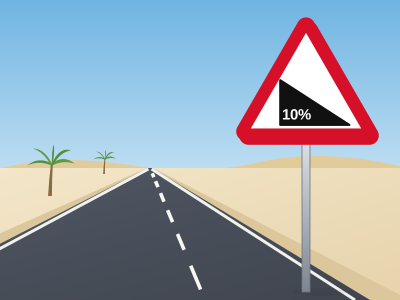
Why should a driver use the engine brake or exhaust brake on a long downhill gradient rather than relying on the service (foot) brakes alone?
The other 12 questions in this test
Read them all. The answer and the reason for each, and the timed 22-question run, are in the Saudi Driving Theory Online Practice Bank.
- Q11Heavy vehicle
A truck enters a city at a time when trucks are not allowed in. What is the penalty?
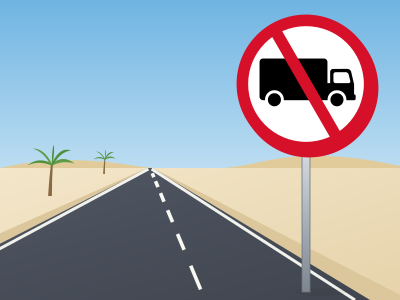
- AA SR 1,000-2,000 fine
- BA verbal warning only
- CA SR 100-150 fine
- DNo penalty if the truck is empty
Answer and explanation in the bank
- Q12Heavy vehicle
A driver is transporting a prefabricated concrete beam that extends beyond the rear of the trailer by 2 metres. What is required in Saudi Arabia before this vehicle is driven on a public road?
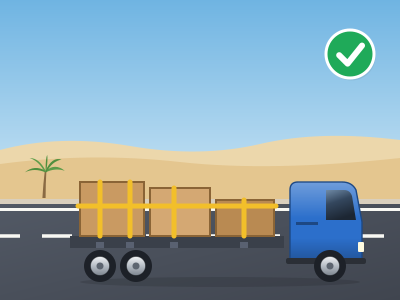
- AAn abnormal-load permit, rear overhang markers or flags, and an escort vehicle if the permit requires one
- BSimply attaching red tape to the end of the beam and driving at reduced speed
- CNo additional action is needed if the load does not exceed the maximum width
- DNotifying the nearest police station by phone is the only requirement
Answer and explanation in the bank
- Q13Heavy vehicle
Large mirrors are fitted to heavy trucks primarily to help the driver do what?
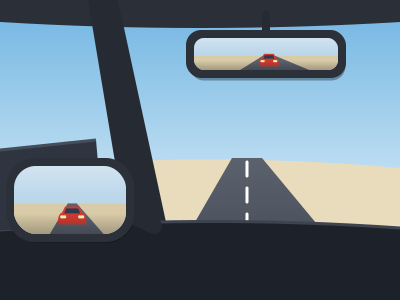
- ASee around blind spots that are much larger than those of a light vehicle, including the areas beside and behind the trailer
- BReflect sunlight to warn other road users of the truck's presence
- CMonitor the load to ensure it has not shifted during the journey
- DComply with a legal requirement that exists only for aesthetic reasons
Answer and explanation in the bank
- Q14Heavy vehicle
Where is the largest blind spot for a standard left-hand-drive heavy truck operating in Saudi Arabia?
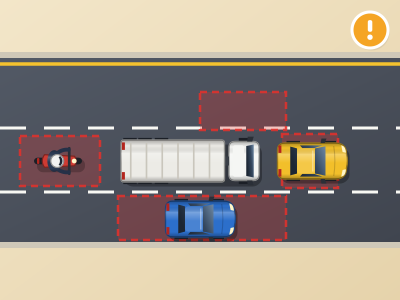
- ADown the right (passenger) side of the vehicle and immediately behind the trailer, where no mirror can give a complete view
- BDirectly in front of the cab, which is fully visible through the windscreen
- COn the driver's left side, right beside the driver's window
- DThere are no blind spots if the truck is fitted with two side mirrors
Answer and explanation in the bank
- Q15Heavy vehicle
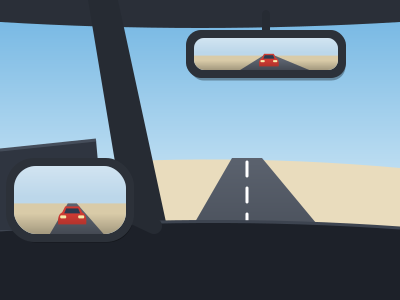
How often should a heavy truck driver check their mirrors while driving on a busy urban road?
- AOnly when changing lanes or overtaking
- BEvery five minutes is sufficient on straight roads
- CFrequently and regularly, including before every lane change, turn, speed change, and at regular intervals when travelling straight
- DOnly before braking, because that is when rear collisions are most likely
Answer and explanation in the bank
- Q16Heavy vehicle
A motorcyclist is travelling beside a heavy truck in an area the driver cannot see in the mirrors. What should the truck driver do before turning left?
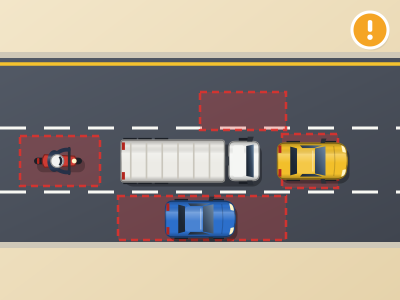
- ASignal early, slow progressively, check all mirrors immediately before turning, and be aware that motorcyclists and cyclists can be hidden in blind spots even after a mirror check
- BSound the horn to warn any vehicles in the blind spot, then turn
- CMove to the right side of the lane briefly to create space, then sweep left to turn
- DTrust that other drivers will see the signal and stay clear
Answer and explanation in the bank
- Q17Heavy vehicle
What is tail swing on a rigid truck or articulated vehicle?
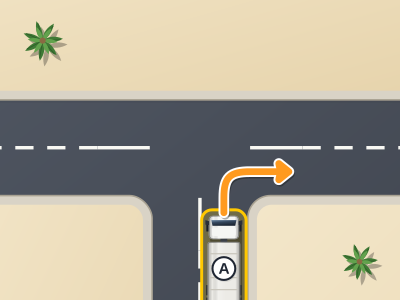
- AThe outward sweep of the rear of the vehicle in the opposite direction to the turn, which can strike kerbs, pedestrians, or other vehicles
- BThe forward momentum of a trailer when braking, which pushes the tractor unit sideways
- CExcessive rear-axle bounce caused by an uneven load distribution
- DThe swinging of unsecured cargo inside a curtain-sided trailer on bends
Answer and explanation in the bank
- Q18Heavy vehicle
When making a left turn in a city in a long rigid truck, why does the driver sometimes move slightly to the right before turning?
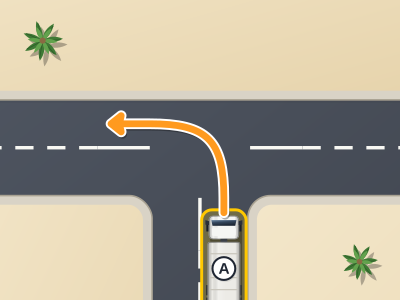
- ATo give oncoming traffic a clear view of the truck's direction indicator
- BTo create enough turning radius to prevent the rear wheels from mounting the kerb or striking objects on the left side
- CBecause Saudi regulations require right-side positioning before left turns
- DTo reduce the tail-swing arc on the right side of the vehicle
Answer and explanation in the bank
- Q19Heavy vehicle
During a wide left turn in an articulated truck, the trailer's inside rear wheels cut in toward the kerb. A pedestrian is standing near the corner. What is the safest action?
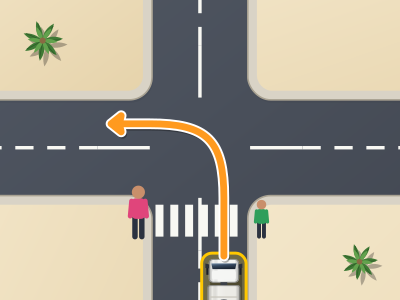
- ASound the horn and complete the turn quickly so the pedestrian has less time in the danger zone
- BStop the vehicle immediately if there is any risk to the pedestrian, wait until they move clear, then complete the turn
- CContinue at the same speed because the mirrors confirmed the pedestrian was clear at the start of the turn
- DFlash the headlights and nudge the vehicle forward to encourage the pedestrian to move
Answer and explanation in the bank
- Q20Heavy vehicle
Which factor most increases the risk of a heavy truck rolling over on a bend?
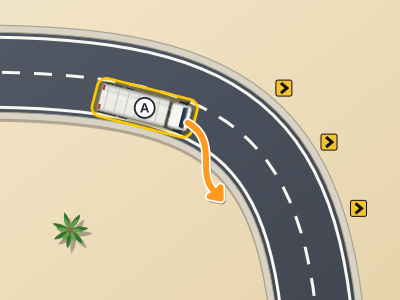
- ADriving on a road with a slight downhill gradient
- BA high centre of gravity caused by a tall or top-heavy load combined with excessive cornering speed
- CHaving the fuel tank more than half full
- DThe engine weight being mounted in front of the front axle
Answer and explanation in the bank
- Q21Heavy vehicle
A tanker truck carrying a liquid cargo that is only half full is considered more prone to rollover than a full tanker. Why?
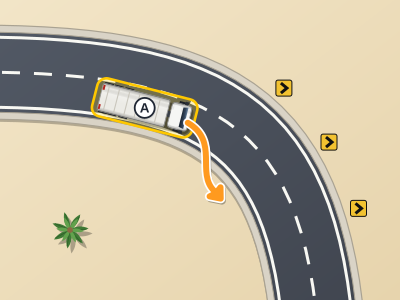
- AThe free surface of the liquid surges sideways under lateral forces, raising the effective centre of gravity and creating dynamic instability
- BA half-full tanker weighs less, so its tyres have less grip
- CThe engine has to work harder with a half-full tank, causing unpredictable throttle response
- DHalf-full tanks develop air pockets that compress the suspension
Answer and explanation in the bank
- Q22Heavy vehicle
How should a driver approach a roundabout in a high-sided curtain-sided trailer to minimise rollover risk?
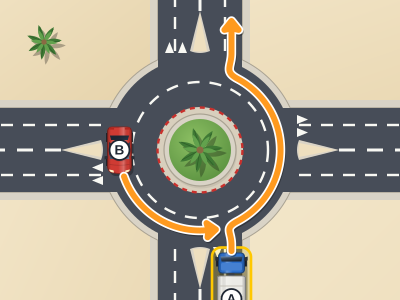
- AMaintain highway speed to keep momentum and reduce the time the trailer is exposed to lateral forces
- BStraddle the lane markings to reduce the turning radius and lessen the tilt
- CReduce speed significantly before entering the roundabout so that lateral forces on the load and trailer remain well within safe limits
- DApply the trailer brakes harder than the tractor brakes to prevent the trailer from overrunning
Answer and explanation in the bank
Every answer above, with the rule it comes from, plus the full 22-question timed test.
Get the Saudi Driving Theory Online Practice Bank - SAR 39What this test covers
Topics include road signs, traffic signals, right of way, roundabouts, speed limits, seat belts, fines and penalties, and the safe-driving rules specific to your vehicle category. Full question-by-question feedback with explanations is shown immediately after you finish the test above.
Frequently asked questions
How many questions is the Riyadh General Dept. of Traffic truck & bus theory test?
The official General Dept. of Traffic truck & bus theory test in Riyadh has 35 questions and you need 22 correct (63%) to pass. This practice test has 22 questions.
Is this the real exam?
These are practice questions to help you revise, written to the published rules and to what candidates report from the real test. They are not the official Saudi exam and the real question bank, format, fees and pass mark are set by the General Department of Traffic (Moroor) and the driving schools, and can change. Always confirm the current requirements with your driving school or the traffic department.
Is this practice test free?
The first 10 questions are free, with no signup, and each shows the answer and the reason. The full 22-question test, timed, is in the Saudi Driving Theory Online Practice Bank (SAR 39, one payment), with every question in the bank.
What does the Riyadh truck & bus theory test cover?
Road signs, traffic signals, right of way, roundabouts, speed limits, seat belts, penalties and safe-driving rules, plus the handling and safety topics specific to your vehicle.