

Tabuk General Dept. of Traffic Motorcycle
Practice mode· Motorcycle skillsTabuk General Dept. of Traffic - Saudi Motorcycle Safety Practice Test
Rider safety essentials: protective gear, visibility, safe following distances, hazard awareness, lane position and sharing the road with larger vehicles.
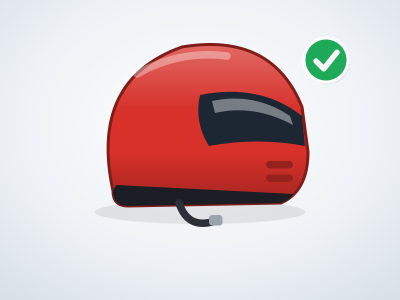
Which helmet standard is generally recognised for motorcycle use in Saudi Arabia?
The other 10 questions in this test
Read them all. The answer and the reason for each, and the timed 20-question run, are in the Saudi Driving Theory Online Practice Bank.
- Q11Motorcycle safety
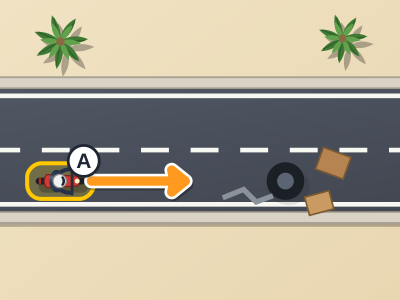
What road-surface hazard is particularly common at Saudi intersections and petrol stations?
- ASpeed bumps that are only dangerous for trucks
- BWet leaves accumulated by roadside vegetation
- CIce patches, which form under shade from overpass bridges in winter
- DDiesel and oil spills, which make the surface extremely slippery especially when light rain first falls
Answer and explanation in the bank
- Q12Motorcycle safety
Why is night riding especially hazardous for motorcyclists in Saudi Arabia compared to daytime?

- AReduced visibility makes it harder to spot road hazards (sand drifts, animals, unlit vehicles) and makes the rider much less visible to other drivers
- BMotorcycle engines produce less power at night due to cooler air temperatures
- CNight riding is safer because there is less traffic on Saudi roads after dark
- DTyre grip is reduced at night because rubber compounds harden in cooler temperatures
Answer and explanation in the bank
- Q13Motorcycle safety
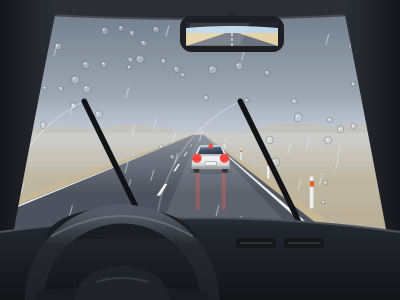
When does rain pose the greatest grip risk to a motorcyclist on Saudi roads?
- AAfter the road has been wet for more than 30 minutes, when the tarmac has fully absorbed water
- BAt the very start of a rain shower, before sufficient water has washed accumulated oil and dust off the road surface
- COnly in the winter months when rain falls at low temperatures
- DRain poses no additional risk on Saudi roads because rain is infrequent and brief
Answer and explanation in the bank
- Q14Motorcycle safety
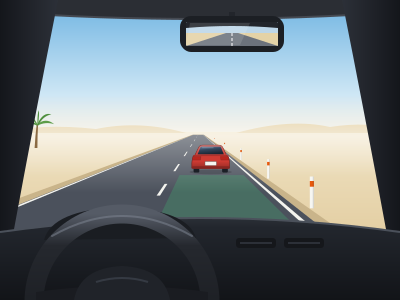
What is the recommended minimum following distance (in seconds) for a motorcyclist behind a car on a dry Saudi highway?
- AHalf a second, because motorcycles brake faster than cars
- BExactly one second, which is the legal minimum for all vehicles in Saudi Arabia
- CFollowing distance is irrelevant as long as you are watching the car's brake lights
- DAt least two seconds, and preferably three to four seconds, to allow time to react and brake
Answer and explanation in the bank
- Q15Motorcycle safety
What is defensive riding as applied to motorcyclists in Saudi Arabia?
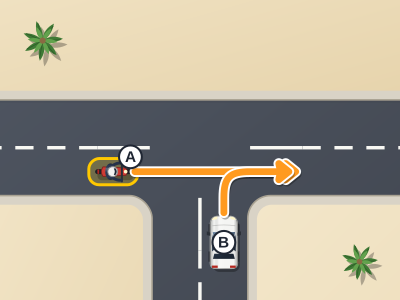
- ARiding aggressively to claim road space before other vehicles can crowd the motorcyclist
- BRiding only on roads with dedicated motorcycle lanes
- CFitting a dashcam so that you have evidence if another driver causes a crash
- DAnticipating and preparing for the mistakes of other road users rather than assuming they will always behave correctly
Answer and explanation in the bank
- Q16Motorcycle safety
When riding in a group on a Saudi highway, what formation is generally safest?
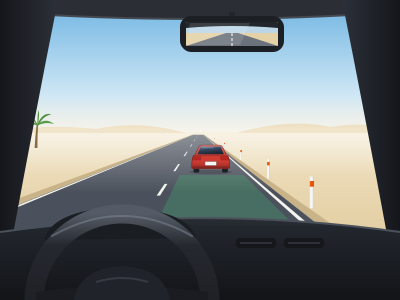
- ASingle-file formation with all riders in the same wheel track as close together as possible
- BSide-by-side formation with two riders occupying one lane width
- CStaggered formation, with each rider offset to the left or right of the one ahead, maintaining individual following distances
- DRiders should spread across two lanes to make the group more visible
Answer and explanation in the bank
- Q17Motorcycle safety
What is the correct technique for crossing a loose-gravel or sand-covered section of road on a motorcycle?
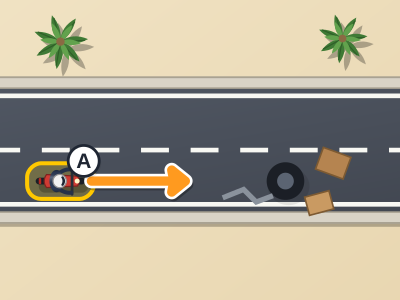
- AReduce speed before the hazard, keep the bike upright, use a light throttle to maintain momentum, and avoid abrupt steering or braking while on the loose surface
- BAccelerate through the section quickly to spend as little time on the loose surface as possible
- CLean the bike heavily and carve a track through the loose material
- DApply both brakes firmly as soon as you enter the loose section to minimise distance on it
Answer and explanation in the bank
- Q18Motorcycle safety
You are riding behind a large truck on a Saudi dual carriageway and want to overtake. What is the safest approach?
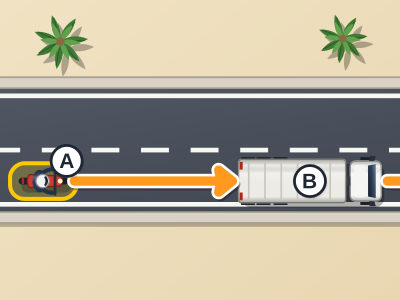
- ADraft closely behind the truck to get maximum speed before pulling out
- BDrop back to increase following distance to improve your view ahead, then accelerate briskly past the truck and move away promptly once clear
- COvertake slowly, staying alongside the truck for as long as possible so drivers behind can see you
- DSound your horn continuously while overtaking to alert the truck driver
Answer and explanation in the bank
- Q19Motorcycle safety
What is the main effect of fatigue on a motorcycle rider?
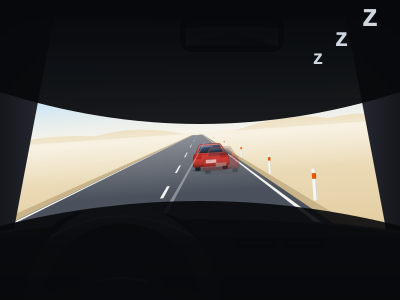
- AIncreased alertness from the physical demands of riding, making fatigue irrelevant for short trips
- BReduced engine vibration sensitivity, which actually makes fatigue less dangerous on motorways
- CFatigue affects car drivers more than motorcyclists because riding is more engaging
- DSlower reaction times, impaired hazard recognition, and micro-sleeps that can cause a crash
Answer and explanation in the bank
- Q20Motorcycle safety
Riding in Saudi Arabia in summer temperatures exceeding 45 degrees Celsius, what hydration rule should you follow?

- ADrink only when you stop for fuel to avoid needing to stop unnecessarily
- BSports drinks with caffeine are preferable to water because they provide energy
- CDrink water before you feel thirsty; thirst indicates you are already mildly dehydrated, which impairs judgement and reaction speed
- DDehydration is only a risk on rides longer than four hours
Answer and explanation in the bank
Every answer above, with the rule it comes from, plus the full 20-question timed test.
Get the Saudi Driving Theory Online Practice Bank - SAR 39What this test covers
Topics include road signs, traffic signals, right of way, roundabouts, speed limits, seat belts, fines and penalties, and the safe-driving rules specific to your vehicle category. Full question-by-question feedback with explanations is shown immediately after you finish the test above.
Frequently asked questions
How many questions is the Tabuk General Dept. of Traffic motorcycle theory test?
The official General Dept. of Traffic motorcycle theory test in Tabuk has 35 questions and you need 22 correct (63%) to pass. This practice test has 20 questions.
Is this the real exam?
These are practice questions to help you revise, written to the published rules and to what candidates report from the real test. They are not the official Saudi exam and the real question bank, format, fees and pass mark are set by the General Department of Traffic (Moroor) and the driving schools, and can change. Always confirm the current requirements with your driving school or the traffic department.
Is this practice test free?
The first 10 questions are free, with no signup, and each shows the answer and the reason. The full 20-question test, timed, is in the Saudi Driving Theory Online Practice Bank (SAR 39, one payment), with every question in the bank.
What does the Tabuk motorcycle theory test cover?
Road signs, traffic signals, right of way, roundabouts, speed limits, seat belts, penalties and safe-driving rules, plus the handling and safety topics specific to your vehicle.