

Kuwait traffic signs and meanings: the short answer
Kuwait uses the standard GCC road sign system, and the General Traffic Department (GTD) of the Ministry of Interior publishes the signs on its own site. Four shapes carry most of the meaning. A red triangle warns you, a red circle forbids something, a blue circle orders you to do something, and a green or blue rectangle tells you where you are going. Stop and give way have shapes of their own so you can read them from far away.
This page is the reference chart: every family, the shape and colour that identify it, what each sign means and what you must do. It is built for the Kuwait theory test, where signs and kerb markings appear as pictures and you have only ten minutes for the whole paper.
Chart first, then the signs test
Read a section, then check yourself straight away. The free Kuwait signs test 1 has 22 picture questions with an explanation after each answer, and signs test 2 gives you 22 more. Those two pages already attract most people searching for a signs test, so use them as your main practice. Our own line on a signs topic test is 20 of 22.
Which page is which
For the score you need on the real paper, read the Kuwait theory test pass mark guide. If you want a questions file, read the Kuwait questions and answers PDF guide. If you failed and need to rebook, use what to do after failing the Kuwait theory test. The full list of tests is on the Kuwait driving test hub.
How signs appear in the Kuwait theory test
The Ministry of Interior runs a practice version of the computer test at ttd.moi.gov.kw, and it is the best public evidence of the format. The paper has 20 questions and a 10-minute timer, in Arabic, English, Urdu or Hindi. Most questions have three or four options, some are true or false, and signs and kerb markings are shown as pictures. The Ministry does not publish a pass mark. Kuwait guides report 18 correct out of 20, which is 90 percent.
| Item | What is reported | How sure we are |
|---|---|---|
| Questions and time | 20 questions in 10 minutes | Shown by the Ministry practice test |
| Languages | Arabic, English, Urdu, Hindi | Shown by the Ministry practice test |
| Question types | Three or four option MCQ, plus true or false | Shown by the Ministry practice test |
| Pictures | Signs and kerb markings are shown as images | Shown by the Ministry practice test |
| Pass mark | 18 of 20 (90%) | Reported by kuwaitlocal.com and autoviatest.com, not published by the Ministry |
| Law covered | Many questions follow the 2025 traffic law, which took effect on 22 April 2025 | Reported by Kuwait Times |
| Our practice format | 22 questions per signs topic test, 20 to pass. 20 questions per mock, 18 to pass | Our own standard |
What this means for your study
Ten minutes for 20 questions is thirty seconds each, so you cannot stop and work out a sign. You must recognise it. That is why a chart is only the first step: once you have read it, you need timed practice that forces instant recall. The two signs tests and the first full mock test are built for that.
The signs are only part of the paper
Not every question shows a sign. Many are about rules and the penalties under the new law, so use the road rules test and the fines and black points test next to this chart. This page covers the sign half of the paper in detail.
Every Kuwait sign family at a glance
Start with this table. If you can rebuild it from memory, you already know the structure of the whole signs section. The first two columns matter most, because shape and colour tell you the type of instruction before you read the symbol.
| Family | Shape and colour | What it tells you | Examples |
|---|---|---|---|
| Warning | Triangle, red border, white face, black symbol | A hazard ahead. Slow down and be ready | Pedestrian crossing, slippery road, speed bump, level crossing |
| Prohibition | Red circle, usually a white face with a black symbol | You must not do this | No entry, no overtaking, no U-turn, speed limit |
| Mandatory | Blue circle, white symbol | You must do this | Keep right, roundabout, minimum speed |
| Priority | Red octagon, inverted triangle, yellow diamond | Who goes first | Stop, give way, priority road |
| Direction and information | Green or blue rectangles, Arabic and English text | Where a road goes, what is nearby | Destination boards, hospital, cycle path |
| Temporary and roadworks | Often orange or yellow, on portable stands | A short term change to the road | Works ahead, lane closed, diversion |
| Road markings and kerbs | White and yellow lines, arrows, stop lines, painted kerbs | Where you may cross, stop or park | Solid line, broken line, stop line, yellow box |
| Traffic lights | Red, amber, green, steady, flashing or arrow | When to stop and go | Flashing red, green right arrow |
| Police signals | Arm and hand positions of an officer | Direct instruction that overrides the rest | Stop, proceed, turn |
The one rule that settles most questions
When two instructions conflict, the order is: an officer first, then temporary signs and lights, then permanent signs, then markings. A candidate who learns that order stops getting the tricky "the light is green but an officer is waving you to stop" question wrong. You can practise the junction side of this in the Kuwait right of way test.
Warning signs: the red triangles
A warning sign does not give an order. It tells you what is coming so you can slow down, look and prepare. The border is red, the face white and the symbol black. On the test you are rarely asked for a number on a warning sign. You are asked what the hazard is and what a careful driver does about it.
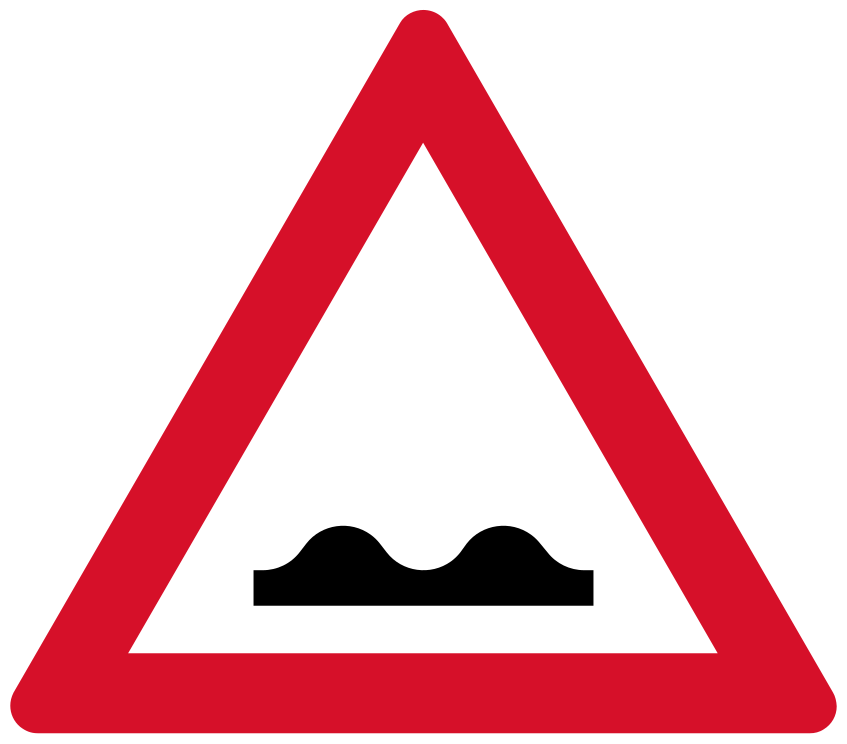
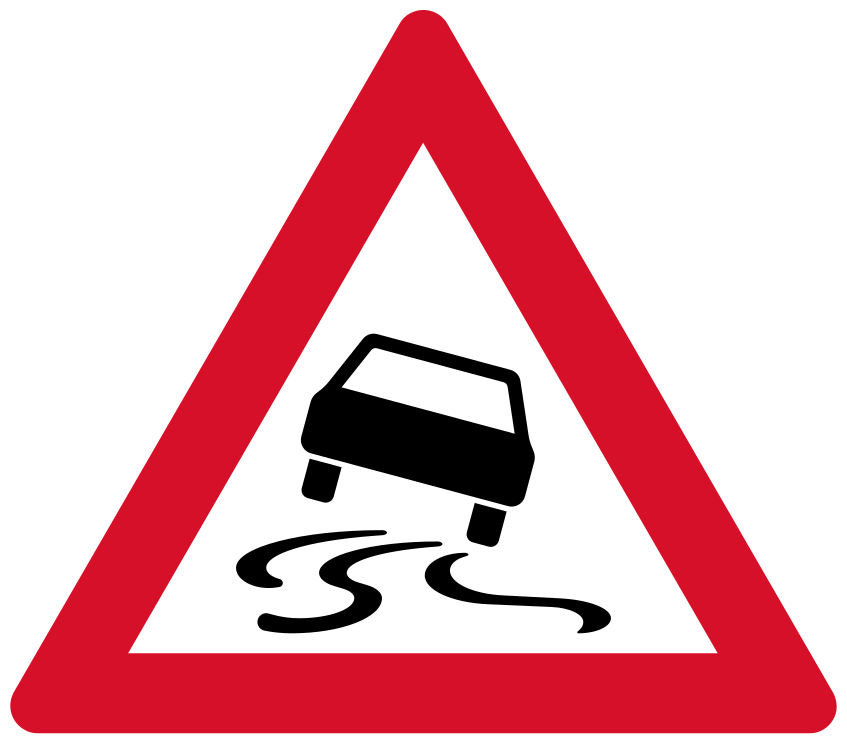
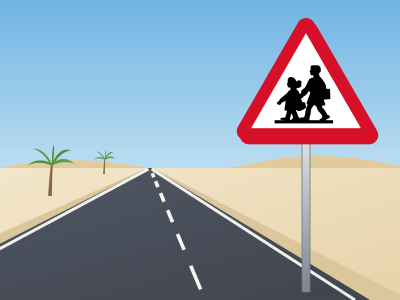
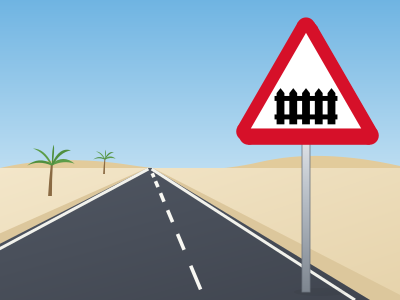
| Sign | Picture | What you do |
|---|---|---|
| Pedestrian crossing | Walking figure | Slow down and stop for anyone on the crossing |
| Children crossing | Children walking | Cut speed and watch both pavements |
| Slippery road | Car with skid lines | Reduce speed, no harsh braking or steering |
| Speed bump | A hump on a road | Slow before the bump |
| Level crossing with barriers | Barrier and gate | Stop if the barriers are down or lights flash |
| Road narrows on both sides | Two inward curves | Hold your lane and give way if the narrow part is shared |
| Bend to the right | Curved arrow | Brake before the bend, not in it |
| Steep descent | Slope symbol | Use a low gear and do not coast in neutral |
| Other danger | Exclamation mark | Something not covered by another sign, read any plate beneath it |
Why the test likes warning signs
The wrong answers are always the confident ones, such as "maintain your speed" or "overtake if clear". A warning sign never makes a hazard less likely, so the safe answer is nearly always to slow down. Practise the full set in the first signs test, which shows the picture and the reason for each answer.
Prohibition signs: the red circles
A red circle takes something away from you. These are the signs where the test is strictest, because the answer is a rule rather than a judgement. The face is usually white with a black symbol, and a diagonal red bar across the symbol means "not allowed".
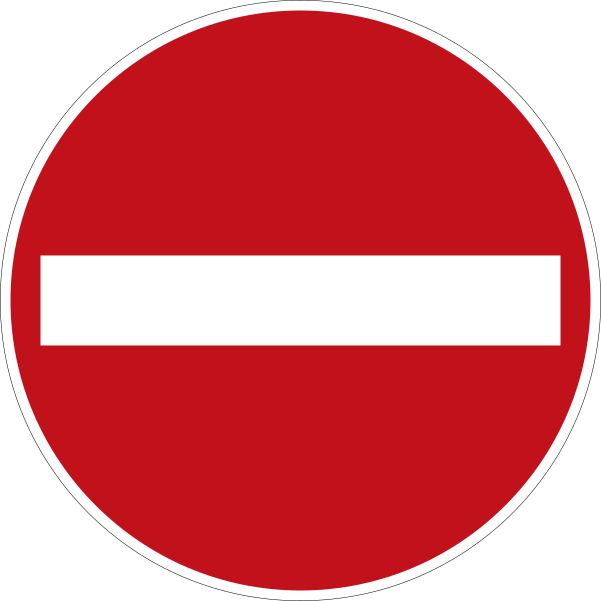
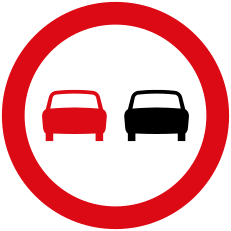
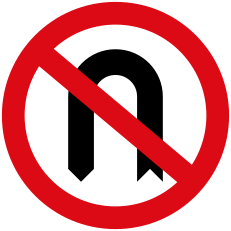
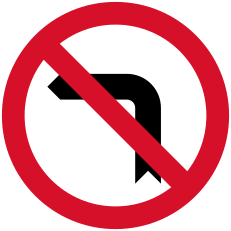
| Sign | Meaning | The usual wrong answer |
|---|---|---|
| Bar across a red circle | No entry for vehicles | "You may enter if the road is empty" |
| Two cars side by side | No overtaking | "You may overtake slow vehicles" |
| Crossed U-turn arrow | No U-turn | "You may if no car is coming" |
| Crossed left arrow | No left turn | "You may turn if the junction is clear" |
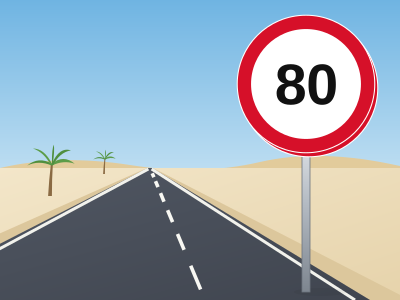
| Number in a red circle | Maximum speed in km/h | "You must drive at that speed" |
| Lorry in a red circle | No goods vehicles | "All large vehicles are banned" |
| P crossed in a red circle | No parking | "You may wait two minutes" |
Speed limit signs
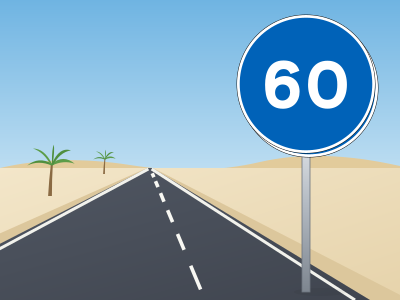
Speed signs show a number in a red circle, for example 60, 80, 100 or 120. The number is a ceiling. It stays in force until another sign changes it, so a limit does not lapse at the next junction. You will see 60 on the picture of a signed road in the bank, and higher numbers on faster roads. Learn the circle first, then the number, and read the exact question to see whether it asks for the limit or for what applies after a junction.
Mandatory and priority signs: blue circles, stop and give way
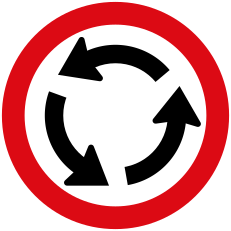
Blue circles give orders. They tell you the direction you must take or the minimum speed you must keep. Priority signs have their own shapes so that a driver can recognise them from far away or from behind: a red octagon for stop, an inverted triangle for give way and a yellow diamond for a priority road.
| Sign | Colour and shape | What you must do |
|---|---|---|
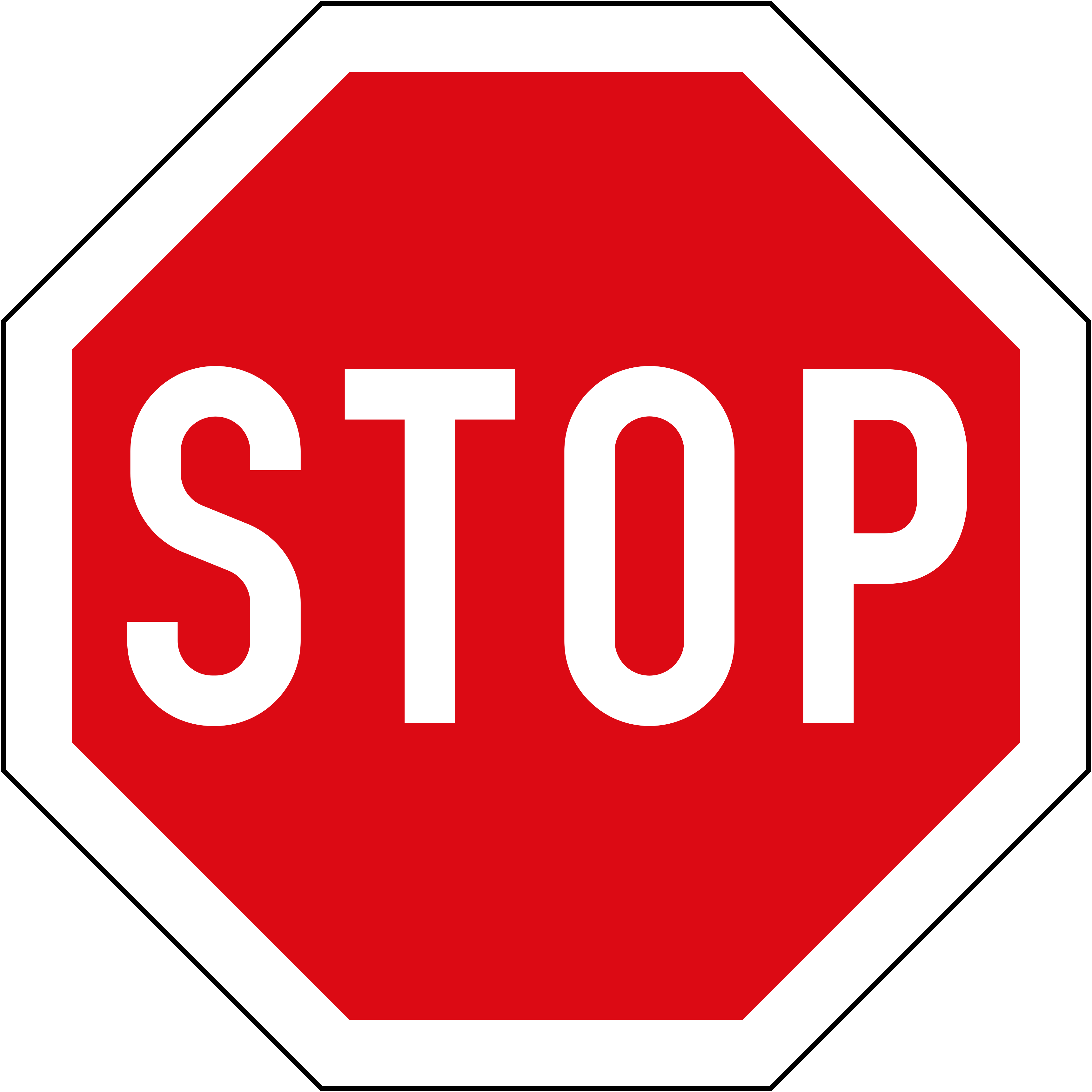
| Stop | Red octagon | Full stop at the line, then give way to all |
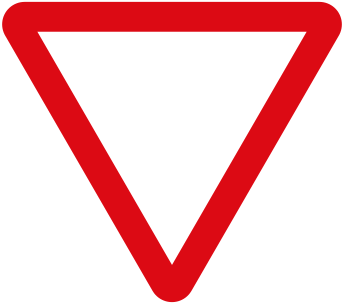
| Give way | Red-bordered inverted triangle | Yield to traffic on the main road, stop only if needed |
| Priority road | Yellow diamond | You have priority over roads joining yours |
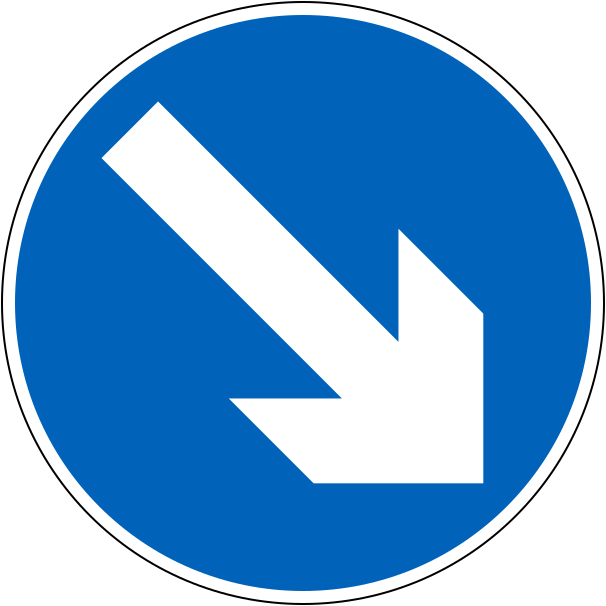
| Keep right | Blue circle, arrow | Pass on the side the arrow shows |
| Roundabout | Blue circle, three arrows | Give way to traffic already on the roundabout |
| Minimum speed | Blue circle, number | Do not drive slower unless conditions force it |
| One way | Blue or white arrow | Traffic flows one direction only |
Red number against blue number
These are opposite instructions. Red is a maximum, blue is a minimum. A candidate who sees a number and answers "the speed you must drive" has mixed them up. The second road rules test includes the kind of wording that separates them.
Stop is not give way
"You may roll through a stop sign if it is empty" is always wrong. A stop sign needs a complete halt. A give way sign needs only enough slowing to yield, and you stop if traffic demands it.
Kuwait question bank + printable papers
772 questions with the answer and the rule, 3 full papers at the real length. One payment, no account.
Fail on the day
KWD 12
Pass first time
KWD 1.5
- 3
- Full papers
- 772
- Questions
- 20
- question timed mocks
That's 1.9 fils a question, every answer explained.
Direction, information and roadworks signs
These signs give you facts and short term instructions rather than permanent rules. They carry fewer exam questions than warning or prohibition signs, but the ones that appear are usually easy marks if you know the colour code. They also matter once you drive alone on Kuwait's ring roads and highways.
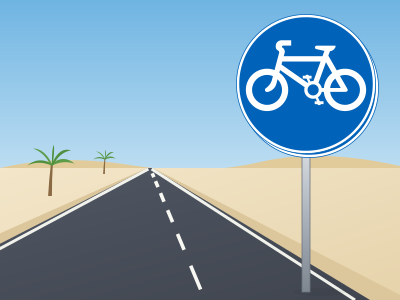
Direction and route signs
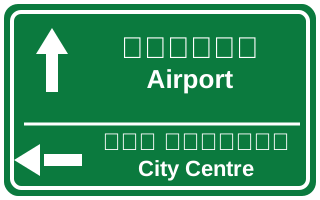
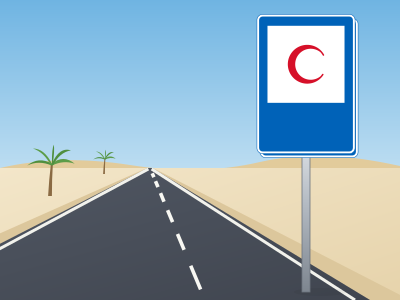
Direction signs are rectangular with names in Arabic and English. Green or blue is typical in the GCC system, and a blue rectangle most often gives expressway or route information. The test question is usually which colour or type of sign something is, so learn the colour, not individual place names. Several of these signs appear in the exit and merge scenes inside the topic tests.
| Type | Usual look | Used for |
|---|---|---|
| Direction | Green rectangle, white text in Arabic and English | Destinations, exits, distances |
| Route information | Blue rectangle | Motorway or expressway information |
| Facilities and services | Rectangle with a symbol | Hospital, parking, fuel |
| Temporary works | Often orange or yellow, on movable stands | Roadworks, diversions, lane closures |
Temporary and roadworks signs
Roadworks signs are temporary and they beat the permanent sign beside them. If a works sign shows a lower limit, that is the limit while the works are there, even if the permanent sign shows a higher one. Cones, barriers and a flagman are part of the instruction. When a question says "a temporary sign contradicts a permanent one", follow the temporary one.
Road markings, stop lines and kerbs
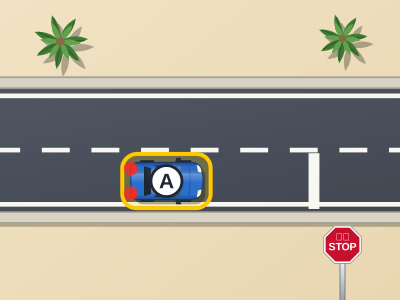
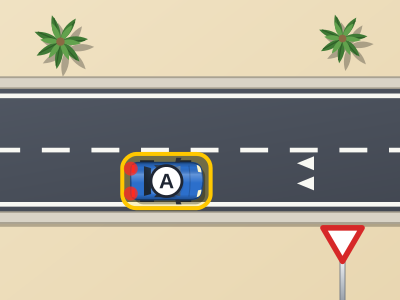
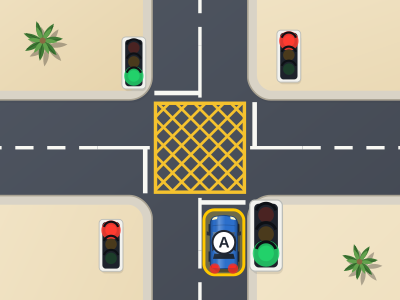
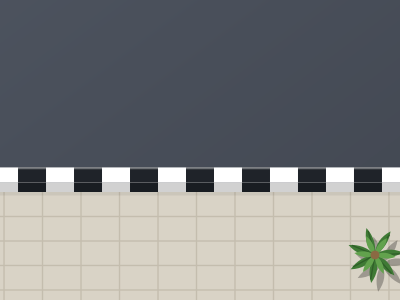
Markings are signs painted on the road, and candidates forget that they count. Several of the trickiest sign questions are really about lines. The rule to hold on to is the same everywhere: a solid line is a wall you do not cross, a broken line is a permission, and a painted line across the road is where you stop or yield.
| Marking | Meaning | Common wrong answer |
|---|---|---|
| Solid centre line | Do not cross or straddle | "You may cross briefly to overtake" |
| Broken line between lanes | Change lanes when safe | "You may drive on it as a lane" |
| Stop line | Stop behind it at a stop sign or red light | "Stop with your front wheels on it" |
| Give way line | Yield to traffic on the other road | "Stop for three seconds" |
| Yellow box | Enter only if your exit is clear | "Enter on green and wait inside" |
| Painted kerb | Parking or stopping restriction, check the colour | "Park if the road is quiet" |
| Bus lane markings | Reserved for buses | "Use it to pass queues" |
Why kerbs matter in Kuwait
The Ministry practice test shows kerb markings as pictures, so this is not a rare topic. Learn each painted kerb you see on the practice papers and do not guess from colour alone. The safe driving test and the topic tests include several of these pictures, and each answer explains the colour.
Traffic lights and police hand signals
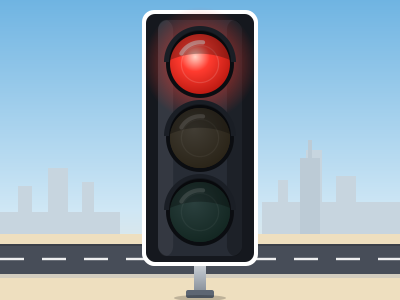
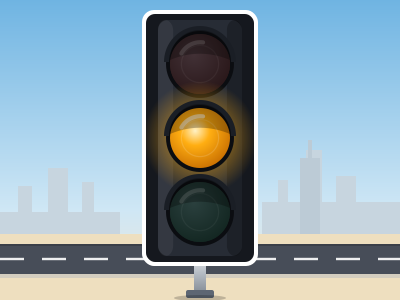
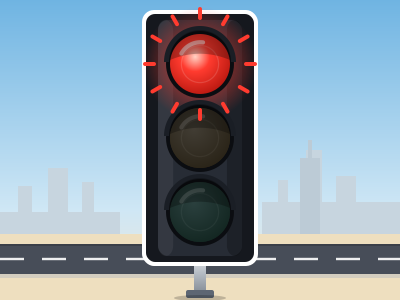
Lights and officers are the signs that change while you look at them, which is why exams like them. The core is simple. Red means stop behind the line. Amber on its own means the light is about to turn red, so stop if you can do it safely. Green means go if the way is clear. What catches people are the flashing states, the arrow and the authority of an officer.
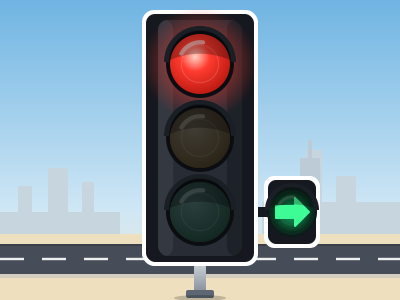
| Signal | What you do |
|---|---|
| Steady red | Stop behind the line. You may not go |
| Steady amber | Stop if safe. Do not accelerate to beat it |
| Steady green | Go when the way is clear and watch for late pedestrians |
| Flashing red | Stop, give way to all, then proceed when safe |
| Flashing amber | Proceed with care and give way to pedestrians |
| Green arrow | Go only in the direction of the arrow |
| Officer facing you, arm raised | Stop. Do not wait for the light |
| Officer side-on, arms out | Traffic from the front and back may go |
The officer wins
Candidates who know the lights perfectly still answer "stay stopped" when the officer waves them through. The officer overrides every light and sign. Check the picture in your school booklet, because questions show the figure and ask what it means.
Why red lights deserve extra care
Kuwait's 2025 traffic law took effect on 22 April 2025, and Gulf News described tougher penalties, including jail for red light violations in serious cases. You do not need the penalty amounts for the signs section, but you do need to know that red is never advice. The second fines and black points test covers the penalty side.
Look-alike pairs people confuse
Most lost marks on a signs test do not come from signs the candidate has never seen. They come from two signs the candidate has seen many times and swaps. Use this table as a checklist, and for each pair say aloud what separates them.
| Pair | How to tell them apart |
|---|---|
| Red circle number against blue circle number | Red is a maximum, blue is a minimum. Opposite instructions |
| Stop against give way | Octagon means full stop. Inverted triangle means yield, stop only if needed |
| Roundabout ahead against roundabout | Red triangle warns of what is coming. Blue circle is the instruction at the roundabout |
| No entry against no parking | Bar across a red circle against a crossed P. One bans driving in, the other bans leaving the car |
| No left turn against keep right | Crossed arrow in a red circle forbids. Blue circle with an arrow commands |
| Pedestrian crossing against children crossing | One walking figure against children. Both mean slow down, the children sign means a school is near |
| Flashing red against steady red | Steady means wait for green. Flashing means stop, then go when clear |
| Flashing amber against steady amber | Steady amber means stop if safe. Flashing amber means proceed with care |
| Solid against broken line | Solid is a barrier. Broken is a permission |
| Warning triangle against prohibition circle | Triangle describes the road. Circle bans an action |
How to drill the pairs
Take one pair a day. Write the row on a card with the picture on one side and the rule on the other, and say the family first: triangle, red circle, blue circle or rectangle. Then take a short test. The second signs test is a good one for pairs, because it deliberately puts similar signs next to each other in the options.
A trick for the 10-minute clock
On a timed paper you cannot compare two signs slowly. Decide the family in one second, then read the question. If the family and the question agree, the answer is usually the first one that matches.
Kuwait traffic signs PDF and printable sheets
Many people search for this chart as a PDF so they can print it, keep it on a phone or study on the way to a lesson. There are two sensible sources, and they do different jobs.
The official reference
The General Traffic Department publishes its traffic sign pages on the Ministry of Interior site, and the Ministry also runs the practice theory test at ttd.moi.gov.kw. Treat the Ministry pages as the final word on how a sign looks. The Ministry practice test gives you a score but not the right answers, so it tells you that you were wrong without telling you why.
Printable practice with answers
Reading a chart does not tell you whether you can recall it under a clock. Our Kuwait printable papers give you question sheets with the pictures that you can print and mark yourself, and the questions PDF guide explains why an old free PDF can be wrong after the 2025 law. They are written to the published rules and to what candidates report from the real test. They are practice, not the official exam.
How to use a printed sheet
- Print one paper and set a 10-minute timer for 20 questions.
- Answer without this chart in front of you.
- Mark it, and write the sign family beside every wrong answer.
- Go back to that family on this page and read it again.
If you would rather check on screen, the online Kuwait bank gives you far more variety than the two free signs tests.
Mistakes that fail people, and a seven day plan
These come from what candidates report and from the wrong answers our own tests catch most often. None of them needs a better memory. They need a better habit.
Reading the picture and not the question
A speed sign question may really be asking whether the limit still applies after a junction. It does, until a new sign changes it. Candidates see the number and answer the number without checking what was asked. Read the last line of the question first.
Treating a prohibition as advice
No overtaking does not depend on whether you can see the road. A no parking sign does not allow two minutes with the engine running. Options that begin "you may" or "only if" are usually wrong for a prohibition.
Forgetting the officer
An officer waving you on overrides a red light. An officer holding you overrides a green one.
Ignoring markings and kerbs
A line is as binding as a sign. Candidates who studied from a poster often have no answer ready for a stop line, a yellow box or a painted kerb, all of which are shown as pictures on the Ministry practice test.
Running out of the ten minutes
With 30 seconds a question, hesitating over one sign costs you the last two. Answer what you know first. Our second mock test uses the same 20-question shape, so use it to find your pace.
A seven day plan to fix them
You do not need weeks for signs. You need repetition with feedback. This plan takes about 30 to 40 minutes a day and ends with two timed papers, so you finish above the line, not on it.
| Day | Work | Check |
|---|---|---|
| 1 | Shape and colour table. Warning triangles and what to do about each | Cover the table and rebuild it from memory |
| 2 | Prohibition and mandatory circles, including speed signs | Signs test 1 |
| 3 | Priority signs, junction rules, direction and roadworks signs | Right of way test |
| 4 | Road markings, stop lines and kerbs | Redo wrong answers from days 2 and 3 |
| 5 | Traffic lights, flashing states, police signals | Signs test 2 |
| 6 | Look-alike pairs, one at a time | Mock test 1, timed |
| 7 | Weak points only, then a second timed paper | Mock test 3, aim for 19 or more of 20 |
Memory tricks that work
- Say the family first. Before the meaning, say triangle, red circle, blue circle or rectangle.
- Red takes, blue gives. Red circles take something away. Blue circles tell you what to do.
- Look for the bar. A diagonal bar usually forbids or cancels.
- Solid is a wall. Broken is a gate.
Practise in any governorate. The signs are national, so a candidate in Hawalli, Al Farwaniyah or Al Jahra sees the same pictures as one in the capital.
What a fail costs and how to practise first
The theory test is cheap to prepare for and expensive to fail. Kuwait guides report no limit on attempts and a charge of about KWD 12 per visit, though the Ministry does not publish a waiting period between attempts and these figures are reported, not confirmed. The money is the small part. A failed paper also means another slot to book, a delay to your practical lessons and a longer wait before you are driving legally.
A 90 percent line leaves two mistakes. A signs section you half know can use both of them on its own, so the margin disappears before you reach the rules and penalties questions.
The practice route
- Take the free signs test 1 and test 2. Our line is 20 of 22.
- Take a free mock such as mock test 4. The line is 18 of 20 in 10 minutes. Aim for 19.
- When the same questions keep coming up, move to the full online bank and the printable papers, which give far more variety.
- Check the light vehicle test list for the topic that matches your weak area, or the Al Asimah page for the full set.
If you have already failed
Read the Kuwait failed theory test guide for the rebooking steps, then come back to the families where you lost marks. Passing with room to spare is cheaper than passing by one mark and sitting nervously for the next stage.
Free Al Asimah (Capital) mock tests and topic tests
Every test opens on ten free questions. Pick a full mock at the real length, or drill one topic.
- Kuwait Theory Mock Test 1Mock · 20 questions
- Kuwait Theory Mock Test 2Mock · 20 questions
- Kuwait Theory Mock Test 3Mock · 20 questions
- Kuwait Theory Mock Test 4Mock · 20 questions
- Kuwait Road Signs Practice Test 1Topic · 22 questions
- Kuwait Road Signs Practice Test 2Topic · 22 questions
- Kuwait Road Rules Test 1Topic · 20 questions
- Kuwait Road Rules Test 2Topic · 20 questions
- Kuwait Right of Way Practice TestTopic · 22 questions
- Kuwait Safe Driving Practice TestTopic · 22 questions
- Kuwait Fines & Black Points Test 1Topic · 20 questions
- Kuwait Fines & Black Points Test 2Topic · 20 questions
Practise for your governorate
The rules are national, but the test centre, booking and fees can differ by area.
Frequently asked questions
Kuwait uses the standard GCC sign system. Warning signs are red triangles, prohibitions are red circles, commands are blue circles, and direction signs are green or blue rectangles with Arabic and English text. Stop, give way and priority signs have their own shapes. Markings, lights and police signals complete the set.
Red means a warning or a ban, blue means an order or information, green marks direction on ordinary roads, and yellow or orange usually marks temporary works. A red border means be careful or do not, a blue circle means you must. Colour is the fastest way to place an unfamiliar sign in a family.
Yes. The Ministry of Interior practice test at ttd.moi.gov.kw shows signs and kerb markings as pictures. The test has 20 questions in 10 minutes, with three or four options and true or false questions, in Arabic, English, Urdu or Hindi. Not every question has a picture, because many cover the 2025 traffic law.
The Ministry does not publish a topic split. The paper has 20 questions in total and many of them are about rules and penalties, so signs are a share of the paper, not all of it. Our signs topic tests have 22 questions with a pass line of 20, which is stricter than the full paper.
The Ministry does not publish a pass mark. Kuwait guides report 18 correct out of 20, which is 90 percent, so two mistakes. Practise until you score 19 or 20 on timed papers so you have room for one unlucky question. The pass mark guide on this site explains the reported figure.
The General Traffic Department publishes its traffic sign pages on the Ministry of Interior website. For printable practice with answers, use our Kuwait printable papers. Be careful with old free PDFs, because the 2025 traffic law changed some penalties and an old file can teach you a wrong answer.
A flashing red light works like a stop sign. You stop, give way to anyone with priority, and go only when it is safe. You do not need to wait for green. A flashing amber light means you may proceed with care and must give way to pedestrians. Steady red always means stop and wait.
A stop sign is a red octagon and needs a complete halt at the line, even if the junction is empty. A give way sign is an inverted triangle and means yield to traffic on the main road, stopping only if you need to. Rolling through a stop sign is always the wrong answer on a test.
Learn the families first, by shape and colour, then test yourself in short sessions. Take the free signs tests 1 and 2, drill the look-alike pairs one a day, and finish with a timed mock. A seven day plan of 30 to 40 minutes is enough for most people who already drive elsewhere.
Kuwait question bank + printable papers
772 questions with the answer and the rule, 3 full papers at the real length. One payment, no account.
Fail on the day
KWD 12
Pass first time
KWD 1.5
- 3
- Full papers
- 772
- Questions
- 20
- question timed mocks
That's 1.9 fils a question, every answer explained.
Official sources
- Ministry of Interior Kuwait - General Traffic Department traffic signs
- Ministry of Interior Kuwait - practice theory test
- Kuwait Times - New traffic law goes into effect from April 22 (23 Jan 2025)
- Gulf News - Kuwait's new traffic law explained (21 Apr 2025)
- kuwaitlocal.com - Kuwait driving license test (18 May 2026)