

Eastern Province General Dept. of Traffic Truck & Bus
Practice mode· Heavy vehicle skillsEastern Province General Dept. of Traffic - Saudi Heavy Vehicle Skills Test 1
First set of questions on truck and bus operation: braking distances, load stability, blind spots, turning space and vehicle checks. Master the skills unique to heavy vehicles.
How does an exhaust brake (Jake brake or compression release brake) slow a heavy truck?
The other 12 questions in this test
Read them all. The answer and the reason for each, and the timed 22-question run, are in the Saudi Driving Theory Online Practice Bank.
- Q11Heavy vehicle
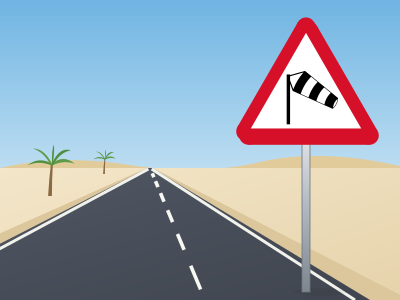
Why are high-sided curtain-sided trailers especially vulnerable on exposed sections of Saudi highways during windy conditions?
- AWind vibrates the curtain fabric and loosens the load restraints
- BWind reduces the air pressure in the tyres, lowering traction
- CHigh-sided vehicles are not vulnerable to wind because their aerodynamic shape deflects air over the roof
- DThe large flat surface of the trailer acts as a sail, and strong crosswinds can generate enough lateral force to push the trailer sideways or cause rollover, especially when lightly loaded
Answer and explanation in the bank
- Q12Heavy vehicle
A driver is crossing an exposed bridge in a high-sided empty trailer when a sudden strong gust hits from the side. What is the correct immediate response?
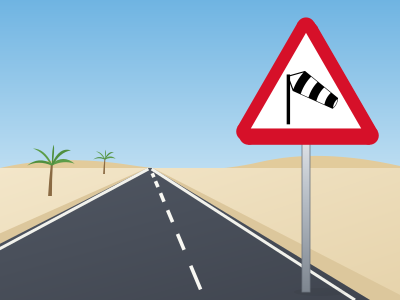
- AReduce speed smoothly, grip the steering wheel firmly with both hands, steer gently to counteract the push, and do not make sudden swerving corrections
- BAccelerate to pass the exposed section of bridge as quickly as possible
- CApply the trailer brakes sharply to stabilise the trailer
- DSteer sharply into the wind to prevent the trailer from blowing off course
Answer and explanation in the bank
- Q13Heavy vehicle
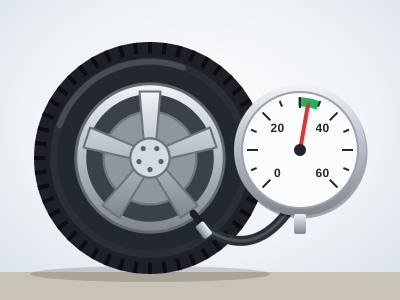
How does extreme heat in Saudi Arabia affect truck tyre pressure during a long journey?
- AHeat causes tyres to deflate gradually, so pressure should be topped up at every fuel stop
- BTyre pressure is unaffected by temperature changes in a tubeless tyre
- CHot weather tyres should be inflated 50% above the cold specification to prevent overheating
- DTyre pressure rises significantly as the air inside heats up; tyres must be checked cold before departure, and pressure must never be released from hot tyres to bring the reading down
Answer and explanation in the bank
- Q14Heavy vehicle
During a summer crossing of a Saudi desert highway, a driver notices that one tyre on the trailer feels unusually hot compared with the others when checked at a fuel stop. What could this indicate and what should the driver do?
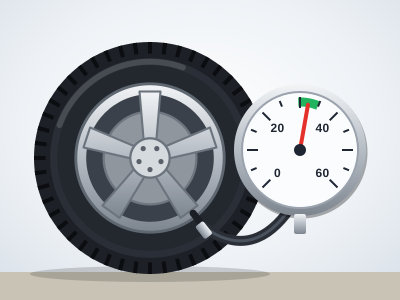
- AA binding or dragging brake, underinflation, or internal tyre damage causing heat build-up; the driver must not continue until the cause is identified and rectified to prevent tyre blowout or fire
- BIt is normal for one tyre to run hotter than others due to variation in road surface; continue the journey
- CInflate the hot tyre to maximum sidewall pressure and continue, as extra pressure will reduce heat generation
- DPour water over the tyre to cool it and then continue immediately
Answer and explanation in the bank
- Q15Heavy vehicle
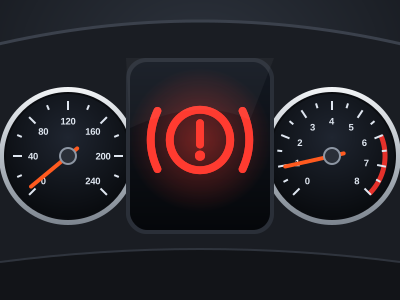
What does the low air-pressure warning light or buzzer on a heavy truck indicate?
- AThe air conditioning system has lost refrigerant and needs servicing
- BThe tyre pressures need to be checked at the next fuel stop
- CThe air suspension has deflated and must be re-inflated before driving
- DThe air pressure in the braking system has fallen below a safe level and you must stop safely as soon as possible
Answer and explanation in the bank
- Q16Heavy vehicle
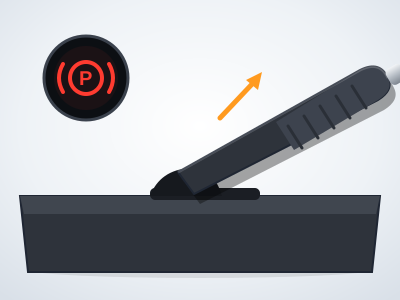
A heavy truck fitted with spring-brake actuators is left parked on a slope without connecting the hand-brake control. What happens to the spring brakes if the air pressure in the system drops to zero?
- AThe spring brakes release fully, allowing the vehicle to roll freely down the slope
- BThe spring brakes apply automatically, holding the vehicle stationary because the springs are released by air pressure and engage when pressure is lost
- CNothing changes because spring brakes are independent of air pressure
- DThe service brakes apply instead, but only on the front axle
Answer and explanation in the bank
- Q17Heavy vehicle
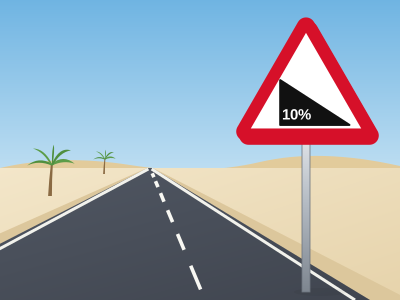
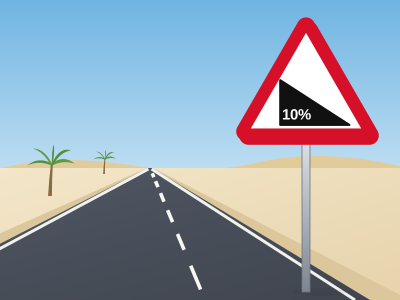
Why should a driver use the engine brake or exhaust brake on a long downhill gradient rather than relying on the service (foot) brakes alone?
- ATo save fuel because using the engine brake charges the air compressor
- BTo prevent the service brakes from overheating and fading, which could lead to brake failure
- CBecause service brakes are not permitted on downhill gradients under Saudi regulations
- DTo keep the engine revs high enough for the alternator to charge the batteries
Answer and explanation in the bank
- Q18Heavy vehicle
Before descending a long steep grade, a heavy truck driver should select an appropriate gear. What is the correct principle?
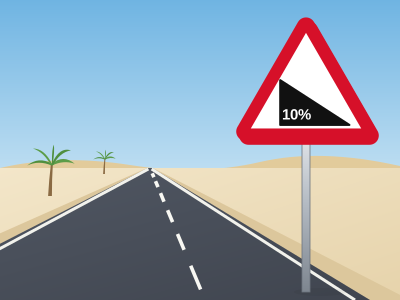
- ASelect a low gear before reaching the descent so engine braking can hold the truck at a safe speed throughout
- BDescend in a high gear to keep engine revs low and reduce noise
- CDescend in neutral so the engine does not drag and overheat
- DBegin the descent in any gear and change down only if speed rises above the limit
Answer and explanation in the bank
- Q19Heavy vehicle
A driver is loading a curtain-sided trailer with pallets. To maintain proper weight distribution, the heaviest pallets should generally be placed
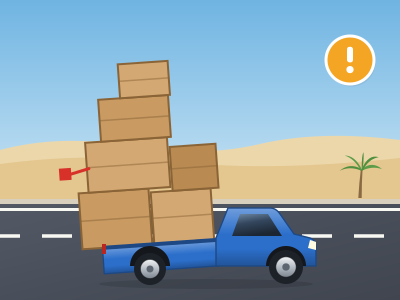
- AAt the very rear of the trailer for easy unloading at the delivery point
- BAs low as possible and centred lengthwise over the axles to keep the centre of gravity low and axle loads within limits
- CAt the very front of the trailer immediately behind the cab to improve steering
- DStacked as high as possible at the centre to maximise load space
Answer and explanation in the bank
- Q20Heavy vehicle
During a pre-departure check a driver notices that several load restraint straps have cuts and are fraying. What should the driver do?
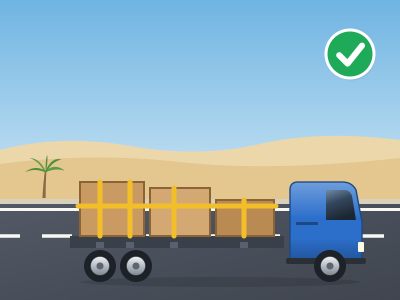
- AReplace the damaged straps immediately before moving the vehicle, as damaged straps can fail in transit and cause the load to shift or fall
- BUse the damaged straps for lighter items only and add extra undamaged straps over the heaviest loads
- CComplete the journey and report the damage on return, because the straps are unlikely to fail in normal conditions
- DWrap the frayed sections with adhesive tape and continue the journey
Answer and explanation in the bank
- Q21Heavy vehicle
A heavy transport vehicle is carrying a load larger than the permitted dimensions. What fine applies?
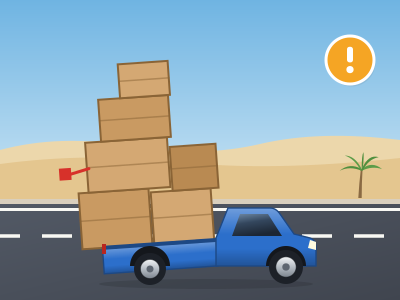
- ASR 100-150
- BSR 300-500
- CNo fine if the load is tied down
- DSR 1,000-2,000
Answer and explanation in the bank
- Q22Heavy vehicle
Which axle load limit principle is most important when loading a tandem-axle trailer in Saudi Arabia?
- AOnly the total GVW matters; individual axle loads are not regulated
- BThe heaviest axle can carry up to 50% of the total GVW without restriction
- CNo individual axle or axle group must exceed its rated limit, even if the total GVW is within the permitted maximum
- DAxle loads only matter on bridges, not on normal roads
Answer and explanation in the bank
Every answer above, with the rule it comes from, plus the full 22-question timed test.
Get the Saudi Driving Theory Online Practice Bank - SAR 39What this test covers
Topics include road signs, traffic signals, right of way, roundabouts, speed limits, seat belts, fines and penalties, and the safe-driving rules specific to your vehicle category. Full question-by-question feedback with explanations is shown immediately after you finish the test above.
Frequently asked questions
How many questions is the Eastern Province General Dept. of Traffic truck & bus theory test?
The official General Dept. of Traffic truck & bus theory test in Eastern Province has 35 questions and you need 22 correct (63%) to pass. This practice test has 22 questions.
Is this the real exam?
These are practice questions to help you revise, written to the published rules and to what candidates report from the real test. They are not the official Saudi exam and the real question bank, format, fees and pass mark are set by the General Department of Traffic (Moroor) and the driving schools, and can change. Always confirm the current requirements with your driving school or the traffic department.
Is this practice test free?
The first 10 questions are free, with no signup, and each shows the answer and the reason. The full 22-question test, timed, is in the Saudi Driving Theory Online Practice Bank (SAR 39, one payment), with every question in the bank.
What does the Eastern Province truck & bus theory test cover?
Road signs, traffic signals, right of way, roundabouts, speed limits, seat belts, penalties and safe-driving rules, plus the handling and safety topics specific to your vehicle.